Free AI Compliance Self-Assessment Spreadsheet
A structured, formula-driven self-assessment tool designed to support organizations evaluating AI system compliance across major global regulatory frameworks including the EU AI Act, NIST AI RMF, ISO/IEC 42001, and more.
CTA Button: [Download Now]
A free, 65-item self-assessment spreadsheet covering 8 compliance domains with automated scoring, gap analysis tracking, and evidence repository. Designed to support organizations conducting structured evaluations of AI systems against the EU AI Act, NIST AI RMF, ISO/IEC 42001, and other global frameworks.
This spreadsheet gives you a structured starting point for evaluating your AI system’s compliance posture. It covers 65 assessment items across 8 compliance domains, with built-in formulas that calculate your overall score and section-by-section breakdown in real time. No manual math. No guessing where you stand.
The tool requires organizational customization. Every AI system operates differently, and this spreadsheet provides the framework for assessment, not a finished compliance determination. You’ll need to evaluate each item against your specific system, document your evidence, and assign remediation owners where gaps exist.
It saves time by giving you a ready-made assessment structure instead of building one from scratch. The scoring methodology, gap analysis automation, and evidence tracking sheets are already wired together, so you can focus on answering the questions rather than building the instrument.
Key Benefits
- Includes 65 assessment items organized across 8 compliance sections with dropdown status fields
- Provides automated compliance scoring that updates in real time as you complete the checklist
- Includes a gap analysis tracker that automatically populates items marked “No” or “In Progress” via FILTER formulas
- Features an evidence repository for tracking 16 documentation items (10 essential, 6 recommended)
- Covers requirements derived from the EU AI Act, NIST AI RMF, ISO/IEC 42001, ISO/IEC 23894, US Executive Order 14110, Canada AIDA, and additional international frameworks
- Supports remediation planning with fields for target dates, ownership assignment, and notes
- Free for commercial and non-commercial use with attribution to Tech Jacks Solutions
Who Uses This?
Designed for:
- AI Governance Officers and compliance teams conducting initial or periodic self-assessments
- Risk managers evaluating AI systems against multiple regulatory frameworks
- Data protection officers assessing AI-related privacy compliance
- IT security teams reviewing AI system controls
- Organizations preparing for formal AI compliance audits
- Students and professionals building AI governance knowledge
What’s Inside (Preview)
The spreadsheet contains 5 interconnected sheets:
- Disclaimer & Usage – Legal disclaimer, recommended 6-step workflow, scoring methodology explanation, and sheet reference guide
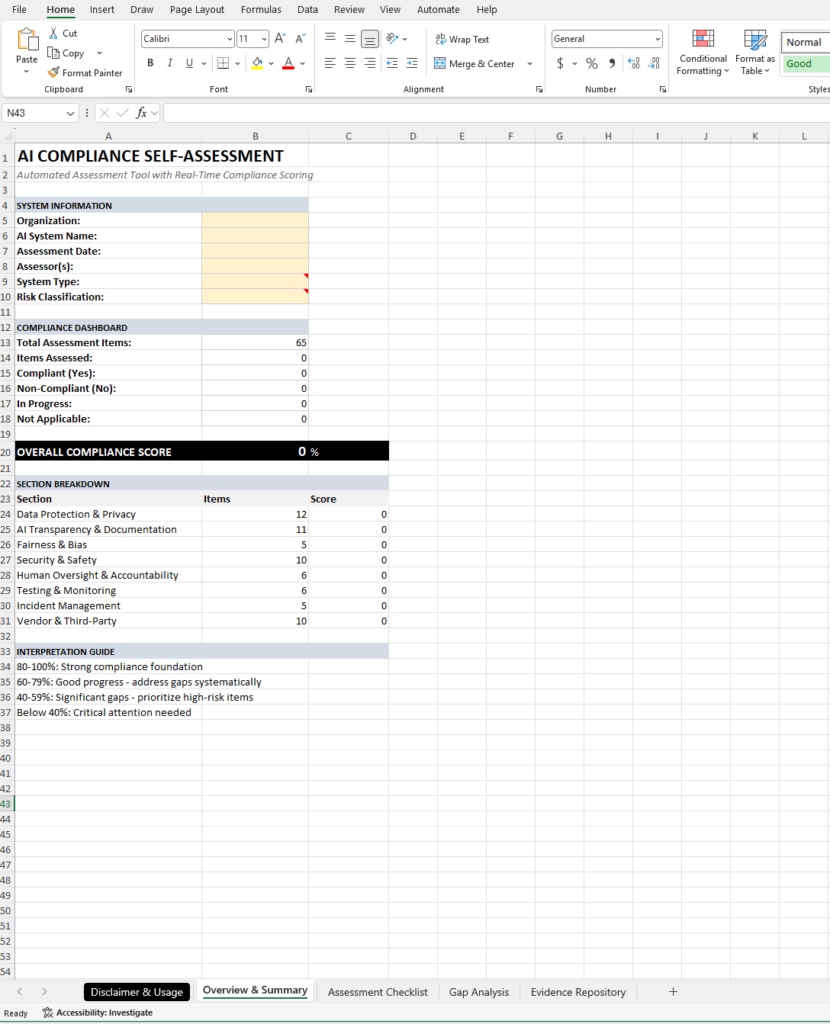
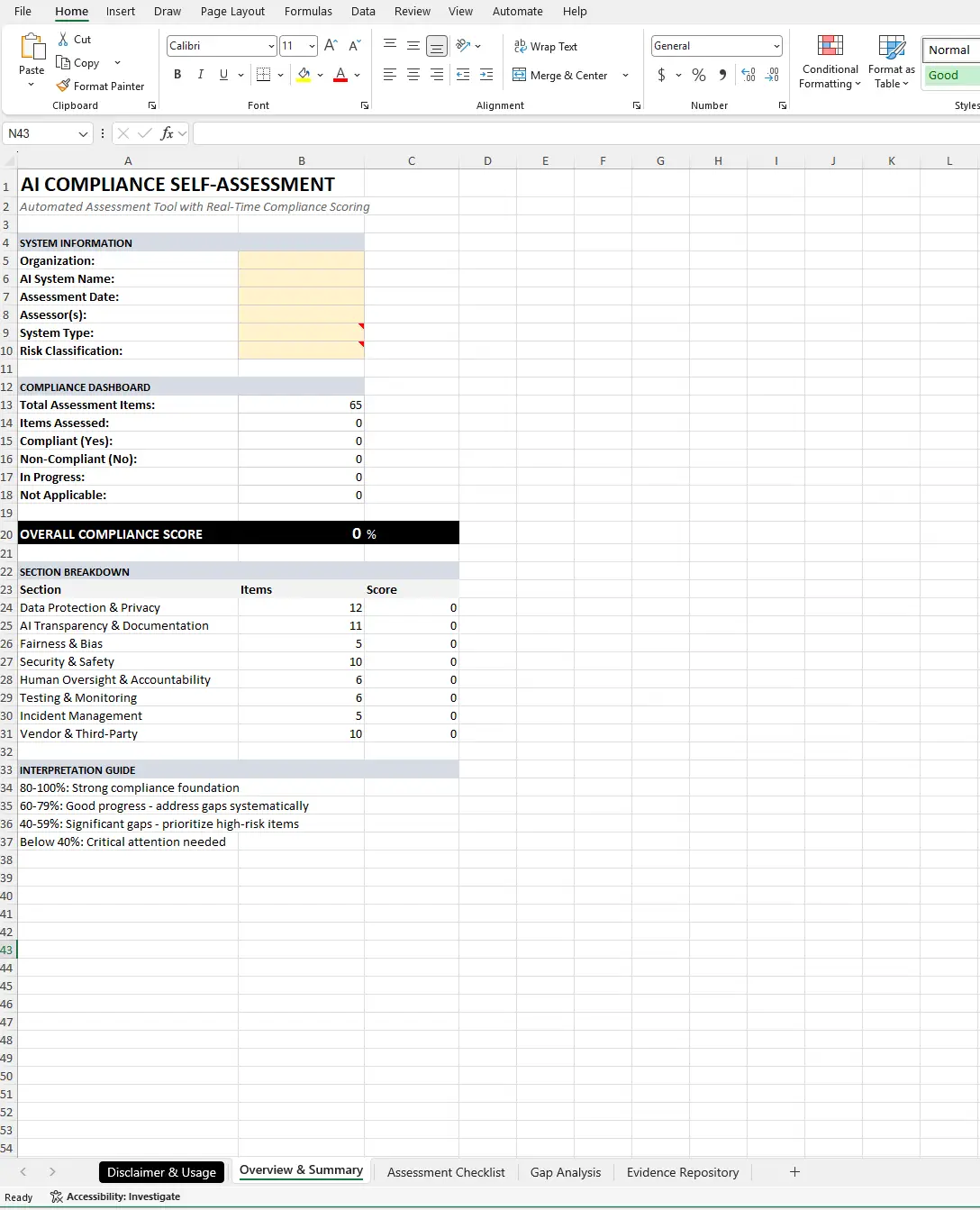
- Overview & Summary – System information fields, real-time compliance dashboard with overall score and section breakdown, and an interpretation guide
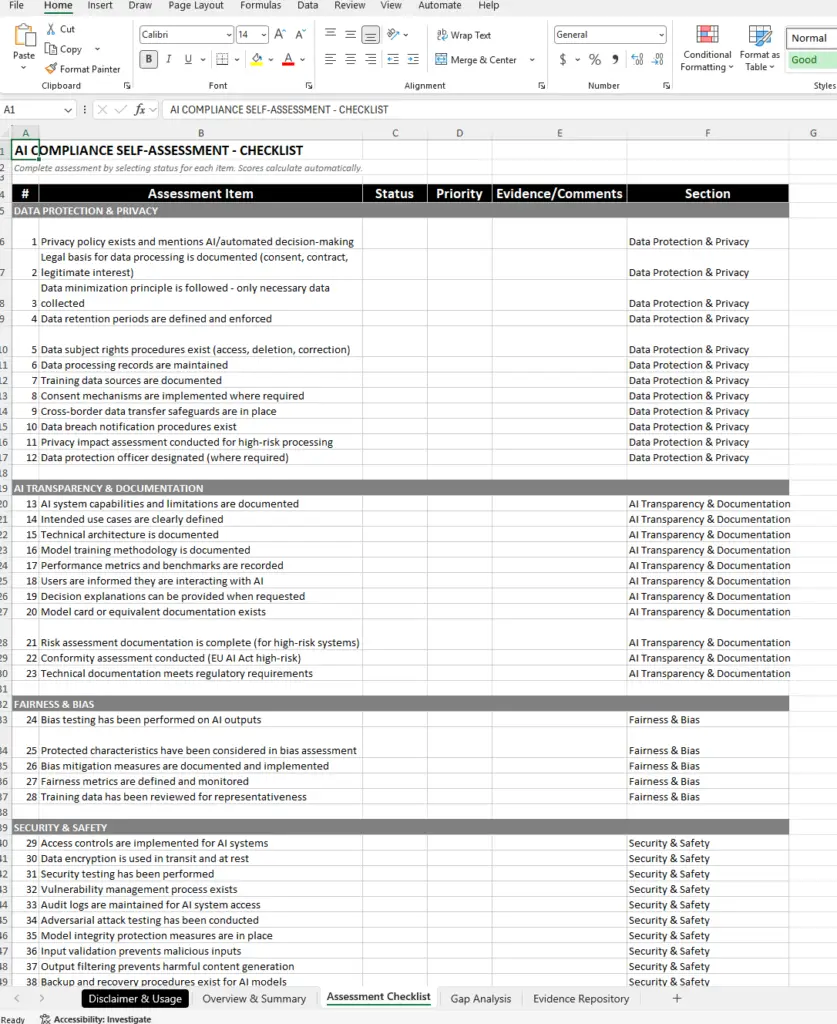
- Assessment Checklist – The core 65-item assessment across 8 sections with dropdown fields for Status (Yes/No/In Progress/N/A), Priority (High/Medium/Low), and free-text evidence/comments
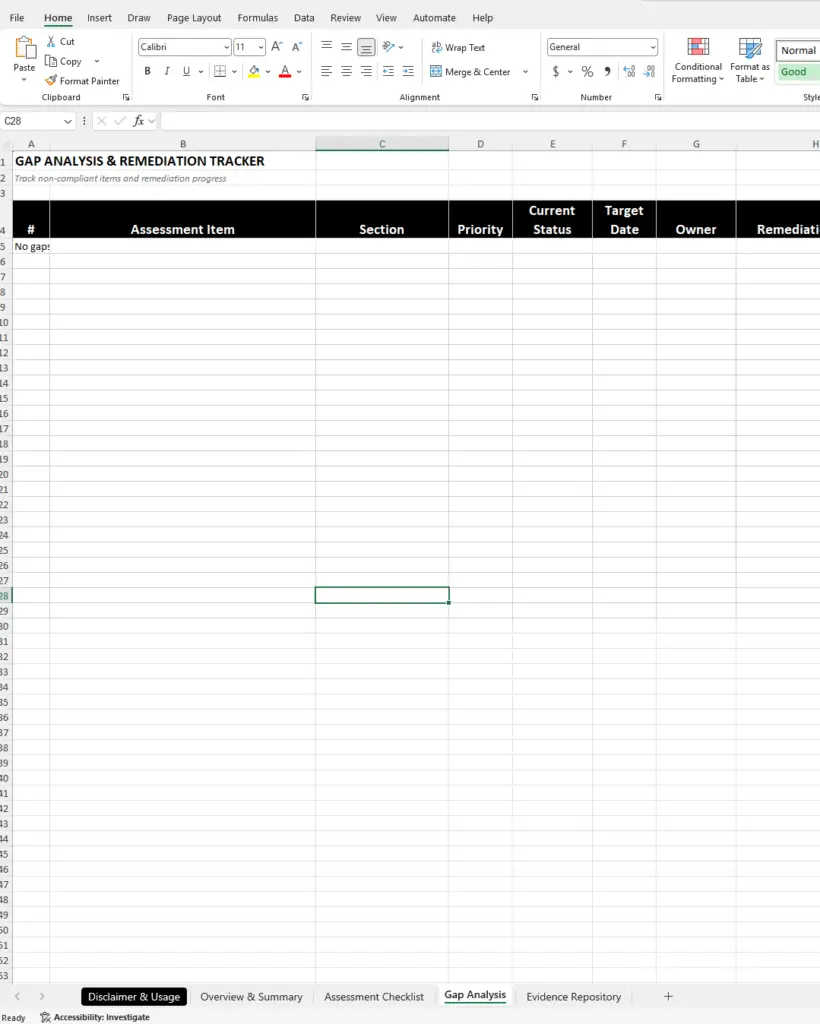
- Gap Analysis – Automated remediation tracker that dynamically pulls non-compliant items, with columns for target date, owner, and remediation notes
- Evidence Repository – Documentation inventory with 10 essential and 6 recommended evidence items, including status and storage location tracking
Why This Matters
AI regulation isn’t theoretical anymore. The EU AI Act (Regulation 2024/1689) entered into force, NIST released its AI Risk Management Framework (AI RMF 1.0), and ISO/IEC 42001 established requirements for AI management systems. Organizations deploying AI systems face a patchwork of regulatory expectations across jurisdictions. The challenge isn’t knowing that compliance matters. It’s knowing where to start.
Most organizations don’t fail at AI compliance because they ignore it. They fail because they lack a structured way to evaluate where they stand. A self-assessment creates that baseline. It identifies what’s in place, what’s missing, and what needs attention first. Without that visibility, remediation planning is guesswork.
This tool doesn’t replace legal counsel, formal audits, or comprehensive compliance programs. It provides a structured framework for conducting that initial (or periodic) assessment so you walk into those conversations with data instead of assumptions.
Framework Alignment
This assessment tool draws requirements and best practices from:
- EU AI Act (Regulation 2024/1689) – Conformity assessment, risk classification, transparency obligations, and documentation requirements for high-risk AI systems
- NIST AI Risk Management Framework (AI RMF 1.0) – Risk identification, assessment methodology, and governance structures
- ISO/IEC 42001 – AI management system requirements including documentation, monitoring, and continual improvement
- ISO/IEC 23894 – AI risk management guidance
- US Executive Order 14110 – Federal guidance on safe, secure, and trustworthy AI development and use
- Canada Artificial Intelligence and Data Act (AIDA) – Canadian AI regulatory requirements
- Additional frameworks – UK AI Regulation Framework, Singapore Model AI Governance, China AI Regulations
Key Features
- 65 assessment items across 8 compliance sections: Data Protection & Privacy (12 items), AI Transparency & Documentation (11 items), Fairness & Bias (5 items), Security & Safety (10 items), Human Oversight & Accountability (6 items), Testing & Monitoring (6 items), Incident Management (5 items), and Vendor & Third-Party (10 items)
- Automated scoring methodology – “Yes” = 1.0 point, “In Progress” = 0.5 points, “No” = 0.0 points, “N/A” excluded from denominator
- Real-time dashboard with overall compliance percentage and section-by-section breakdown
- Formula-driven gap analysis that dynamically captures items requiring remediation
- Evidence repository organizing documentation into essential and recommended categories
- Interpretation guide with four scoring bands: 80-100% (strong foundation), 60-79% (good progress), 40-59% (significant gaps), below 40% (critical attention needed)
- Dropdown-based input for consistent data entry across Status and Priority fields
- System information capture including organization name, AI system name, assessment date, assessor, system type, and risk classification
Comparison Table: Building Your Own vs. Using This Template
| Feature | Building From Scratch | Free AI Compliance Self-Assessment |
|---|---|---|
| Assessment structure | You define sections and items | 65 items across 8 sections pre-built |
| Scoring automation | Manual calculation required | Formula-driven, updates in real time |
| Gap tracking | Separate process or manual filtering | Automated via FILTER formulas |
| Framework coverage | Limited to your team’s awareness | Derived from 9+ international frameworks |
| Evidence management | Ad hoc documentation | Structured repository with 16 tracked items |
| Scoring methodology | Undefined or inconsistent | Standardized methodology with N/A handling |
| Cost | Internal staff time to research and build | Free with attribution |
| Customization required | Everything from scratch | Organizational context and evidence only |
FAQ Section
Q: Does completing this assessment certify my organization as AI compliant? A: No. This is a self-assessment tool for informational and educational purposes. Completion does not certify, guarantee, or represent compliance with any law, regulation, or standard. Regulatory compliance is determined solely by the relevant regulatory authority.
Q: What file format is this delivered in? A: The tool is delivered as a Microsoft Excel (.xlsx) file. It is optimized for Microsoft Excel to ensure proper formatting, formula functionality, and collaborative editing capabilities.
Q: How often should I run this assessment? A: The tool recommends quarterly reassessment or whenever significant changes are made to your AI system, data sources, use cases, or when new regulations take effect. Save dated copies to track progress over time.
Q: Do I need compliance expertise to use this tool? A: The assessment items are written in plain language, but interpreting results and developing remediation plans may benefit from compliance or legal expertise depending on your organization’s risk profile and regulatory exposure.
Q: Can I use this for multiple AI systems? A: Yes. Create a separate copy of the spreadsheet for each AI system you assess. The system information fields on the Overview & Summary tab allow you to scope each assessment individually.
Q: Is this tool free? A: Yes. The tool is free for commercial and non-commercial use with attribution to Tech Jacks Solutions.
Ideal For
- Organizations deploying AI systems that need a structured compliance baseline
- Compliance teams preparing documentation ahead of formal AI audits
- Risk management professionals evaluating AI-related risks across regulatory frameworks
- Data protection officers assessing AI systems for privacy compliance
- IT security teams conducting control assessments on AI infrastructure
- Consultants supporting client AI governance programs
- Students and professionals studying AI compliance requirements
Pricing Strategy
Single Template: Free for commercial and non-commercial use with attribution to Tech Jacks Solutions.
Bundle Option: May be combined with additional Tech Jacks Solutions governance and compliance templates depending on organizational needs.
Enterprise Option: Available as part of comprehensive AI governance documentation suites. Contact Tech Jacks Solutions for organizational licensing and customization.
Differentiator
This self-assessment tool covers 65 assessment items mapped across 8 compliance domains, drawing from 9+ international regulatory frameworks in a single spreadsheet. Unlike generic compliance checklists, it includes automated scoring with a standardized methodology, formula-driven gap analysis that dynamically populates remediation items, and a structured evidence repository. The tool provides a practical starting point for organizations at any stage of AI compliance maturity, from initial baseline assessment through periodic reassessment, without requiring paid software subscriptions or specialized compliance platforms. It requires organizational customization and does not guarantee compliance outcomes, but it provides the structured framework that many organizations lack when beginning their AI governance work.