

Datadog: How AI code reviews slash incident riskAI News Integrating AI into code review workflows allows engineering leaders to detect systemic risks that often evade human detection at scale. For engineering leaders managing distributed systems, the trade-off between deployment speed and operational stability often defines the success of their platform. Datadog, a company responsible for the observability of complex infrastructures worldwide, operates under intense
The post Datadog: How AI code reviews slash incident risk appeared first on AI News.
Integrating AI into code review workflows allows engineering leaders to detect systemic risks that often evade human detection at scale. For engineering leaders managing distributed systems, the trade-off between deployment speed and operational stability often defines the success of their platform. Datadog, a company responsible for the observability of complex infrastructures worldwide, operates under intense
The post Datadog: How AI code reviews slash incident risk appeared first on AI News. Read More

How LLMs Handle Infinite Context With Finite MemoryTowards Data Science Achieving infinite context with 114× less memory
The post How LLMs Handle Infinite Context With Finite Memory appeared first on Towards Data Science.
Achieving infinite context with 114× less memory
The post How LLMs Handle Infinite Context With Finite Memory appeared first on Towards Data Science. Read More

How Beekeeper optimized user personalization with Amazon BedrockArtificial Intelligence Beekeeper’s automated leaderboard approach and human feedback loop system for dynamic LLM and prompt pair selection addresses the key challenges organizations face in navigating the rapidly evolving landscape of language models.
Beekeeper’s automated leaderboard approach and human feedback loop system for dynamic LLM and prompt pair selection addresses the key challenges organizations face in navigating the rapidly evolving landscape of language models. Read More
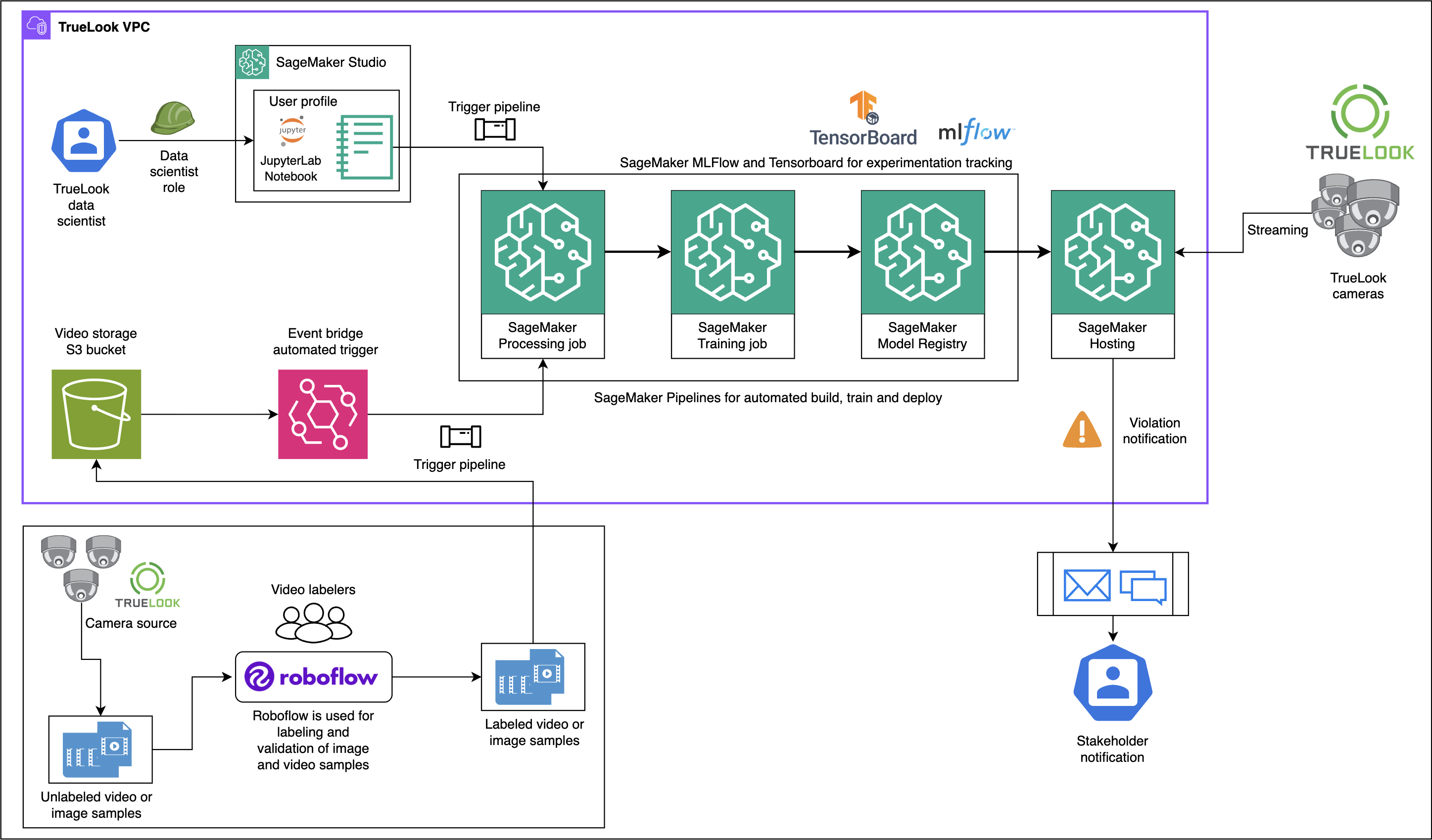
Architecting TrueLook’s AI-powered construction safety system on Amazon SageMaker AIArtificial Intelligence This post provides a detailed architectural overview of how TrueLook built its AI-powered safety monitoring system using SageMaker AI, highlighting key technical decisions, pipeline design patterns, and MLOps best practices. You will gain valuable insights into designing scalable computer vision solutions on AWS, particularly around model training workflows, automated pipeline creation, and production deployment strategies for real-time inference.
This post provides a detailed architectural overview of how TrueLook built its AI-powered safety monitoring system using SageMaker AI, highlighting key technical decisions, pipeline design patterns, and MLOps best practices. You will gain valuable insights into designing scalable computer vision solutions on AWS, particularly around model training workflows, automated pipeline creation, and production deployment strategies for real-time inference. Read More
Autonomy without accountability: The real AI riskAI News If you have ever taken a self-driving Uber through downtown LA, you might recognise the strange sense of uncertainty that settles in when there is no driver and no conversation, just a quiet car making assumptions about the world around it. The journey feels fine until the car misreads a shadow or slows abruptly for
The post Autonomy without accountability: The real AI risk appeared first on AI News.
If you have ever taken a self-driving Uber through downtown LA, you might recognise the strange sense of uncertainty that settles in when there is no driver and no conversation, just a quiet car making assumptions about the world around it. The journey feels fine until the car misreads a shadow or slows abruptly for
The post Autonomy without accountability: The real AI risk appeared first on AI News. Read More
Mastering Non-Linear Data: A Guide to Scikit-Learn’s SplineTransformerTowards Data Science Forget stiff lines and wild polynomials. Discover why Splines are the “Goldilocks” of feature engineering, offering the perfect balance of flexibility and discipline for non-linear data using Scikit-Learn’s SplineTransformer.
The post Mastering Non-Linear Data: A Guide to Scikit-Learn’s SplineTransformer appeared first on Towards Data Science.
Forget stiff lines and wild polynomials. Discover why Splines are the “Goldilocks” of feature engineering, offering the perfect balance of flexibility and discipline for non-linear data using Scikit-Learn’s SplineTransformer.
The post Mastering Non-Linear Data: A Guide to Scikit-Learn’s SplineTransformer appeared first on Towards Data Science. Read More

From cloud to factory – humanoid robots coming to workplacesAI News The Microsoft-Hexagon partnerships may mark a turning point in the acceptance of humanoid robots in the workplace, as prototypes become operational realities.
The post From cloud to factory – humanoid robots coming to workplaces appeared first on AI News.
The Microsoft-Hexagon partnerships may mark a turning point in the acceptance of humanoid robots in the workplace, as prototypes become operational realities.
The post From cloud to factory – humanoid robots coming to workplaces appeared first on AI News. Read More
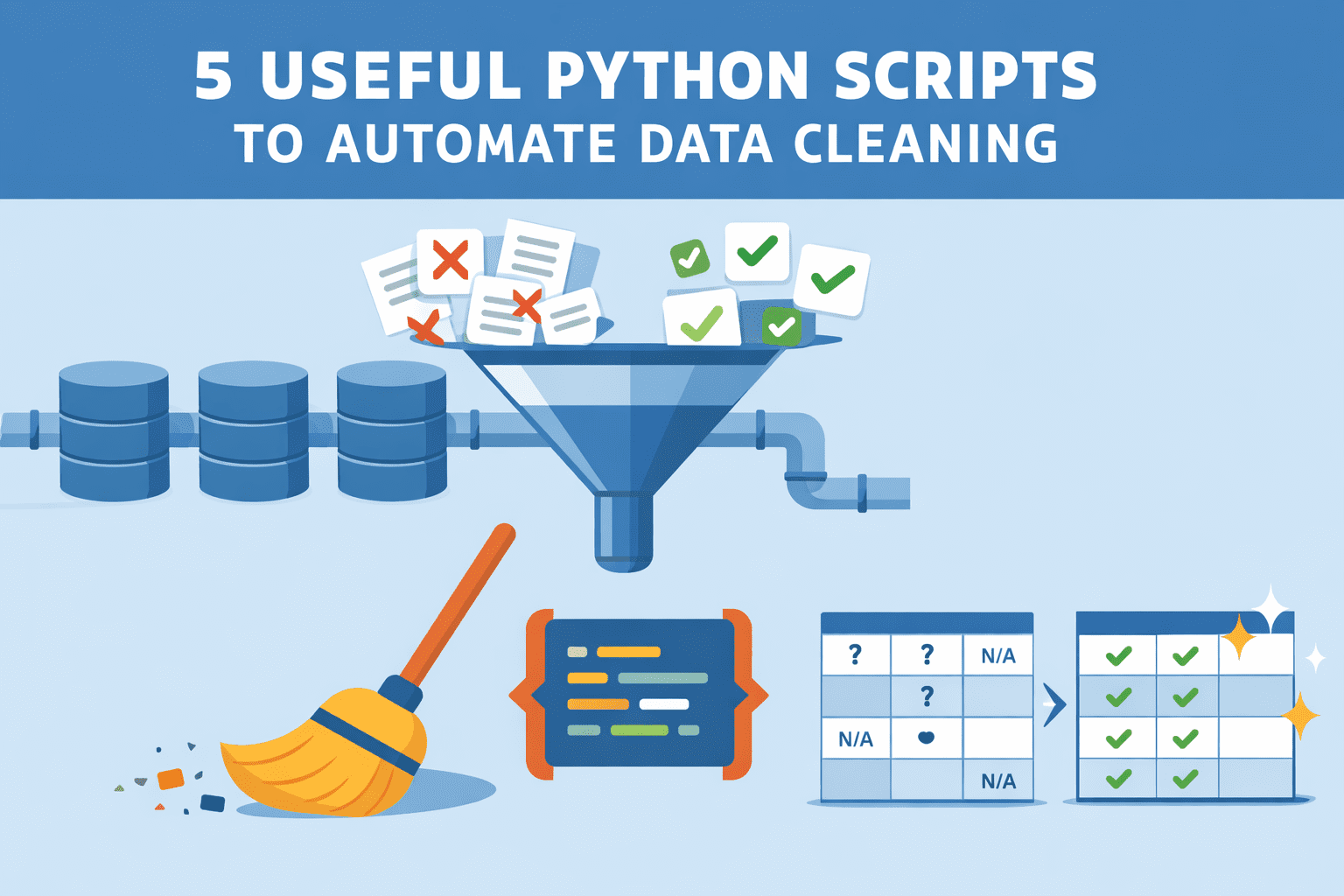
5 Useful Python Scripts to Automate Data CleaningKDnuggets Tired of repetitive data cleaning tasks? This article covers five Python scripts that handle common data cleaning tasks efficiently and reliably.
Tired of repetitive data cleaning tasks? This article covers five Python scripts that handle common data cleaning tasks efficiently and reliably. Read More
Teaching a Neural Network the Mandelbrot SetTowards Data Science And why Fourier features change everything
The post Teaching a Neural Network the Mandelbrot Set appeared first on Towards Data Science.
And why Fourier features change everything
The post Teaching a Neural Network the Mandelbrot Set appeared first on Towards Data Science. Read More
ReStyle-TTS: Relative and Continuous Style Control for Zero-Shot Speech Synthesiscs.AI updates on arXiv.org arXiv:2601.03632v1 Announce Type: cross
Abstract: Zero-shot text-to-speech models can clone a speaker’s timbre from a short reference audio, but they also strongly inherit the speaking style present in the reference. As a result, synthesizing speech with a desired style often requires carefully selecting reference audio, which is impractical when only limited or mismatched references are available. While recent controllable TTS methods attempt to address this issue, they typically rely on absolute style targets and discrete textual prompts, and therefore do not support continuous and reference-relative style control. We propose ReStyle-TTS, a framework that enables continuous and reference-relative style control in zero-shot TTS. Our key insight is that effective style control requires first reducing the model’s implicit dependence on reference style before introducing explicit control mechanisms. To this end, we introduce Decoupled Classifier-Free Guidance (DCFG), which independently controls text and reference guidance, reducing reliance on reference style while preserving text fidelity. On top of this, we apply style-specific LoRAs together with Orthogonal LoRA Fusion to enable continuous and disentangled multi-attribute control, and introduce a Timbre Consistency Optimization module to mitigate timbre drift caused by weakened reference guidance. Experiments show that ReStyle-TTS enables user-friendly, continuous, and relative control over pitch, energy, and multiple emotions while maintaining intelligibility and speaker timbre, and performs robustly in challenging mismatched reference-target style scenarios.
arXiv:2601.03632v1 Announce Type: cross
Abstract: Zero-shot text-to-speech models can clone a speaker’s timbre from a short reference audio, but they also strongly inherit the speaking style present in the reference. As a result, synthesizing speech with a desired style often requires carefully selecting reference audio, which is impractical when only limited or mismatched references are available. While recent controllable TTS methods attempt to address this issue, they typically rely on absolute style targets and discrete textual prompts, and therefore do not support continuous and reference-relative style control. We propose ReStyle-TTS, a framework that enables continuous and reference-relative style control in zero-shot TTS. Our key insight is that effective style control requires first reducing the model’s implicit dependence on reference style before introducing explicit control mechanisms. To this end, we introduce Decoupled Classifier-Free Guidance (DCFG), which independently controls text and reference guidance, reducing reliance on reference style while preserving text fidelity. On top of this, we apply style-specific LoRAs together with Orthogonal LoRA Fusion to enable continuous and disentangled multi-attribute control, and introduce a Timbre Consistency Optimization module to mitigate timbre drift caused by weakened reference guidance. Experiments show that ReStyle-TTS enables user-friendly, continuous, and relative control over pitch, energy, and multiple emotions while maintaining intelligibility and speaker timbre, and performs robustly in challenging mismatched reference-target style scenarios. Read More