
Navigating AI Entrepreneurship: Insights From The Application LayerKDnuggets Through the lens of a serial entrepreneur, this article explores how the AI revolution is shifting from infrastructure to the application layer, where the greatest opportunities lie in solving specialized, data-heavy industry problems rather than perfecting raw technology.
Through the lens of a serial entrepreneur, this article explores how the AI revolution is shifting from infrastructure to the application layer, where the greatest opportunities lie in solving specialized, data-heavy industry problems rather than perfecting raw technology. Read More
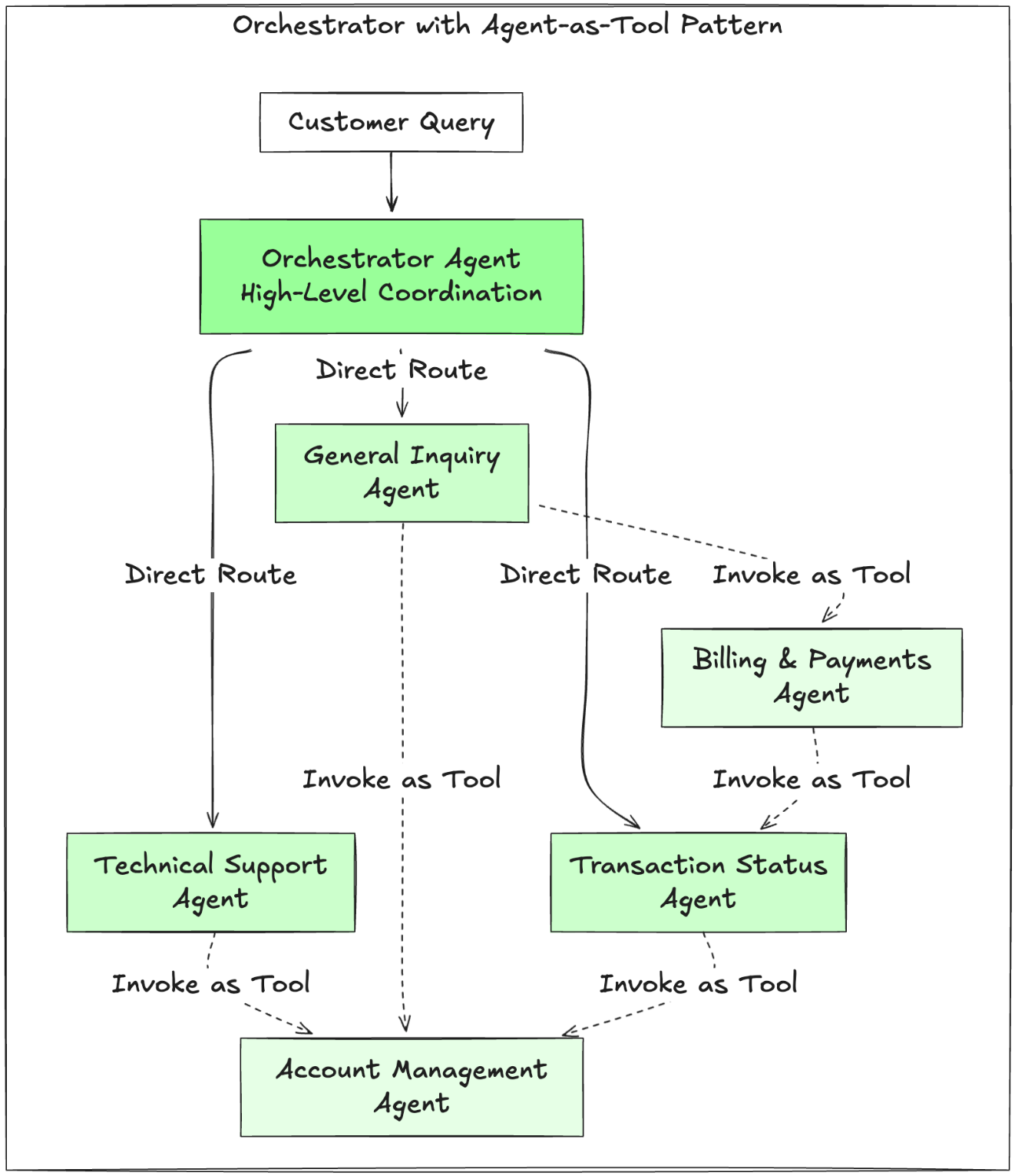
How bunq handles 97% of support with Amazon BedrockArtificial Intelligence In this post, we show how bunq upgraded Finn, its in-house generative AI assistant, using Amazon Bedrock to transform user support and banking operations to be seamless, in multiple languages and time zones.
In this post, we show how bunq upgraded Finn, its in-house generative AI assistant, using Amazon Bedrock to transform user support and banking operations to be seamless, in multiple languages and time zones. Read More
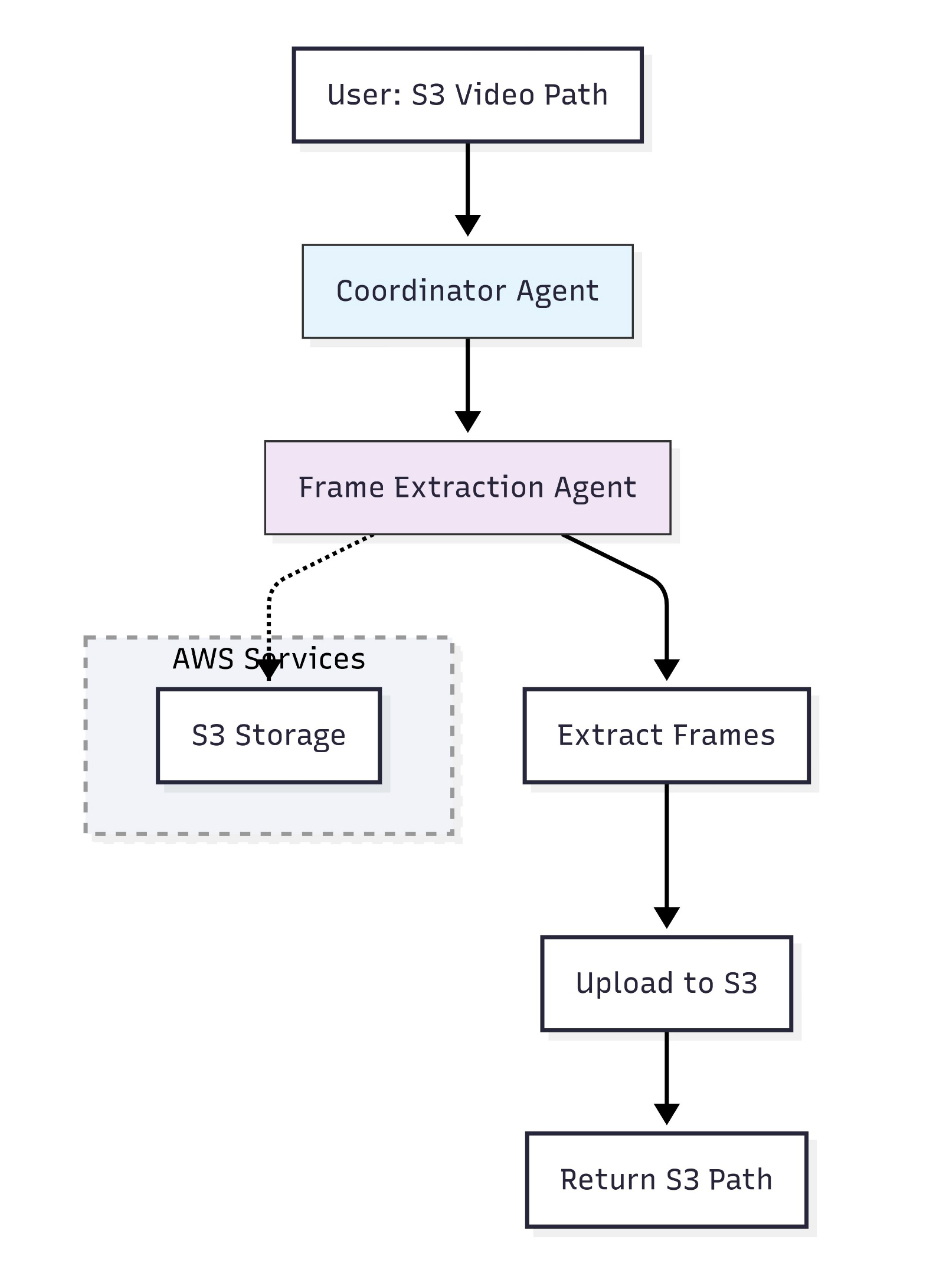
Using Strands Agents to create a multi-agent solution with Meta’s Llama 4 and Amazon BedrockArtificial Intelligence In this post, we explore how to build a multi-agent video processing workflow using Strands Agents, Meta’s Llama 4 models, and Amazon Bedrock to automatically analyze and understand video content through specialized AI agents working in coordination. To showcase the solution, we will use Amazon SageMaker AI to walk you through the code.
In this post, we explore how to build a multi-agent video processing workflow using Strands Agents, Meta’s Llama 4 models, and Amazon Bedrock to automatically analyze and understand video content through specialized AI agents working in coordination. To showcase the solution, we will use Amazon SageMaker AI to walk you through the code. Read More
7 Statistical Concepts Every Data Scientist Should Master (and Why)KDnuggets Understanding data starts with statistics. These 7 statistics concepts give you the foundation to analyze and interpret with confidence.
Understanding data starts with statistics. These 7 statistics concepts give you the foundation to analyze and interpret with confidence. Read More

5 Alternatives to Google Colab for Long-Running TasksKDnuggets These five options make long-running jobs easier, faster, and less frustrating than Colab.
These five options make long-running jobs easier, faster, and less frustrating than Colab. Read More

Balancing AI cost efficiency with data sovereigntyAI News AI cost efficiency and data sovereignty are at odds, forcing a rethink of enterprise risk frameworks for global organisations. For over a year, the generative AI narrative focused on a race for capability, often measuring success by parameter counts and flawed benchmark scores. Boardroom conversations, however, are undergoing a necessary correction. While the allure of
The post Balancing AI cost efficiency with data sovereignty appeared first on AI News.
AI cost efficiency and data sovereignty are at odds, forcing a rethink of enterprise risk frameworks for global organisations. For over a year, the generative AI narrative focused on a race for capability, often measuring success by parameter counts and flawed benchmark scores. Boardroom conversations, however, are undergoing a necessary correction. While the allure of
The post Balancing AI cost efficiency with data sovereignty appeared first on AI News. Read More

Salesforce AI Introduces FOFPred: A Language-Driven Future Optical Flow Prediction Framework that Enables Improved Robot Control and Video GenerationMarkTechPost Salesforce AI research team present FOFPred, a language driven future optical flow prediction framework that connects large vision language models with diffusion transformers for dense motion forecasting in control and video generation settings. FOFPred takes one or more images and a natural language instruction such as ‘moving the bottle from right to left’ and predicts
The post Salesforce AI Introduces FOFPred: A Language-Driven Future Optical Flow Prediction Framework that Enables Improved Robot Control and Video Generation appeared first on MarkTechPost.
Salesforce AI research team present FOFPred, a language driven future optical flow prediction framework that connects large vision language models with diffusion transformers for dense motion forecasting in control and video generation settings. FOFPred takes one or more images and a natural language instruction such as ‘moving the bottle from right to left’ and predicts
The post Salesforce AI Introduces FOFPred: A Language-Driven Future Optical Flow Prediction Framework that Enables Improved Robot Control and Video Generation appeared first on MarkTechPost. Read More

How AutoGluon Enables Modern AutoML Pipelines for Production-Grade Tabular Models with Ensembling and DistillationMarkTechPost In this tutorial, we build a production-grade tabular machine learning pipeline using AutoGluon, taking a real-world mixed-type dataset from raw ingestion through to deployment-ready artifacts. We train high-quality stacked and bagged ensembles, evaluate performance with robust metrics, perform subgroup and feature-level analysis, and then optimize the model for real-time inference using refit-full and distillation. Throughout
The post How AutoGluon Enables Modern AutoML Pipelines for Production-Grade Tabular Models with Ensembling and Distillation appeared first on MarkTechPost.
In this tutorial, we build a production-grade tabular machine learning pipeline using AutoGluon, taking a real-world mixed-type dataset from raw ingestion through to deployment-ready artifacts. We train high-quality stacked and bagged ensembles, evaluate performance with robust metrics, perform subgroup and feature-level analysis, and then optimize the model for real-time inference using refit-full and distillation. Throughout
The post How AutoGluon Enables Modern AutoML Pipelines for Production-Grade Tabular Models with Ensembling and Distillation appeared first on MarkTechPost. Read More
The human brain may work more like AI than anyone expectedArtificial Intelligence News — ScienceDaily Scientists have discovered that the human brain understands spoken language in a way that closely resembles how advanced AI language models work. By tracking brain activity as people listened to a long podcast, researchers found that meaning unfolds step by step—much like the layered processing inside systems such as GPT-style models.
Scientists have discovered that the human brain understands spoken language in a way that closely resembles how advanced AI language models work. By tracking brain activity as people listened to a long podcast, researchers found that meaning unfolds step by step—much like the layered processing inside systems such as GPT-style models. Read More
Improved Bug Localization with AI Agents Leveraging Hypothesis and Dynamic Cognitioncs.AI updates on arXiv.org arXiv:2601.12522v1 Announce Type: cross
Abstract: Software bugs cost technology providers (e.g., AT&T) billions annually and cause developers to spend roughly 50% of their time on bug resolution. Traditional methods for bug localization often analyze the suspiciousness of code components (e.g., methods, documents) in isolation, overlooking their connections with other components in the codebase. Recent advances in Large Language Models (LLMs) and agentic AI techniques have shown strong potential for code understanding, but still lack causal reasoning during code exploration and struggle to manage growing context effectively, limiting their capability. In this paper, we present a novel agentic technique for bug localization — CogniGent — that overcomes the limitations above by leveraging multiple AI agents capable of causal reasoning, call-graph-based root cause analysis and context engineering. It emulates developers-inspired debugging practices (a.k.a., dynamic cognitive debugging) and conducts hypothesis testing to support bug localization. We evaluate CogniGent on a curated dataset of 591 bug reports using three widely adopted performance metrics and compare it against six established baselines from the literature. Experimental results show that our technique consistently outperformed existing traditional and LLM-based techniques, achieving MAP improvements of 23.33-38.57% at the document and method levels. Similar gains were observed in MRR, with increases of 25.14-53.74% at both granularity levels. Statistical significance tests also confirm the superiority of our technique. By addressing the reasoning, dependency, and context limitations, CogniGent advances the state of bug localization, bridging human-like cognition with agentic automation for improved performance.
arXiv:2601.12522v1 Announce Type: cross
Abstract: Software bugs cost technology providers (e.g., AT&T) billions annually and cause developers to spend roughly 50% of their time on bug resolution. Traditional methods for bug localization often analyze the suspiciousness of code components (e.g., methods, documents) in isolation, overlooking their connections with other components in the codebase. Recent advances in Large Language Models (LLMs) and agentic AI techniques have shown strong potential for code understanding, but still lack causal reasoning during code exploration and struggle to manage growing context effectively, limiting their capability. In this paper, we present a novel agentic technique for bug localization — CogniGent — that overcomes the limitations above by leveraging multiple AI agents capable of causal reasoning, call-graph-based root cause analysis and context engineering. It emulates developers-inspired debugging practices (a.k.a., dynamic cognitive debugging) and conducts hypothesis testing to support bug localization. We evaluate CogniGent on a curated dataset of 591 bug reports using three widely adopted performance metrics and compare it against six established baselines from the literature. Experimental results show that our technique consistently outperformed existing traditional and LLM-based techniques, achieving MAP improvements of 23.33-38.57% at the document and method levels. Similar gains were observed in MRR, with increases of 25.14-53.74% at both granularity levels. Statistical significance tests also confirm the superiority of our technique. By addressing the reasoning, dependency, and context limitations, CogniGent advances the state of bug localization, bridging human-like cognition with agentic automation for improved performance. Read More