

Lightweight LLM powers Japanese enterprise AI deploymentsAI News Enterprise AI deployment has been facing a fundamental tension: organisations need sophisticated language models but baulk at the infrastructure costs and energy consumption of frontier systems. NTT Inc.’s recent launch of tsuzumi 2, a lightweight large language model (LLM) running on a single GPU, demonstrates how businesses are resolving this constraint—with early deployments showing performance matching larger
The post Lightweight LLM powers Japanese enterprise AI deployments appeared first on AI News.
Enterprise AI deployment has been facing a fundamental tension: organisations need sophisticated language models but baulk at the infrastructure costs and energy consumption of frontier systems. NTT Inc.’s recent launch of tsuzumi 2, a lightweight large language model (LLM) running on a single GPU, demonstrates how businesses are resolving this constraint—with early deployments showing performance matching larger
The post Lightweight LLM powers Japanese enterprise AI deployments appeared first on AI News. Read More

OpenAI and Foxconn collaborate to strengthen U.S. manufacturing across the AI supply chainOpenAI News OpenAI and Foxconn are collaborating to design and manufacture next-generation AI infrastructure hardware in the U.S. The partnership will develop multiple generations of data-center systems, strengthen U.S. supply chains, and build key components domestically to accelerate advanced AI infrastructure.
OpenAI and Foxconn are collaborating to design and manufacture next-generation AI infrastructure hardware in the U.S. The partnership will develop multiple generations of data-center systems, strengthen U.S. supply chains, and build key components domestically to accelerate advanced AI infrastructure. Read More
Patent Language Model Pretraining with ModernBERTcs.AI updates on arXiv.org arXiv:2509.14926v3 Announce Type: replace-cross
Abstract: Transformer-based language models such as BERT have become foundational in NLP, yet their performance degrades in specialized domains like patents, which contain long, technical, and legally structured text. Prior approaches to patent NLP have primarily relied on fine-tuning general-purpose models or domain-adapted variants pretrained with limited data. In this work, we pretrain 3 domain-specific masked language models for patents, using the ModernBERT architecture and a curated corpus of over 60 million patent records. Our approach incorporates architectural optimizations, including FlashAttention, rotary embeddings, and GLU feed-forward layers. We evaluate our models on four downstream patent classification tasks. Our model, ModernBERT-base-PT, consistently outperforms the general-purpose ModernBERT baseline on three out of four datasets and achieves competitive performance with a baseline PatentBERT. Additional experiments with ModernBERT-base-VX and Mosaic-BERT-large demonstrate that scaling the model size and customizing the tokenizer further enhance performance on selected tasks. Notably, all ModernBERT variants retain substantially faster inference over – 3x that of PatentBERT – underscoring their suitability for time-sensitive applications. These results underscore the benefits of domain-specific pretraining and architectural improvements for patent-focused NLP tasks.
arXiv:2509.14926v3 Announce Type: replace-cross
Abstract: Transformer-based language models such as BERT have become foundational in NLP, yet their performance degrades in specialized domains like patents, which contain long, technical, and legally structured text. Prior approaches to patent NLP have primarily relied on fine-tuning general-purpose models or domain-adapted variants pretrained with limited data. In this work, we pretrain 3 domain-specific masked language models for patents, using the ModernBERT architecture and a curated corpus of over 60 million patent records. Our approach incorporates architectural optimizations, including FlashAttention, rotary embeddings, and GLU feed-forward layers. We evaluate our models on four downstream patent classification tasks. Our model, ModernBERT-base-PT, consistently outperforms the general-purpose ModernBERT baseline on three out of four datasets and achieves competitive performance with a baseline PatentBERT. Additional experiments with ModernBERT-base-VX and Mosaic-BERT-large demonstrate that scaling the model size and customizing the tokenizer further enhance performance on selected tasks. Notably, all ModernBERT variants retain substantially faster inference over – 3x that of PatentBERT – underscoring their suitability for time-sensitive applications. These results underscore the benefits of domain-specific pretraining and architectural improvements for patent-focused NLP tasks. Read More
Energy Consumption of Dataframe Libraries for End-to-End Deep Learning Pipelines:A Comparative Analysiscs.AI updates on arXiv.org arXiv:2511.08644v2 Announce Type: replace-cross
Abstract: This paper presents a detailed comparative analysis of the performance of three major Python data manipulation libraries – Pandas, Polars, and Dask – specifically when embedded within complete deep learning (DL) training and inference pipelines. The research bridges a gap in existing literature by studying how these libraries interact with substantial GPU workloads during critical phases like data loading, preprocessing, and batch feeding. The authors measured key performance indicators including runtime, memory usage, disk usage, and energy consumption (both CPU and GPU) across various machine learning models and datasets.
arXiv:2511.08644v2 Announce Type: replace-cross
Abstract: This paper presents a detailed comparative analysis of the performance of three major Python data manipulation libraries – Pandas, Polars, and Dask – specifically when embedded within complete deep learning (DL) training and inference pipelines. The research bridges a gap in existing literature by studying how these libraries interact with substantial GPU workloads during critical phases like data loading, preprocessing, and batch feeding. The authors measured key performance indicators including runtime, memory usage, disk usage, and energy consumption (both CPU and GPU) across various machine learning models and datasets. Read More
Preference Learning with Lie Detectors can Induce Honesty or Evasioncs.AI updates on arXiv.org arXiv:2505.13787v2 Announce Type: replace-cross
Abstract: As AI systems become more capable, deceptive behaviors can undermine evaluation and mislead users at deployment. Recent work has shown that lie detectors can accurately classify deceptive behavior, but they are not typically used in the training pipeline due to concerns around contamination and objective hacking. We examine these concerns by incorporating a lie detector into the labelling step of LLM post-training and evaluating whether the learned policy is genuinely more honest, or instead learns to fool the lie detector while remaining deceptive. Using DolusChat, a novel 65k-example dataset with paired truthful/deceptive responses, we identify three key factors that determine the honesty of learned policies: amount of exploration during preference learning, lie detector accuracy, and KL regularization strength. We find that preference learning with lie detectors and GRPO can lead to policies which evade lie detectors, with deception rates of over 85%. However, if the lie detector true positive rate (TPR) or KL regularization is sufficiently high, GRPO learns honest policies. In contrast, off-policy algorithms (DPO) consistently lead to deception rates under 25% for realistic TPRs. Our results illustrate a more complex picture than previously assumed: depending on the context, lie-detector-enhanced training can be a powerful tool for scalable oversight, or a counterproductive method encouraging undetectable misalignment.
arXiv:2505.13787v2 Announce Type: replace-cross
Abstract: As AI systems become more capable, deceptive behaviors can undermine evaluation and mislead users at deployment. Recent work has shown that lie detectors can accurately classify deceptive behavior, but they are not typically used in the training pipeline due to concerns around contamination and objective hacking. We examine these concerns by incorporating a lie detector into the labelling step of LLM post-training and evaluating whether the learned policy is genuinely more honest, or instead learns to fool the lie detector while remaining deceptive. Using DolusChat, a novel 65k-example dataset with paired truthful/deceptive responses, we identify three key factors that determine the honesty of learned policies: amount of exploration during preference learning, lie detector accuracy, and KL regularization strength. We find that preference learning with lie detectors and GRPO can lead to policies which evade lie detectors, with deception rates of over 85%. However, if the lie detector true positive rate (TPR) or KL regularization is sufficiently high, GRPO learns honest policies. In contrast, off-policy algorithms (DPO) consistently lead to deception rates under 25% for realistic TPRs. Our results illustrate a more complex picture than previously assumed: depending on the context, lie-detector-enhanced training can be a powerful tool for scalable oversight, or a counterproductive method encouraging undetectable misalignment. Read More
SlotMatch: Distilling Object-Centric Representations for Unsupervised Video Segmentationcs.AI updates on arXiv.org arXiv:2508.03411v3 Announce Type: replace-cross
Abstract: Unsupervised video segmentation is a challenging computer vision task, especially due to the lack of supervisory signals coupled with the complexity of visual scenes. To overcome this challenge, state-of-the-art models based on slot attention often have to rely on large and computationally expensive neural architectures. To this end, we propose a simple knowledge distillation framework that effectively transfers object-centric representations to a lightweight student. The proposed framework, called SlotMatch, aligns corresponding teacher and student slots via the cosine similarity, requiring no additional distillation objectives or auxiliary supervision. The simplicity of SlotMatch is confirmed via theoretical and empirical evidence, both indicating that integrating additional losses is redundant. We conduct experiments on three datasets to compare the state-of-the-art teacher model, SlotContrast, with our distilled student. The results show that our student based on SlotMatch matches and even outperforms its teacher, while using 3.6x less parameters and running up to 2.7x faster. Moreover, our student surpasses all other state-of-the-art unsupervised video segmentation models.
arXiv:2508.03411v3 Announce Type: replace-cross
Abstract: Unsupervised video segmentation is a challenging computer vision task, especially due to the lack of supervisory signals coupled with the complexity of visual scenes. To overcome this challenge, state-of-the-art models based on slot attention often have to rely on large and computationally expensive neural architectures. To this end, we propose a simple knowledge distillation framework that effectively transfers object-centric representations to a lightweight student. The proposed framework, called SlotMatch, aligns corresponding teacher and student slots via the cosine similarity, requiring no additional distillation objectives or auxiliary supervision. The simplicity of SlotMatch is confirmed via theoretical and empirical evidence, both indicating that integrating additional losses is redundant. We conduct experiments on three datasets to compare the state-of-the-art teacher model, SlotContrast, with our distilled student. The results show that our student based on SlotMatch matches and even outperforms its teacher, while using 3.6x less parameters and running up to 2.7x faster. Moreover, our student surpasses all other state-of-the-art unsupervised video segmentation models. Read More
Towards Automatic Evaluation and Selection of PHI De-identification Models via Multi-Agent Collaborationcs.AI updates on arXiv.org arXiv:2510.16194v2 Announce Type: replace
Abstract: Protected health information (PHI) de-identification is critical for enabling the safe reuse of clinical notes, yet evaluating and comparing PHI de-identification models typically depends on costly, small-scale expert annotations. We present TEAM-PHI, a multi-agent evaluation and selection framework that uses large language models (LLMs) to automatically measure de-identification quality and select the best-performing model without heavy reliance on gold labels. TEAM-PHI deploys multiple Evaluation Agents, each independently judging the correctness of PHI extractions and outputting structured metrics. Their results are then consolidated through an LLM-based majority voting mechanism that integrates diverse evaluator perspectives into a single, stable, and reproducible ranking. Experiments on a real-world clinical note corpus demonstrate that TEAM-PHI produces consistent and accurate rankings: despite variation across individual evaluators, LLM-based voting reliably converges on the same top-performing systems. Further comparison with ground-truth annotations and human evaluation confirms that the framework’s automated rankings closely match supervised evaluation. By combining independent evaluation agents with LLM majority voting, TEAM-PHI offers a practical, secure, and cost-effective solution for automatic evaluation and best-model selection in PHI de-identification, even when ground-truth labels are limited.
arXiv:2510.16194v2 Announce Type: replace
Abstract: Protected health information (PHI) de-identification is critical for enabling the safe reuse of clinical notes, yet evaluating and comparing PHI de-identification models typically depends on costly, small-scale expert annotations. We present TEAM-PHI, a multi-agent evaluation and selection framework that uses large language models (LLMs) to automatically measure de-identification quality and select the best-performing model without heavy reliance on gold labels. TEAM-PHI deploys multiple Evaluation Agents, each independently judging the correctness of PHI extractions and outputting structured metrics. Their results are then consolidated through an LLM-based majority voting mechanism that integrates diverse evaluator perspectives into a single, stable, and reproducible ranking. Experiments on a real-world clinical note corpus demonstrate that TEAM-PHI produces consistent and accurate rankings: despite variation across individual evaluators, LLM-based voting reliably converges on the same top-performing systems. Further comparison with ground-truth annotations and human evaluation confirms that the framework’s automated rankings closely match supervised evaluation. By combining independent evaluation agents with LLM majority voting, TEAM-PHI offers a practical, secure, and cost-effective solution for automatic evaluation and best-model selection in PHI de-identification, even when ground-truth labels are limited. Read More
PyTorch Tutorial for Beginners: Build a Multiple Regression Model from ScratchTowards Data Science Hands-on PyTorch: Building a 3-layer neural network for multiple regression
The post PyTorch Tutorial for Beginners: Build a Multiple Regression Model from Scratch appeared first on Towards Data Science.
Hands-on PyTorch: Building a 3-layer neural network for multiple regression
The post PyTorch Tutorial for Beginners: Build a Multiple Regression Model from Scratch appeared first on Towards Data Science. Read More

How to Write Readable Python Functions Even If You’re a BeginnerKDnuggets Writing readable Python functions doesn’t have to be difficult. This guide shows simple beginner-friendly techniques to make your code clear, consistent, and easy for others to understand.
Writing readable Python functions doesn’t have to be difficult. This guide shows simple beginner-friendly techniques to make your code clear, consistent, and easy for others to understand. Read More
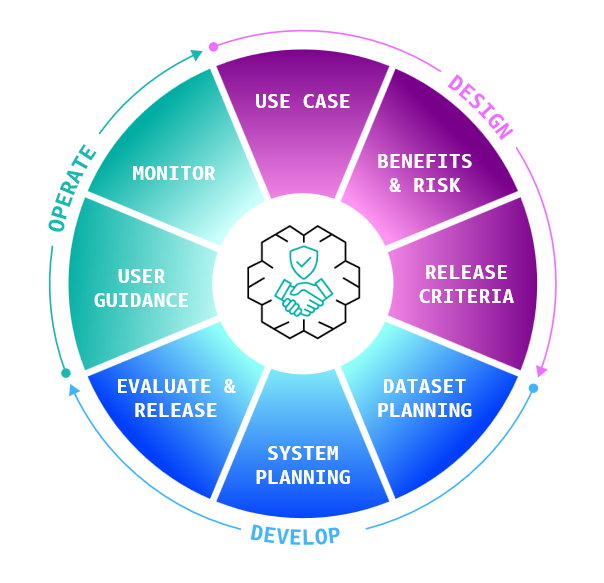
Announcing the AWS Well-Architected Responsible AI Lens Artificial Intelligence Today, we’re announcing the AWS Well-Architected Responsible AI Lens—a set of thoughtful questions and corresponding best practices that help builders address responsible AI concerns throughout development and operation.
Today, we’re announcing the AWS Well-Architected Responsible AI Lens—a set of thoughtful questions and corresponding best practices that help builders address responsible AI concerns throughout development and operation. Read More