

LLM-Pruning Collection: A JAX Based Repo For Structured And Unstructured LLM CompressionMarkTechPost Zlab Princeton researchers have released LLM-Pruning Collection, a JAX based repository that consolidates major pruning algorithms for large language models into a single, reproducible framework. It targets one concrete goal, make it easy to compare block level, layer level and weight level pruning methods under a consistent training and evaluation stack on both GPUs and
The post LLM-Pruning Collection: A JAX Based Repo For Structured And Unstructured LLM Compression appeared first on MarkTechPost.
Zlab Princeton researchers have released LLM-Pruning Collection, a JAX based repository that consolidates major pruning algorithms for large language models into a single, reproducible framework. It targets one concrete goal, make it easy to compare block level, layer level and weight level pruning methods under a consistent training and evaluation stack on both GPUs and
The post LLM-Pruning Collection: A JAX Based Repo For Structured And Unstructured LLM Compression appeared first on MarkTechPost. Read More
Prompt Engineering vs RAG for Editing ResumesTowards Data Science Running a code-free comparison in Azure
The post Prompt Engineering vs RAG for Editing Resumes appeared first on Towards Data Science.
Running a code-free comparison in Azure
The post Prompt Engineering vs RAG for Editing Resumes appeared first on Towards Data Science. Read More
How to Filter for Dates, Including or Excluding Future Dates, in Semantic ModelsTowards Data Science It is common to have either planning data or the previous year’s data displayed beyond today’s date. But future data can be confusing. How can I add a Slicer to show or hide future data? Let’s see how to do it.
The post How to Filter for Dates, Including or Excluding Future Dates, in Semantic Models appeared first on Towards Data Science.
It is common to have either planning data or the previous year’s data displayed beyond today’s date. But future data can be confusing. How can I add a Slicer to show or hide future data? Let’s see how to do it.
The post How to Filter for Dates, Including or Excluding Future Dates, in Semantic Models appeared first on Towards Data Science. Read More
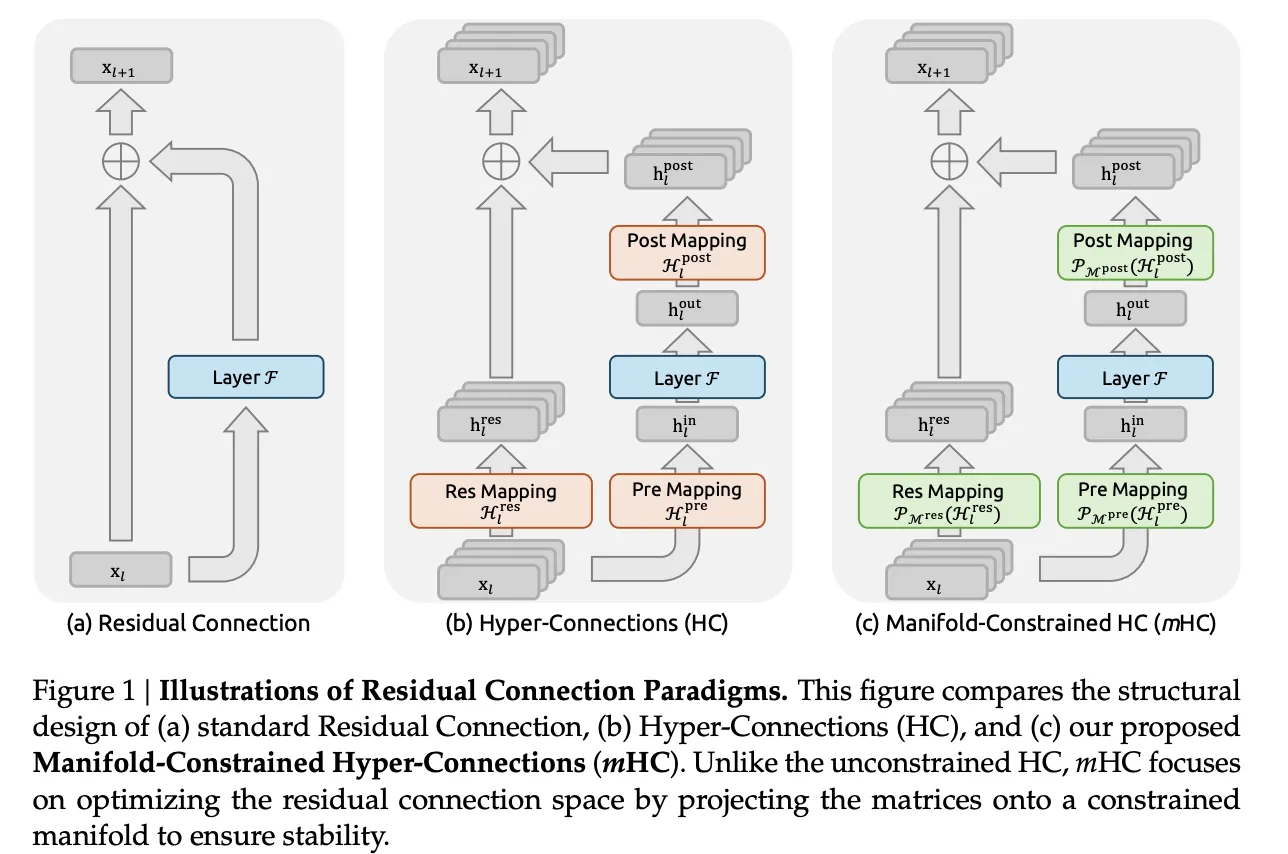
DeepSeek Researchers Apply a 1967 Matrix Normalization Algorithm to Fix Instability in Hyper ConnectionsMarkTechPost DeepSeek researchers are trying to solve a precise issue in large language model training. Residual connections made very deep networks trainable, hyper connections widened that residual stream, and training then became unstable at scale. The new method mHC, Manifold Constrained Hyper Connections, keeps the richer topology of hyper connections but locks the mixing behavior on
The post DeepSeek Researchers Apply a 1967 Matrix Normalization Algorithm to Fix Instability in Hyper Connections appeared first on MarkTechPost.
DeepSeek researchers are trying to solve a precise issue in large language model training. Residual connections made very deep networks trainable, hyper connections widened that residual stream, and training then became unstable at scale. The new method mHC, Manifold Constrained Hyper Connections, keeps the richer topology of hyper connections but locks the mixing behavior on
The post DeepSeek Researchers Apply a 1967 Matrix Normalization Algorithm to Fix Instability in Hyper Connections appeared first on MarkTechPost. Read More
How to Build a Production-Ready Multi-Agent Incident Response System Using OpenAI Swarm and Tool-Augmented AgentsMarkTechPost In this tutorial, we build an advanced yet practical multi-agent system using OpenAI Swarm that runs in Colab. We demonstrate how we can orchestrate specialized agents, such as a triage agent, an SRE agent, a communications agent, and a critic, to collaboratively handle a real-world production incident scenario. By structuring agent handoffs, integrating lightweight tools
The post How to Build a Production-Ready Multi-Agent Incident Response System Using OpenAI Swarm and Tool-Augmented Agents appeared first on MarkTechPost.
In this tutorial, we build an advanced yet practical multi-agent system using OpenAI Swarm that runs in Colab. We demonstrate how we can orchestrate specialized agents, such as a triage agent, an SRE agent, a communications agent, and a critic, to collaboratively handle a real-world production incident scenario. By structuring agent handoffs, integrating lightweight tools
The post How to Build a Production-Ready Multi-Agent Incident Response System Using OpenAI Swarm and Tool-Augmented Agents appeared first on MarkTechPost. Read More
Optimizing Data Transfer in AI/ML WorkloadsTowards Data Science A deep dive on data transfer bottlenecks, their identification, and their resolution with the help of NVIDIA Nsight™ Systems
The post Optimizing Data Transfer in AI/ML Workloads appeared first on Towards Data Science.
A deep dive on data transfer bottlenecks, their identification, and their resolution with the help of NVIDIA Nsight™ Systems
The post Optimizing Data Transfer in AI/ML Workloads appeared first on Towards Data Science. Read More
How to Keep MCPs Useful in Agentic PipelinesTowards Data Science Check the tools your LLM uses before replacing it with just a more powerful model
The post How to Keep MCPs Useful in Agentic Pipelines appeared first on Towards Data Science.
Check the tools your LLM uses before replacing it with just a more powerful model
The post How to Keep MCPs Useful in Agentic Pipelines appeared first on Towards Data Science. Read More
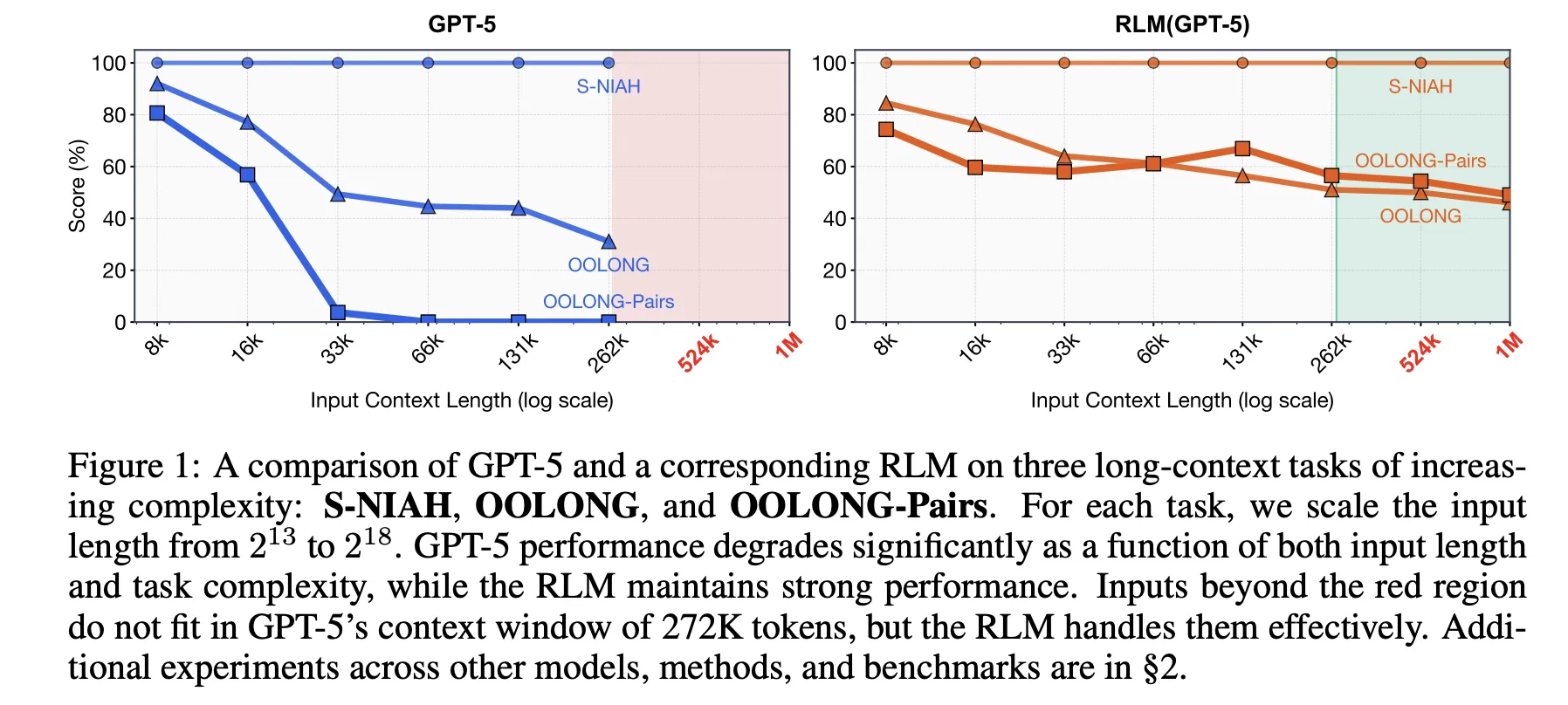
Recursive Language Models (RLMs): From MIT’s Blueprint to Prime Intellect’s RLMEnv for Long Horizon LLM AgentsMarkTechPost Recursive Language Models aim to break the usual trade off between context length, accuracy and cost in large language models. Instead of forcing a model to read a giant prompt in one pass, RLMs treat the prompt as an external environment and let the model decide how to inspect it with code, then recursively call
The post Recursive Language Models (RLMs): From MIT’s Blueprint to Prime Intellect’s RLMEnv for Long Horizon LLM Agents appeared first on MarkTechPost.
Recursive Language Models aim to break the usual trade off between context length, accuracy and cost in large language models. Instead of forcing a model to read a giant prompt in one pass, RLMs treat the prompt as an external environment and let the model decide how to inspect it with code, then recursively call
The post Recursive Language Models (RLMs): From MIT’s Blueprint to Prime Intellect’s RLMEnv for Long Horizon LLM Agents appeared first on MarkTechPost. Read More
A Coding Implementation to Build a Self-Testing Agentic AI System Using Strands to Red-Team Tool-Using Agents and Enforce Safety at RuntimeMarkTechPost In this tutorial, we build an advanced red-team evaluation harness using Strands Agents to stress-test a tool-using AI system against prompt-injection and tool-misuse attacks. We treat agent safety as a first-class engineering problem by orchestrating multiple agents that generate adversarial prompts, execute them against a guarded target agent, and judge the responses with structured evaluation
The post A Coding Implementation to Build a Self-Testing Agentic AI System Using Strands to Red-Team Tool-Using Agents and Enforce Safety at Runtime appeared first on MarkTechPost.
In this tutorial, we build an advanced red-team evaluation harness using Strands Agents to stress-test a tool-using AI system against prompt-injection and tool-misuse attacks. We treat agent safety as a first-class engineering problem by orchestrating multiple agents that generate adversarial prompts, execute them against a guarded target agent, and judge the responses with structured evaluation
The post A Coding Implementation to Build a Self-Testing Agentic AI System Using Strands to Red-Team Tool-Using Agents and Enforce Safety at Runtime appeared first on MarkTechPost. Read More
Drift Detection in Robust Machine Learning SystemsTowards Data Science A prerequisite for long-term success of machine learning systems
The post Drift Detection in Robust Machine Learning Systems appeared first on Towards Data Science.
A prerequisite for long-term success of machine learning systems
The post Drift Detection in Robust Machine Learning Systems appeared first on Towards Data Science. Read More