

Why the Sophistication of Your Prompt Correlates Almost Perfectly with the Sophistication of the Response, as Research by Anthropic FoundTowards Data Science How prompt engineering has evolved, examined scientifically; and implications for the future of conversational AI tools
The post Why the Sophistication of Your Prompt Correlates Almost Perfectly with the Sophistication of the Response, as Research by Anthropic Found appeared first on Towards Data Science.
How prompt engineering has evolved, examined scientifically; and implications for the future of conversational AI tools
The post Why the Sophistication of Your Prompt Correlates Almost Perfectly with the Sophistication of the Response, as Research by Anthropic Found appeared first on Towards Data Science. Read More
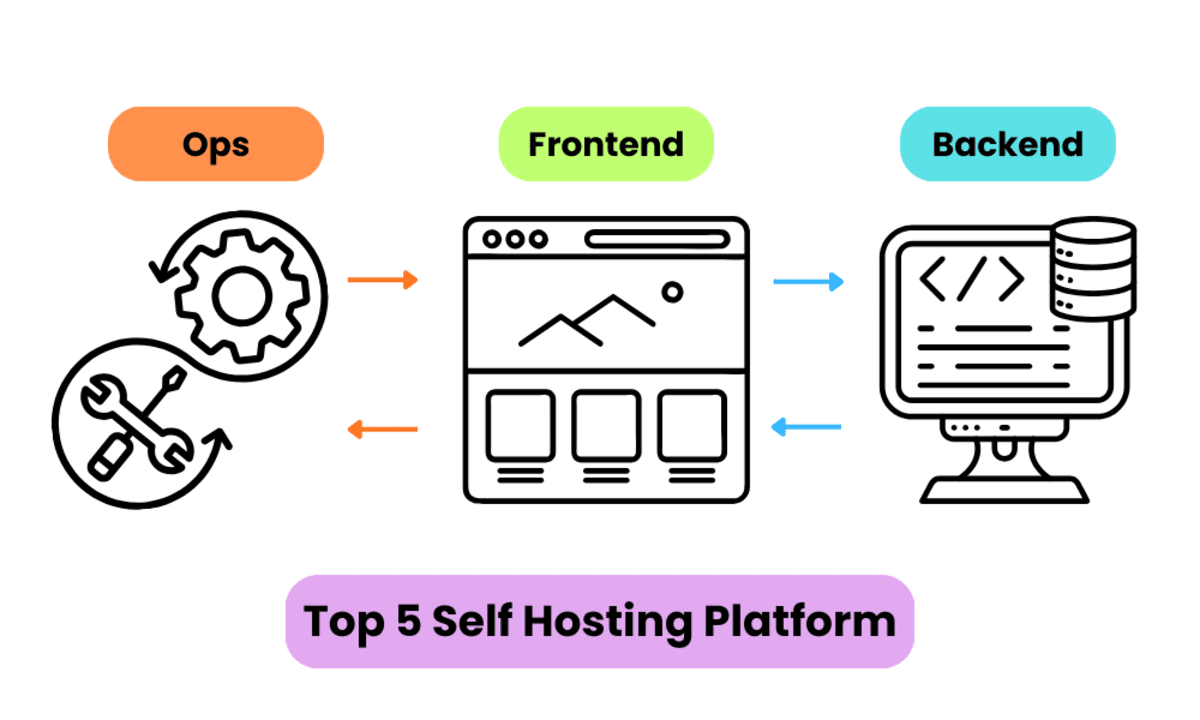
Top 5 Self Hosting Platform Alternative to Vercel, Heroku & NetlifyKDnuggets The best self hosting platforms that help developers deploy, scale, and turn their projects into production ready applications while avoiding the complexity of becoming a full time DevOps engineer.
The best self hosting platforms that help developers deploy, scale, and turn their projects into production ready applications while avoiding the complexity of becoming a full time DevOps engineer. Read More
From Transactions to Trends: Predict When a Customer Is About to Stop BuyingTowards Data Science Customer churn is usually a gradual process, not a sudden event. In this post, we analyze monthly transaction trends and convert regression slopes into degrees to clearly identify declining purchase behavior. A small negative slope today can prevent a big revenue loss tomorrow.
The post From Transactions to Trends: Predict When a Customer Is About to Stop Buying appeared first on Towards Data Science.
Customer churn is usually a gradual process, not a sudden event. In this post, we analyze monthly transaction trends and convert regression slopes into degrees to clearly identify declining purchase behavior. A small negative slope today can prevent a big revenue loss tomorrow.
The post From Transactions to Trends: Predict When a Customer Is About to Stop Buying appeared first on Towards Data Science. Read More
Defensive AI and how machine learning strengthens cyber defenseAI News Cyber threats don’t follow predictable patterns, forcing security teams to rethink how protection works at scale. Defensive AI is emerging as a practical response, combining machine learning with human oversight. Cybersecurity rarely fails because teams lack tools. It fails because threats move faster than detection can keep pace. As digital systems expand, attackers adapt in
The post Defensive AI and how machine learning strengthens cyber defense appeared first on AI News.
Cyber threats don’t follow predictable patterns, forcing security teams to rethink how protection works at scale. Defensive AI is emerging as a practical response, combining machine learning with human oversight. Cybersecurity rarely fails because teams lack tools. It fails because threats move faster than detection can keep pace. As digital systems expand, attackers adapt in
The post Defensive AI and how machine learning strengthens cyber defense appeared first on AI News. Read More
Prometheus Mind: Retrofitting Memory to Frozen Language Modelscs.AI updates on arXiv.org arXiv:2601.15324v1 Announce Type: new
Abstract: Adding memory to pretrained language models typically requires architectural changes or weight modification. We present Prometheus Mind, which retrofits memory to a frozen Qwen3-4B using 11 modular adapters (530MB, 7% overhead) — fully reversible by removing the adapters. Building this system required solving four problems: (1) Extraction — we develop Contrastive Direction Discovery (CDD), which finds semantic directions via minimal pairs without labeled data. (2) Training — end-to-end optimization collapses; stage-wise training of each adapter on simple proxy tasks succeeds. (3) Injection — learned encoders fail to generalize; we find that lm_head.weight rows already provide the mapping we need, requiring no training. (4) Hidden state collapse — transformers make “wife” and “brother” 0.98+ similar; we train projections to recover distinction (0.98 $rightarrow$ 0.09). On PrometheusExtract-132 (132 cases), the system achieves 94.4% retrieval on clean inputs (n=54, 95% CI: [84.9%, 98.1%]), degrading to 19.4% on informal inputs with ellipsis, filler words, or implicit subjects (n=36). The primary bottleneck is relation classification (47.3% accuracy), responsible for most extraction errors.
arXiv:2601.15324v1 Announce Type: new
Abstract: Adding memory to pretrained language models typically requires architectural changes or weight modification. We present Prometheus Mind, which retrofits memory to a frozen Qwen3-4B using 11 modular adapters (530MB, 7% overhead) — fully reversible by removing the adapters. Building this system required solving four problems: (1) Extraction — we develop Contrastive Direction Discovery (CDD), which finds semantic directions via minimal pairs without labeled data. (2) Training — end-to-end optimization collapses; stage-wise training of each adapter on simple proxy tasks succeeds. (3) Injection — learned encoders fail to generalize; we find that lm_head.weight rows already provide the mapping we need, requiring no training. (4) Hidden state collapse — transformers make “wife” and “brother” 0.98+ similar; we train projections to recover distinction (0.98 $rightarrow$ 0.09). On PrometheusExtract-132 (132 cases), the system achieves 94.4% retrieval on clean inputs (n=54, 95% CI: [84.9%, 98.1%]), degrading to 19.4% on informal inputs with ellipsis, filler words, or implicit subjects (n=36). The primary bottleneck is relation classification (47.3% accuracy), responsible for most extraction errors. Read More
Integrating Knowledge Distillation Methods: A Sequential Multi-Stage Frameworkcs.AI updates on arXiv.org arXiv:2601.15657v1 Announce Type: cross
Abstract: Knowledge distillation (KD) transfers knowledge from large teacher models to compact student models, enabling efficient deployment on resource constrained devices. While diverse KD methods, including response based, feature based, and relation based approaches, capture different aspects of teacher knowledge, integrating multiple methods or knowledge sources is promising but often hampered by complex implementation, inflexible combinations, and catastrophic forgetting, which limits practical effectiveness.
This work proposes SMSKD (Sequential Multi Stage Knowledge Distillation), a flexible framework that sequentially integrates heterogeneous KD methods. At each stage, the student is trained with a specific distillation method, while a frozen reference model from the previous stage anchors learned knowledge to mitigate forgetting. In addition, we introduce an adaptive weighting mechanism based on the teacher true class probability (TCP) that dynamically adjusts the reference loss per sample to balance knowledge retention and integration.
By design, SMSKD supports arbitrary method combinations and stage counts with negligible computational overhead. Extensive experiments show that SMSKD consistently improves student accuracy across diverse teacher student architectures and method combinations, outperforming existing baselines. Ablation studies confirm that stage wise distillation and reference model supervision are primary contributors to performance gains, with TCP based adaptive weighting providing complementary benefits. Overall, SMSKD is a practical and resource efficient solution for integrating heterogeneous KD methods.
arXiv:2601.15657v1 Announce Type: cross
Abstract: Knowledge distillation (KD) transfers knowledge from large teacher models to compact student models, enabling efficient deployment on resource constrained devices. While diverse KD methods, including response based, feature based, and relation based approaches, capture different aspects of teacher knowledge, integrating multiple methods or knowledge sources is promising but often hampered by complex implementation, inflexible combinations, and catastrophic forgetting, which limits practical effectiveness.
This work proposes SMSKD (Sequential Multi Stage Knowledge Distillation), a flexible framework that sequentially integrates heterogeneous KD methods. At each stage, the student is trained with a specific distillation method, while a frozen reference model from the previous stage anchors learned knowledge to mitigate forgetting. In addition, we introduce an adaptive weighting mechanism based on the teacher true class probability (TCP) that dynamically adjusts the reference loss per sample to balance knowledge retention and integration.
By design, SMSKD supports arbitrary method combinations and stage counts with negligible computational overhead. Extensive experiments show that SMSKD consistently improves student accuracy across diverse teacher student architectures and method combinations, outperforming existing baselines. Ablation studies confirm that stage wise distillation and reference model supervision are primary contributors to performance gains, with TCP based adaptive weighting providing complementary benefits. Overall, SMSKD is a practical and resource efficient solution for integrating heterogeneous KD methods. Read More
FlexLLM: Composable HLS Library for Flexible Hybrid LLM Accelerator Designcs.AI updates on arXiv.org arXiv:2601.15710v1 Announce Type: cross
Abstract: We present FlexLLM, a composable High-Level Synthesis (HLS) library for rapid development of domain-specific LLM accelerators. FlexLLM exposes key architectural degrees of freedom for stage-customized inference, enabling hybrid designs that tailor temporal reuse and spatial dataflow differently for prefill and decode, and provides a comprehensive quantization suite to support accurate low-bit deployment. Using FlexLLM, we build a complete inference system for the Llama-3.2 1B model in under two months with only 1K lines of code. The system includes: (1) a stage-customized accelerator with hardware-efficient quantization (12.68 WikiText-2 PPL) surpassing SpinQuant baseline, and (2) a Hierarchical Memory Transformer (HMT) plug-in for efficient long-context processing. On the AMD U280 FPGA at 16nm, the accelerator achieves 1.29$times$ end-to-end speedup, 1.64$times$ higher decode throughput, and 3.14$times$ better energy efficiency than an NVIDIA A100 GPU (7nm) running BF16 inference; projected results on the V80 FPGA at 7nm reach 4.71$times$, 6.55$times$, and 4.13$times$, respectively. In long-context scenarios, integrating the HMT plug-in reduces prefill latency by 23.23$times$ and extends the context window by 64$times$, delivering 1.10$times$/4.86$times$ lower end-to-end latency and 5.21$times$/6.27$times$ higher energy efficiency on the U280/V80 compared to the A100 baseline. FlexLLM thus bridges algorithmic innovation in LLM inference and high-performance accelerators with minimal manual effort.
arXiv:2601.15710v1 Announce Type: cross
Abstract: We present FlexLLM, a composable High-Level Synthesis (HLS) library for rapid development of domain-specific LLM accelerators. FlexLLM exposes key architectural degrees of freedom for stage-customized inference, enabling hybrid designs that tailor temporal reuse and spatial dataflow differently for prefill and decode, and provides a comprehensive quantization suite to support accurate low-bit deployment. Using FlexLLM, we build a complete inference system for the Llama-3.2 1B model in under two months with only 1K lines of code. The system includes: (1) a stage-customized accelerator with hardware-efficient quantization (12.68 WikiText-2 PPL) surpassing SpinQuant baseline, and (2) a Hierarchical Memory Transformer (HMT) plug-in for efficient long-context processing. On the AMD U280 FPGA at 16nm, the accelerator achieves 1.29$times$ end-to-end speedup, 1.64$times$ higher decode throughput, and 3.14$times$ better energy efficiency than an NVIDIA A100 GPU (7nm) running BF16 inference; projected results on the V80 FPGA at 7nm reach 4.71$times$, 6.55$times$, and 4.13$times$, respectively. In long-context scenarios, integrating the HMT plug-in reduces prefill latency by 23.23$times$ and extends the context window by 64$times$, delivering 1.10$times$/4.86$times$ lower end-to-end latency and 5.21$times$/6.27$times$ higher energy efficiency on the U280/V80 compared to the A100 baseline. FlexLLM thus bridges algorithmic innovation in LLM inference and high-performance accelerators with minimal manual effort. Read More
PromptHelper: A Prompt Recommender System for Encouraging Creativity in AI Chatbot Interactionscs.AI updates on arXiv.org arXiv:2601.15575v1 Announce Type: cross
Abstract: Prompting is central to interaction with AI systems, yet many users struggle to explore alternative directions, articulate creative intent, or understand how variations in prompts shape model outputs. We introduce prompt recommender systems (PRS) as an interaction approach that supports exploration, suggesting contextually relevant follow-up prompts. We present PromptHelper, a PRS prototype integrated into an AI chatbot that surfaces semantically diverse prompt suggestions while users work on real writing tasks. We evaluate PromptHelper in a 2×2 fully within-subjects study (N=32) across creative and academic writing tasks. Results show that PromptHelper significantly increases users’ perceived exploration and expressiveness without increasing cognitive workload. Qualitative findings illustrate how prompt recommendations help users branch into new directions, overcome uncertainty about what to ask next, and better articulate their intent. We discuss implications for designing AI interfaces that scaffold exploratory interaction while preserving user agency, and release open-source resources to support research on prompt recommendation.
arXiv:2601.15575v1 Announce Type: cross
Abstract: Prompting is central to interaction with AI systems, yet many users struggle to explore alternative directions, articulate creative intent, or understand how variations in prompts shape model outputs. We introduce prompt recommender systems (PRS) as an interaction approach that supports exploration, suggesting contextually relevant follow-up prompts. We present PromptHelper, a PRS prototype integrated into an AI chatbot that surfaces semantically diverse prompt suggestions while users work on real writing tasks. We evaluate PromptHelper in a 2×2 fully within-subjects study (N=32) across creative and academic writing tasks. Results show that PromptHelper significantly increases users’ perceived exploration and expressiveness without increasing cognitive workload. Qualitative findings illustrate how prompt recommendations help users branch into new directions, overcome uncertainty about what to ask next, and better articulate their intent. We discuss implications for designing AI interfaces that scaffold exploratory interaction while preserving user agency, and release open-source resources to support research on prompt recommendation. Read More
OpenVision 3: A Family of Unified Visual Encoder for Both Understanding and Generationcs.AI updates on arXiv.org arXiv:2601.15369v1 Announce Type: cross
Abstract: This paper presents a family of advanced vision encoder, named OpenVision 3, that learns a single, unified visual representation that can serve both image understanding and image generation. Our core architecture is simple: we feed VAE-compressed image latents to a ViT encoder and train its output to support two complementary roles. First, the encoder output is passed to the ViT-VAE decoder to reconstruct the original image, encouraging the representation to capture generative structure. Second, the same representation is optimized with contrastive learning and image-captioning objectives, strengthening semantic features. By jointly optimizing reconstruction- and semantics-driven signals in a shared latent space, the encoder learns representations that synergize and generalize well across both regimes. We validate this unified design through extensive downstream evaluations with the encoder frozen. For multimodal understanding, we plug the encoder into the LLaVA-1.5 framework: it performs comparably with a standard CLIP vision encoder (e.g., 62.4 vs 62.2 on SeedBench, and 83.7 vs 82.9 on POPE). For generation, we test it under the RAE framework: ours substantially surpasses the standard CLIP-based encoder (e.g., gFID: 1.89 vs 2.54 on ImageNet). We hope this work can spur future research on unified modeling.
arXiv:2601.15369v1 Announce Type: cross
Abstract: This paper presents a family of advanced vision encoder, named OpenVision 3, that learns a single, unified visual representation that can serve both image understanding and image generation. Our core architecture is simple: we feed VAE-compressed image latents to a ViT encoder and train its output to support two complementary roles. First, the encoder output is passed to the ViT-VAE decoder to reconstruct the original image, encouraging the representation to capture generative structure. Second, the same representation is optimized with contrastive learning and image-captioning objectives, strengthening semantic features. By jointly optimizing reconstruction- and semantics-driven signals in a shared latent space, the encoder learns representations that synergize and generalize well across both regimes. We validate this unified design through extensive downstream evaluations with the encoder frozen. For multimodal understanding, we plug the encoder into the LLaVA-1.5 framework: it performs comparably with a standard CLIP vision encoder (e.g., 62.4 vs 62.2 on SeedBench, and 83.7 vs 82.9 on POPE). For generation, we test it under the RAE framework: ours substantially surpasses the standard CLIP-based encoder (e.g., gFID: 1.89 vs 2.54 on ImageNet). We hope this work can spur future research on unified modeling. Read More
Chunking, Retrieval, and Re-ranking: An Empirical Evaluation of RAG Architectures for Policy Document Question Answeringcs.AI updates on arXiv.org arXiv:2601.15457v1 Announce Type: cross
Abstract: The integration of Large Language Models (LLMs) into the public health policy sector offers a transformative approach to navigating the vast repositories of regulatory guidance maintained by agencies such as the Centers for Disease Control and Prevention (CDC). However, the propensity for LLMs to generate hallucinations, defined as plausible but factually incorrect assertions, presents a critical barrier to the adoption of these technologies in high-stakes environments where information integrity is non-negotiable. This empirical evaluation explores the effectiveness of Retrieval-Augmented Generation (RAG) architectures in mitigating these risks by grounding generative outputs in authoritative document context. Specifically, this study compares a baseline Vanilla LLM against Basic RAG and Advanced RAG pipelines utilizing cross-encoder re-ranking. The experimental framework employs a Mistral-7B-Instruct-v0.2 model and an all-MiniLM-L6-v2 embedding model to process a corpus of official CDC policy analytical frameworks and guidance documents. The analysis measures the impact of two distinct chunking strategies, recursive character-based and token-based semantic splitting, on system accuracy, measured through faithfulness and relevance scores across a curated set of complex policy scenarios. Quantitative findings indicate that while Basic RAG architectures provide a substantial improvement in faithfulness (0.621) over Vanilla baselines (0.347), the Advanced RAG configuration achieves a superior faithfulness average of 0.797. These results demonstrate that two-stage retrieval mechanisms are essential for achieving the precision required for domain-specific policy question answering, though structural constraints in document segmentation remain a significant bottleneck for multi-step reasoning tasks.
arXiv:2601.15457v1 Announce Type: cross
Abstract: The integration of Large Language Models (LLMs) into the public health policy sector offers a transformative approach to navigating the vast repositories of regulatory guidance maintained by agencies such as the Centers for Disease Control and Prevention (CDC). However, the propensity for LLMs to generate hallucinations, defined as plausible but factually incorrect assertions, presents a critical barrier to the adoption of these technologies in high-stakes environments where information integrity is non-negotiable. This empirical evaluation explores the effectiveness of Retrieval-Augmented Generation (RAG) architectures in mitigating these risks by grounding generative outputs in authoritative document context. Specifically, this study compares a baseline Vanilla LLM against Basic RAG and Advanced RAG pipelines utilizing cross-encoder re-ranking. The experimental framework employs a Mistral-7B-Instruct-v0.2 model and an all-MiniLM-L6-v2 embedding model to process a corpus of official CDC policy analytical frameworks and guidance documents. The analysis measures the impact of two distinct chunking strategies, recursive character-based and token-based semantic splitting, on system accuracy, measured through faithfulness and relevance scores across a curated set of complex policy scenarios. Quantitative findings indicate that while Basic RAG architectures provide a substantial improvement in faithfulness (0.621) over Vanilla baselines (0.347), the Advanced RAG configuration achieves a superior faithfulness average of 0.797. These results demonstrate that two-stage retrieval mechanisms are essential for achieving the precision required for domain-specific policy question answering, though structural constraints in document segmentation remain a significant bottleneck for multi-step reasoning tasks. Read More