
AI Use Case Inventories:
8 Key Components for Strong AI Tracking
The foundation of every AI governance program starts with knowing what you have
When we dove into AI governance, we underestimated just how crucial tracking AI deployments would be. Sure, it’s easy to get lost in the thrill of shiny new tools, but as anyone who’s ever tried juggling too many platforms at once will tell you: complexity spirals fast. An AI Inventory is an essential tool that can help keep chaos at bay.
Without a comprehensive inventory, you’re essentially managing AI governance blindfolded. That’s neither effective nor enjoyable.
Start documenting your AI systems now. Don’t wait for a compliance audit or operational crisis to force your hand. Learning from mistakes isn’t illegal — but getting caught unprepared is expensive.
An AI Inventory Is Foundational to Governance
Your inventory isn’t a static list — it actively guides strategic decision-making and risk mitigation. These are the four objectives it serves:
Transparency
Clearly document every AI system: purposes, data usage, stakeholders, and associated risks. This ensures accountability and trust across the organization.
Compliance
Identify applicable regulatory requirements and gaps — GDPR Art. 22, NIST AI RMF, EU AI Act — before they escalate into real headaches.
Risk Management
Proactively mitigate security vulnerabilities, ethical concerns, and bias-related issues before they cause tangible harm or regulatory scrutiny.
Strategic Alignment
Ensure each AI deployment directly contributes to strategic business objectives, preventing redundant or misaligned AI initiatives.
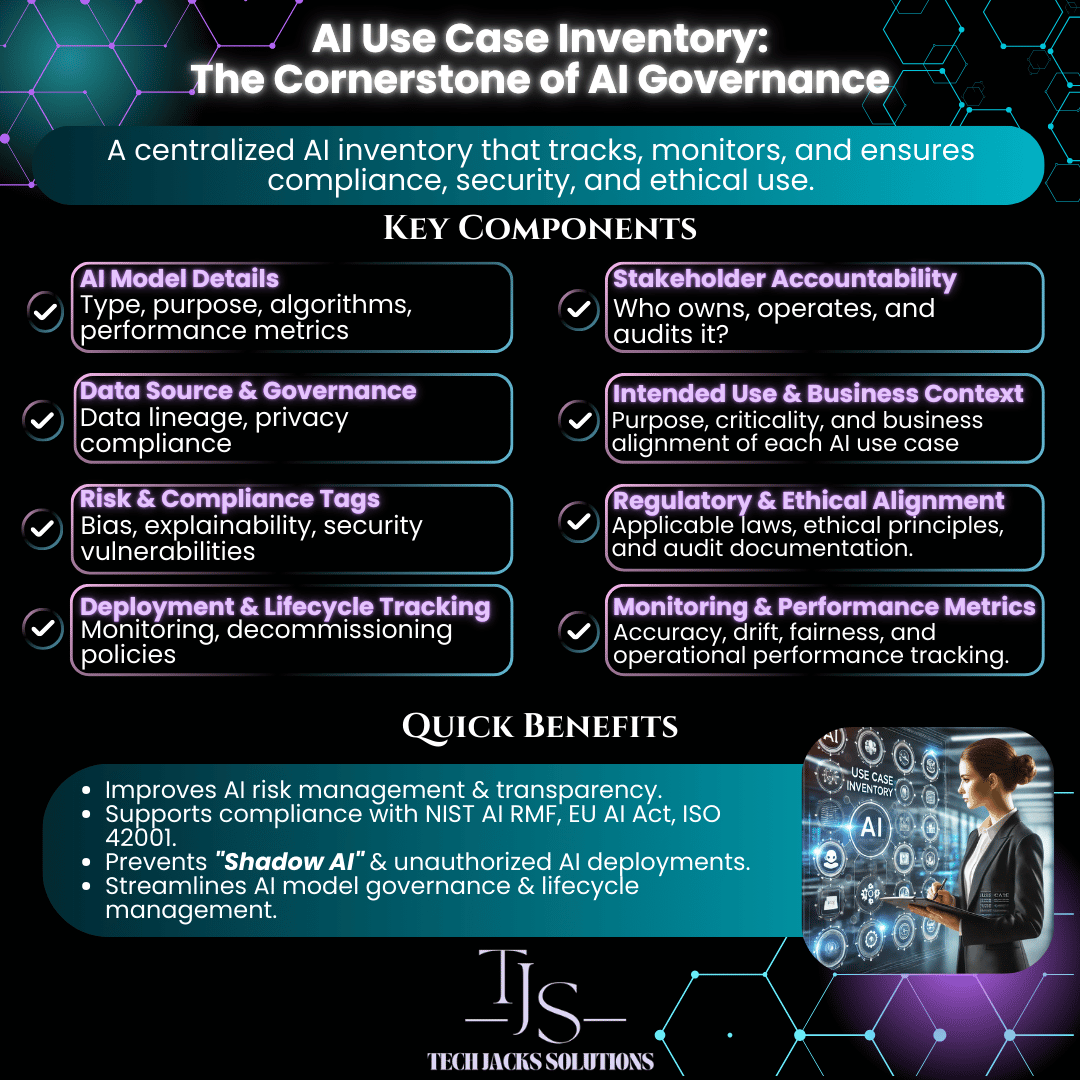
What Every AI Inventory Must Include
These are the 8 non-negotiable components. Missing any of them creates blind spots that regulators, auditors, and operational incidents will find before you do.
How Complete Is Your AI Inventory?
Check off each component you’ve implemented. Be honest — partial implementation counts as unchecked.
How to Build Your Inventory
Five steps from zero to a functioning AI inventory. Start with Step 1 — don’t try to build the perfect system on day one.
Catalog All AI Use Cases
Document every AI tool with clarity: intended business objectives, datasets involved, key stakeholders responsible, and specific intended outcomes. Cast the net wide — include shadow AI tools employees adopted without IT approval.
Classify by Risk & Impact
Rate each use case on associated risks, data sensitivity, regulatory compliance requirements, and overall strategic impact. Not all AI is equal — a spell checker and a credit decisioning model need very different governance intensity.
Link to Governance Objectives
Align every AI initiative explicitly to your broader organizational strategic goals and governance principles. If a use case doesn’t align clearly, seriously reconsider its implementation or continuation.
Establish Review Cadence
Create and empower a cross-functional governance committee to regularly review, validate, refine, and approve AI use cases. Quarterly at minimum — monthly if your organization is rapidly adopting new AI tools.
Standardize Documentation
Standardize how AI use cases are documented, including mandatory information: data handling practices, model transparency, and ethical implications. Consistency streamlines reviews and audits.
Keeping Your Inventory Current
An inventory is only useful if it’s accurate. AI evolves fast — your documentation must keep pace.