

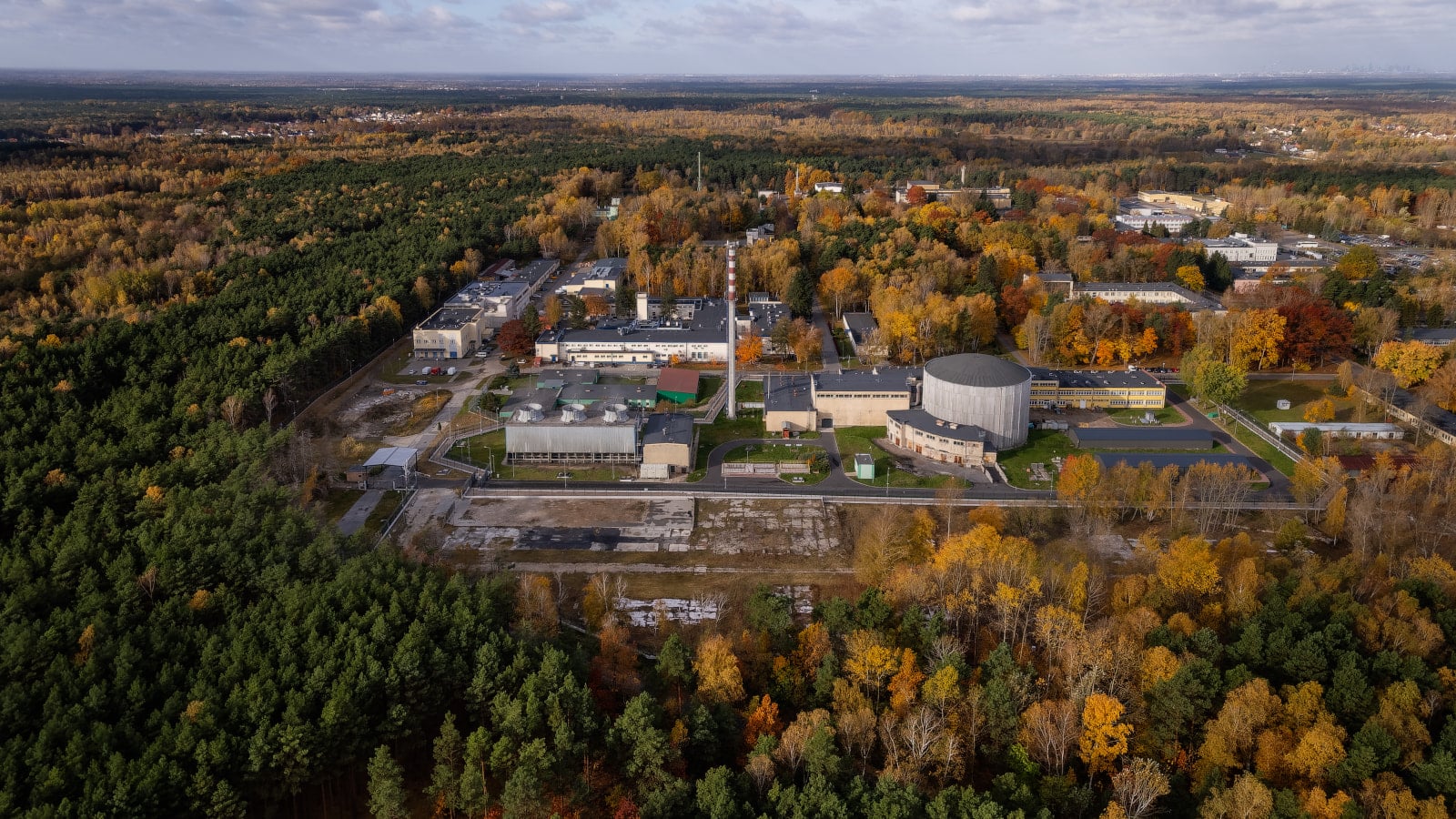
Poland’s National Centre for Nuclear Research (NCBJ) detected and blocked a cyberattack against its IT infrastructure in March 2026, with Polish authorities identifying indicators pointing to Iran as the likely actor, though investigators caution the evidence may represent false flags. The incident is the latest in a sustained targeting pattern against Polish critical infrastructure, following APT44/Sandworm’s attack on the Polish power grid in January 2026 and 31 confirmed Russian cyber incidents against Poland between mid-2025 and early 2026. No operational impact occurred at the MARIA reactor, but the targeting of nuclear research infrastructure in a NATO member state carries strategic significance beyond the immediate incident.
The NCBJ incident reflects a pattern of escalating pressure against Polish critical infrastructure from multiple nation-state actors operating on overlapping but likely independent timelines. Within roughly two months, Poland has absorbed a confirmed Russian APT44/Sandworm attack against distributed energy resources and CHP facilities (January 2026), an ICCT-documented campaign of 31 Russian cyber incidents spanning mid-2025 to early 2026, and now a cyber intrusion attempt against its primary nuclear research institute with tentative Iranian attribution. Whether these campaigns are coordinated or coincidental, the operational tempo suggests Polish government and infrastructure operators face a persistent multi-front threat environment that strains detection and response resources.
The Iran attribution warrants careful handling. Polish authorities identified indicators suggesting Iranian involvement but explicitly flagged the possibility of false flags, a technically sound caution. False-flag operations in critical infrastructure targeting are well-documented; attribution based on tooling, infrastructure, or TTPs alone carries meaningful error risk. Security teams should not treat Iranian attribution as confirmed. The more operationally useful takeaway is that the attack profile, targeting a nuclear research institute in a NATO state that has publicly declared non-involvement in Middle East conflicts, fits a pattern of coercive signaling regardless of the actor behind it. The specific TTPs used were not disclosed publicly.
The NCBJ’s response demonstrates the value of layered detection over perimeter-only defense. The organization’s statement credits early threat detection procedures and rapid IT response for containing the incident before system integrity was compromised. The MARIA reactor’s continued full-power operation confirms that IT/OT segmentation or procedural controls prevented any spillover to operational technology systems. This is the intended outcome of defense-in-depth architecture for critical infrastructure, but it does not indicate the threat has passed. NCBJ has placed internal security teams on high alert, suggesting they assess continued targeting as likely.
A significant gap in the available reporting is the absence of specific technical indicators: no CVEs, no malware families, no network IOCs, and no TTPs were disclosed. This limits direct defensive application for security teams. The investigation is active, and disclosure norms for nuclear facilities typically favor minimal technical detail for operational security reasons. Teams monitoring this threat should watch for subsequent reporting from CERT Polska, CISA advisories referencing Iranian threat actors targeting European critical infrastructure, and any MITRE ATT&CK-mapped activity clusters tied to Iranian state-sponsored groups with infrastructure targeting history (notably APT33/Refined Kitten, APT34/OilRig, or Charming Kitten, though no specific group has been named in connection with this incident).
For enterprise security teams, particularly those in the energy, utilities, research, and government sectors, the NCBJ incident reinforces a threat model where nuclear and scientific research organizations are valid targets for nation-state coercion, intelligence collection, and disruptive signaling. The combination of Russian and potentially Iranian activity against a single NATO member within a compressed timeframe is a meaningful signal for allied-nation infrastructure operators to assess their own exposure, validate their detection coverage against known state-sponsored TTPs, and review IT/OT boundary controls.
- Takeaway 1: Poland faces confirmed multi-actor nation-state pressure, APT44/Sandworm hit the energy grid in January 2026, and a separate actor (possibly Iran) targeted NCBJ in March 2026. Security teams in NATO member states should model simultaneous, independent threat actor campaigns rather than single-actor scenarios.
- Takeaway 2: Iranian attribution is unconfirmed and investigators have flagged false-flag indicators. Do not anchor detection or response strategy to a single attributed actor. Focus on TTPs and targeting patterns rather than actor identity until attribution is solidified by authoritative sources.
- Takeaway 3: NCBJ’s successful containment demonstrates that early detection procedures and IT/OT segmentation can prevent operational impact even when an attack reaches internal systems. Review and test your own IT/OT boundary controls and detection tripwires for critical operational systems.
- Takeaway 4: No technical IOCs have been publicly released. Monitor CERT Polska, CISA, and MITRE ATT&CK updates for indicators tied to Iranian state-sponsored groups with critical infrastructure targeting history, and treat the absence of IOCs as a gap to flag, not a signal of low risk.
- Takeaway 5: Nuclear, scientific research, and energy sector organizations should treat this incident as a targeting signal. Validate detection coverage against ATT&CK techniques associated with initial access and reconnaissance against internet-facing infrastructure, and confirm escalation paths to national CERTs are current.
