

The quiet work behind Citi’s 4,000-person internal AI rolloutAI News For many large companies, artificial intelligence still lives in side projects. Small teams test tools, run pilots, and present results that struggle to spread beyond a few departments. Citi has taken a different path, where instead of keeping AI limited to specialists, the bank has spent the past two years pushing the technology into daily
The post The quiet work behind Citi’s 4,000-person internal AI rollout appeared first on AI News.
For many large companies, artificial intelligence still lives in side projects. Small teams test tools, run pilots, and present results that struggle to spread beyond a few departments. Citi has taken a different path, where instead of keeping AI limited to specialists, the bank has spent the past two years pushing the technology into daily
The post The quiet work behind Citi’s 4,000-person internal AI rollout appeared first on AI News. Read More
From Prompts to Pavement: LMMs-based Agentic Behavior-Tree Generation Framework for Autonomous Vehiclescs.AI updates on arXiv.org arXiv:2601.12358v1 Announce Type: cross
Abstract: Autonomous vehicles (AVs) require adaptive behavior planners to navigate unpredictable, real-world environments safely. Traditional behavior trees (BTs) offer structured decision logic but are inherently static and demand labor-intensive manual tuning, limiting their applicability at SAE Level 5 autonomy. This paper presents an agentic framework that leverages large language models (LLMs) and multi-modal vision models (LVMs) to generate and adapt BTs on the fly. A specialized Descriptor agent applies chain-of-symbols prompting to assess scene criticality, a Planner agent constructs high-level sub-goals via in-context learning, and a Generator agent synthesizes executable BT sub-trees in XML format. Integrated into a CARLA+Nav2 simulation, our system triggers only upon baseline BT failure, demonstrating successful navigation around unexpected obstacles (e.g., street blockage) with no human intervention. Compared to a static BT baseline, this approach is a proof-of-concept that extends to diverse driving scenarios.
arXiv:2601.12358v1 Announce Type: cross
Abstract: Autonomous vehicles (AVs) require adaptive behavior planners to navigate unpredictable, real-world environments safely. Traditional behavior trees (BTs) offer structured decision logic but are inherently static and demand labor-intensive manual tuning, limiting their applicability at SAE Level 5 autonomy. This paper presents an agentic framework that leverages large language models (LLMs) and multi-modal vision models (LVMs) to generate and adapt BTs on the fly. A specialized Descriptor agent applies chain-of-symbols prompting to assess scene criticality, a Planner agent constructs high-level sub-goals via in-context learning, and a Generator agent synthesizes executable BT sub-trees in XML format. Integrated into a CARLA+Nav2 simulation, our system triggers only upon baseline BT failure, demonstrating successful navigation around unexpected obstacles (e.g., street blockage) with no human intervention. Compared to a static BT baseline, this approach is a proof-of-concept that extends to diverse driving scenarios. Read More
We Tuned 4 Classifiers on the Same Dataset: None Actually ImprovedKDnuggets We tuned four classifiers on student performance data with proper nested cross-validation and statistical testing. The result? Tuning changed nothing.
We tuned four classifiers on student performance data with proper nested cross-validation and statistical testing. The result? Tuning changed nothing. Read More
ServiceNow powers actionable enterprise AI with OpenAIOpenAI News ServiceNow expands access to OpenAI frontier models to power AI-driven enterprise workflows, summarization, search, and voice across the ServiceNow Platform.
ServiceNow expands access to OpenAI frontier models to power AI-driven enterprise workflows, summarization, search, and voice across the ServiceNow Platform. Read More
You Probably Don’t Need a Vector Database for Your RAG — YetTowards Data Science Numpy or SciKit-Learn might meet all your retrieval needs
The post You Probably Don’t Need a Vector Database for Your RAG — Yet appeared first on Towards Data Science.
Numpy or SciKit-Learn might meet all your retrieval needs
The post You Probably Don’t Need a Vector Database for Your RAG — Yet appeared first on Towards Data Science. Read More
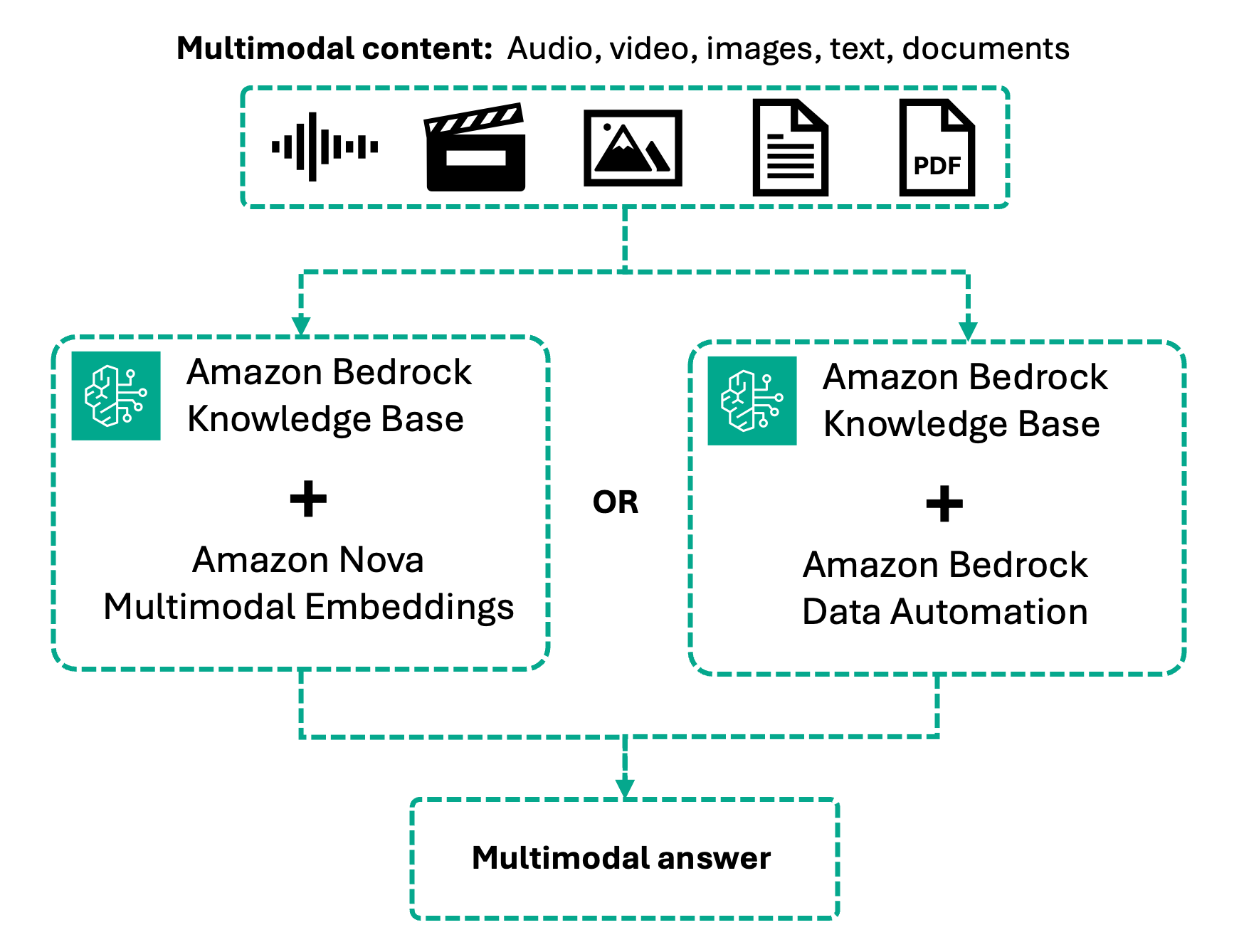
Introducing multimodal retrieval for Amazon Bedrock Knowledge BasesArtificial Intelligence In this post, we’ll guide you through building multimodal RAG applications. You’ll learn how multimodal knowledge bases work, how to choose the right processing strategy based on your content type, and how to configure and implement multimodal retrieval using both the console and code examples.
In this post, we’ll guide you through building multimodal RAG applications. You’ll learn how multimodal knowledge bases work, how to choose the right processing strategy based on your content type, and how to configure and implement multimodal retrieval using both the console and code examples. Read More
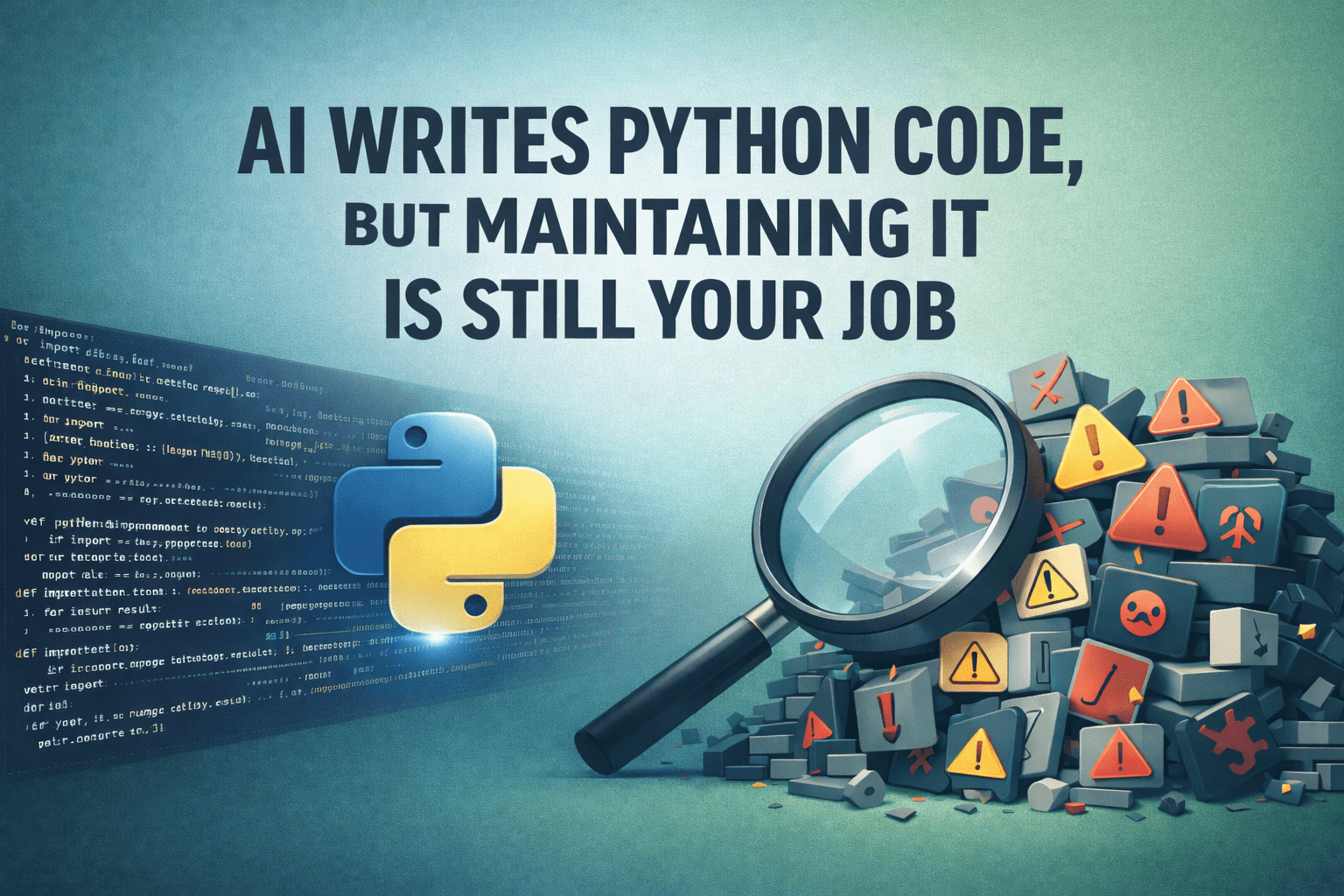
AI Writes Python Code, But Maintaining It Is Still Your JobKDnuggets AI can whip up Python code in no time. The challenge, however, is keeping the code clean, readable, and maintainable.
AI can whip up Python code in no time. The challenge, however, is keeping the code clean, readable, and maintainable. Read More
How to Perform Large Code Refactors in CursorTowards Data Science Learn how to perform code refactoring with LLMs
The post How to Perform Large Code Refactors in Cursor appeared first on Towards Data Science.
Learn how to perform code refactoring with LLMs
The post How to Perform Large Code Refactors in Cursor appeared first on Towards Data Science. Read More
Unbreakable? Researchers warn quantum computers have serious security flawsArtificial Intelligence News — ScienceDaily Quantum computers could revolutionize everything from drug discovery to business analytics—but their incredible power also makes them surprisingly vulnerable. New research from Penn State warns that today’s quantum machines are not just futuristic tools, but potential gold mines for hackers. The study reveals that weaknesses can exist not only in software, but deep within the physical hardware itself, where valuable algorithms and sensitive data may be exposed.
Quantum computers could revolutionize everything from drug discovery to business analytics—but their incredible power also makes them surprisingly vulnerable. New research from Penn State warns that today’s quantum machines are not just futuristic tools, but potential gold mines for hackers. The study reveals that weaknesses can exist not only in software, but deep within the physical hardware itself, where valuable algorithms and sensitive data may be exposed. Read More
3 Hyperparameter Tuning Techniques That Go Beyond Grid SearchKDnuggets Uncover how advanced hyperparameter search methods in machine learning work, and why they can find optimal model configurations faster.
Uncover how advanced hyperparameter search methods in machine learning work, and why they can find optimal model configurations faster. Read More