

Scaling PostgreSQL to power 800 million ChatGPT usersOpenAI News An inside look at how OpenAI scaled PostgreSQL to millions of queries per second using replicas, caching, rate limiting, and workload isolation.
An inside look at how OpenAI scaled PostgreSQL to millions of queries per second using replicas, caching, rate limiting, and workload isolation. Read More
Evaluating Multi-Step LLM-Generated Content: Why Customer Journeys Require Structural MetricsTowards Data Science How to evaluate goal-oriented content designed to build engagement and deliver business results, and why structure matters.
The post Evaluating Multi-Step LLM-Generated Content: Why Customer Journeys Require Structural Metrics appeared first on Towards Data Science.
How to evaluate goal-oriented content designed to build engagement and deliver business results, and why structure matters.
The post Evaluating Multi-Step LLM-Generated Content: Why Customer Journeys Require Structural Metrics appeared first on Towards Data Science. Read More

Open Notebook: A True Open Source Private NotebookLM Alternative?KDnuggets Open Notebook is an open-source, AI-powered platform designed to help users take, organize, and interact with notes while keeping full control over their data.
Open Notebook is an open-source, AI-powered platform designed to help users take, organize, and interact with notes while keeping full control over their data. Read More
Why SaaS Product Management Is the Best Domain for Data-Driven Professionals in 2026Towards Data Science How I use analytics, automation, and AI to build better SaaS
The post Why SaaS Product Management Is the Best Domain for Data-Driven Professionals in 2026 appeared first on Towards Data Science.
How I use analytics, automation, and AI to build better SaaS
The post Why SaaS Product Management Is the Best Domain for Data-Driven Professionals in 2026 appeared first on Towards Data Science. Read More
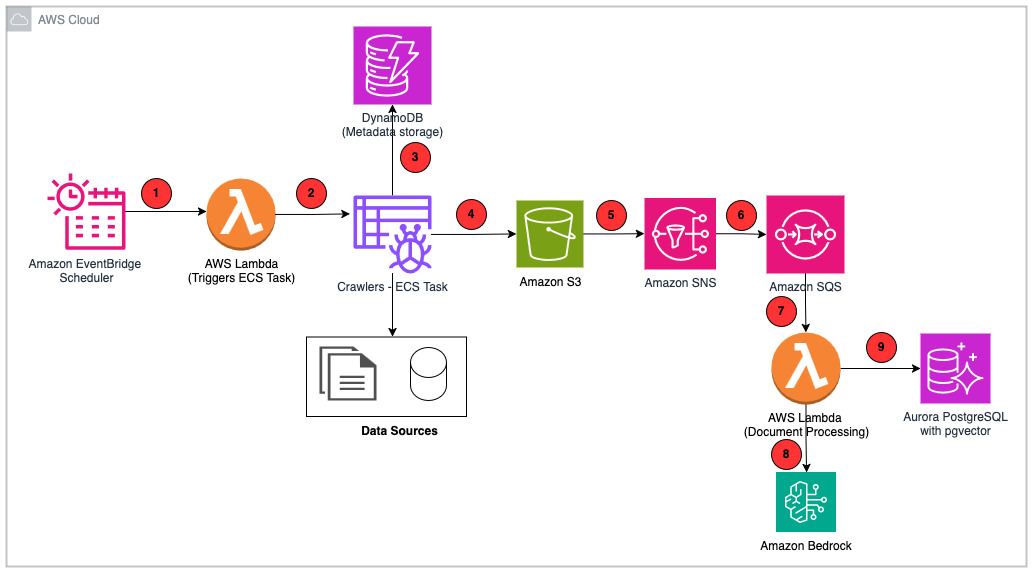
How PDI built an enterprise-grade RAG system for AI applications with AWSArtificial Intelligence PDI Technologies is a global leader in the convenience retail and petroleum wholesale industries. In this post, we walk through the PDI Intelligence Query (PDIQ) process flow and architecture, focusing on the implementation details and the business outcomes it has helped PDI achieve.
PDI Technologies is a global leader in the convenience retail and petroleum wholesale industries. In this post, we walk through the PDI Intelligence Query (PDIQ) process flow and architecture, focusing on the implementation details and the business outcomes it has helped PDI achieve. Read More
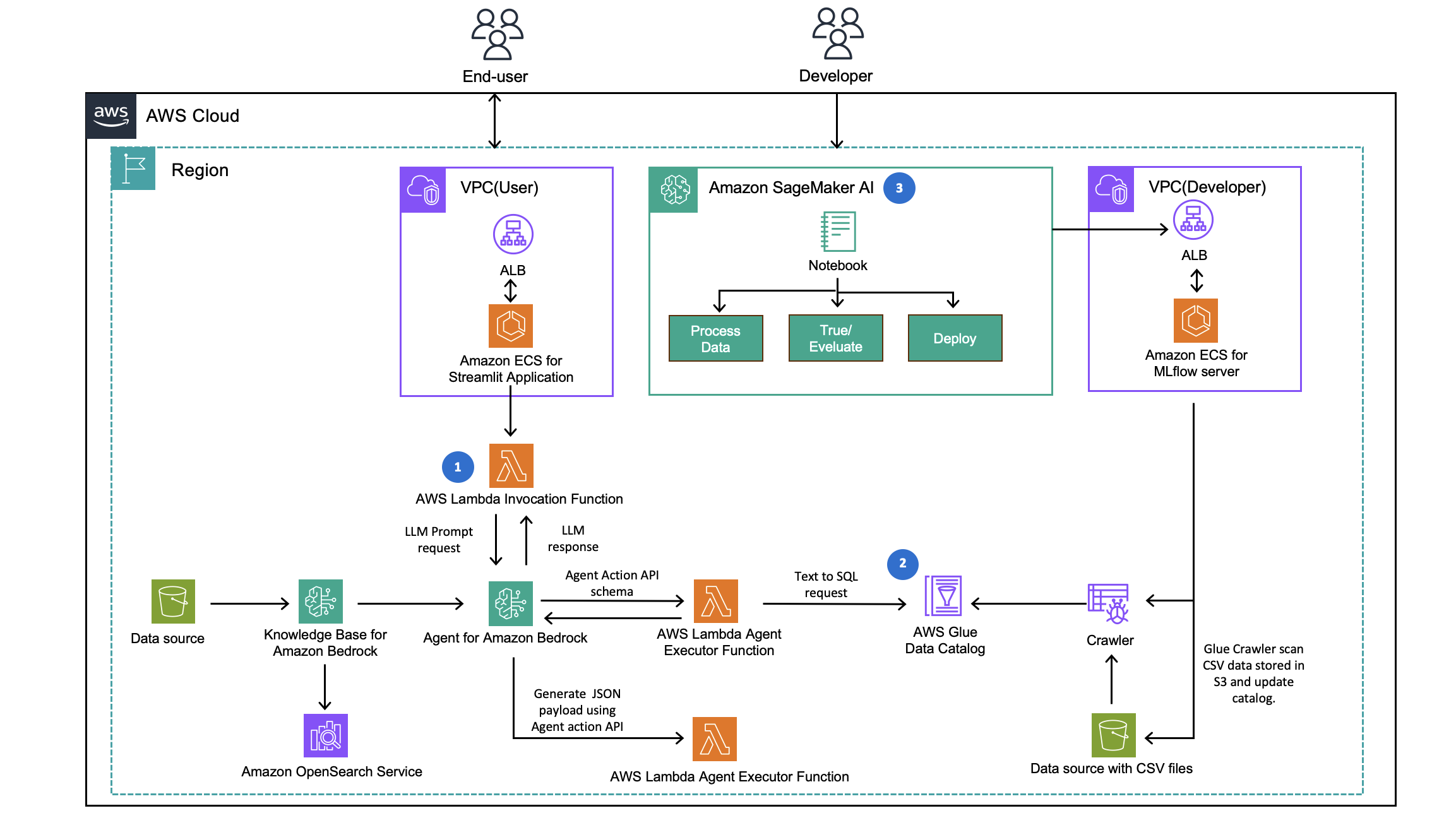
How CLICKFORCE accelerates data-driven advertising with Amazon Bedrock AgentsArtificial Intelligence In this post, we demonstrate how CLICKFORCE used AWS services to build Lumos and transform advertising industry analysis from weeks-long manual work into an automated, one-hour process.
In this post, we demonstrate how CLICKFORCE used AWS services to build Lumos and transform advertising industry analysis from weeks-long manual work into an automated, one-hour process. Read More

Controlling AI agent sprawl: The CIO’s guide to governanceAI News Corporate networks are filling up with AI agents, creating a governance blind spot for leaders managing multi-cloud infrastructures. As distinct business units race to adopt generative technologies, CIOs especially find their ecosystems populated by fragmented and unmonitored assets. This mirrors the shadow IT challenges of the cloud era, but involves autonomous actors capable of executing
The post Controlling AI agent sprawl: The CIO’s guide to governance appeared first on AI News.
Corporate networks are filling up with AI agents, creating a governance blind spot for leaders managing multi-cloud infrastructures. As distinct business units race to adopt generative technologies, CIOs especially find their ecosystems populated by fragmented and unmonitored assets. This mirrors the shadow IT challenges of the cloud era, but involves autonomous actors capable of executing
The post Controlling AI agent sprawl: The CIO’s guide to governance appeared first on AI News. Read More
Towards AI Transparency and Accountability: A Global Framework for Exchanging Information on AI Systemscs.AI updates on arXiv.org arXiv:2307.13658v3 Announce Type: replace-cross
Abstract: We propose that future AI transparency and accountability regulations are based on an open global standard for exchanging information about AI systems, which allows co-existence of potentially conflicting local regulations. Then, we discuss key components of a lightweight and effective AI transparency and/or accountability regulation. To prevent overregulation, the proposed approach encourages collaboration between regulators and industry to create a scalable and cost-efficient mutually beneficial solution. This includes using automated assessments and benchmarks with results transparently communicated through AI cards in an open AI register to facilitate meaningful public comparisons of competing AI systems. Such AI cards should report standardized measures tailored to the specific high-risk applications of AI systems and could be used for conformity assessments under AI transparency and accountability policies such as the European Union’s AI Act.
arXiv:2307.13658v3 Announce Type: replace-cross
Abstract: We propose that future AI transparency and accountability regulations are based on an open global standard for exchanging information about AI systems, which allows co-existence of potentially conflicting local regulations. Then, we discuss key components of a lightweight and effective AI transparency and/or accountability regulation. To prevent overregulation, the proposed approach encourages collaboration between regulators and industry to create a scalable and cost-efficient mutually beneficial solution. This includes using automated assessments and benchmarks with results transparently communicated through AI cards in an open AI register to facilitate meaningful public comparisons of competing AI systems. Such AI cards should report standardized measures tailored to the specific high-risk applications of AI systems and could be used for conformity assessments under AI transparency and accountability policies such as the European Union’s AI Act. Read More
Where Do AI Coding Agents Fail? An Empirical Study of Failed Agentic Pull Requests in GitHubcs.AI updates on arXiv.org arXiv:2601.15195v1 Announce Type: cross
Abstract: AI coding agents are now submitting pull requests (PRs) to software projects, acting not just as assistants but as autonomous contributors. As these agentic contributions are rapidly increasing across real repositories, little is known about how they behave in practice and why many of them fail to be merged. In this paper, we conduct a large-scale study of 33k agent-authored PRs made by five coding agents across GitHub. (RQ1) We first quantitatively characterize merged and not-merged PRs along four broad dimensions: 1) merge outcomes across task types, 2) code changes, 3) CI build results, and 4) review dynamics. We observe that tasks related to documentation, CI, and build update achieve the highest merge success, whereas performance and bug-fix tasks perform the worst. Not-merged PRs tend to involve larger code changes, touch more files, and often do not pass the project’s CI/CD pipeline validation. (RQ2) To further investigate why some agentic PRs are not merged, we qualitatively analyze 600 PRs to derive a hierarchical taxonomy of rejection patterns. This analysis complements the quantitative findings in RQ1 by uncovering rejection reasons not captured by quantitative metrics, including lack of meaningful reviewer engagement, duplicate PRs, unwanted feature implementations, and agent misalignment. Together, our findings highlight key socio-technical and human-AI collaboration factors that are critical to improving the success of future agentic workflows.
arXiv:2601.15195v1 Announce Type: cross
Abstract: AI coding agents are now submitting pull requests (PRs) to software projects, acting not just as assistants but as autonomous contributors. As these agentic contributions are rapidly increasing across real repositories, little is known about how they behave in practice and why many of them fail to be merged. In this paper, we conduct a large-scale study of 33k agent-authored PRs made by five coding agents across GitHub. (RQ1) We first quantitatively characterize merged and not-merged PRs along four broad dimensions: 1) merge outcomes across task types, 2) code changes, 3) CI build results, and 4) review dynamics. We observe that tasks related to documentation, CI, and build update achieve the highest merge success, whereas performance and bug-fix tasks perform the worst. Not-merged PRs tend to involve larger code changes, touch more files, and often do not pass the project’s CI/CD pipeline validation. (RQ2) To further investigate why some agentic PRs are not merged, we qualitatively analyze 600 PRs to derive a hierarchical taxonomy of rejection patterns. This analysis complements the quantitative findings in RQ1 by uncovering rejection reasons not captured by quantitative metrics, including lack of meaningful reviewer engagement, duplicate PRs, unwanted feature implementations, and agent misalignment. Together, our findings highlight key socio-technical and human-AI collaboration factors that are critical to improving the success of future agentic workflows. Read More
A Brain-inspired Embodied Intelligence for Fluid and Fast Reflexive Robotics Controlcs.AI updates on arXiv.org arXiv:2601.14628v1 Announce Type: cross
Abstract: Recent advances in embodied intelligence have leveraged massive scaling of data and model parameters to master natural-language command following and multi-task control. In contrast, biological systems demonstrate an innate ability to acquire skills rapidly from sparse experience. Crucially, current robotic policies struggle to replicate the dynamic stability, reflexive responsiveness, and temporal memory inherent in biological motion. Here we present Neuromorphic Vision-Language-Action (NeuroVLA), a framework that mimics the structural organization of the bio-nervous system between the cortex, cerebellum, and spinal cord. We adopt a system-level bio-inspired design: a high-level model plans goals, an adaptive cerebellum module stabilizes motion using high-frequency sensors feedback, and a bio-inspired spinal layer executes lightning-fast actions generation. NeuroVLA represents the first deployment of a neuromorphic VLA on physical robotics, achieving state-of-the-art performance. We observe the emergence of biological motor characteristics without additional data or special guidance: it stops the shaking in robotic arms, saves significant energy(only 0.4w on Neuromorphic Processor), shows temporal memory ability and triggers safety reflexes in less than 20 milliseconds.
arXiv:2601.14628v1 Announce Type: cross
Abstract: Recent advances in embodied intelligence have leveraged massive scaling of data and model parameters to master natural-language command following and multi-task control. In contrast, biological systems demonstrate an innate ability to acquire skills rapidly from sparse experience. Crucially, current robotic policies struggle to replicate the dynamic stability, reflexive responsiveness, and temporal memory inherent in biological motion. Here we present Neuromorphic Vision-Language-Action (NeuroVLA), a framework that mimics the structural organization of the bio-nervous system between the cortex, cerebellum, and spinal cord. We adopt a system-level bio-inspired design: a high-level model plans goals, an adaptive cerebellum module stabilizes motion using high-frequency sensors feedback, and a bio-inspired spinal layer executes lightning-fast actions generation. NeuroVLA represents the first deployment of a neuromorphic VLA on physical robotics, achieving state-of-the-art performance. We observe the emergence of biological motor characteristics without additional data or special guidance: it stops the shaking in robotic arms, saves significant energy(only 0.4w on Neuromorphic Processor), shows temporal memory ability and triggers safety reflexes in less than 20 milliseconds. Read More