
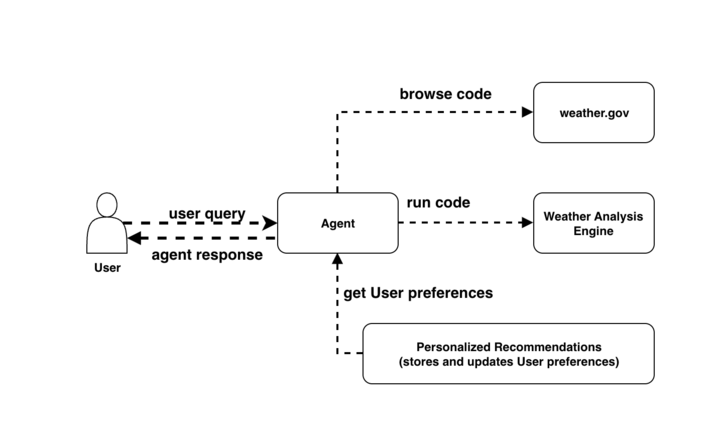
Build AI agents with Amazon Bedrock AgentCore using AWS CloudFormationArtificial Intelligence Amazon Bedrock AgentCore services are now being supported by various IaC frameworks such as AWS Cloud Development Kit (AWS CDK), Terraform and AWS CloudFormation Templates. This integration brings the power of IaC directly to AgentCore so developers can provision, configure, and manage their AI agent infrastructure. In this post, we use CloudFormation templates to build an end-to-end application for a weather activity planner.
Amazon Bedrock AgentCore services are now being supported by various IaC frameworks such as AWS Cloud Development Kit (AWS CDK), Terraform and AWS CloudFormation Templates. This integration brings the power of IaC directly to AgentCore so developers can provision, configure, and manage their AI agent infrastructure. In this post, we use CloudFormation templates to build an end-to-end application for a weather activity planner. Read More
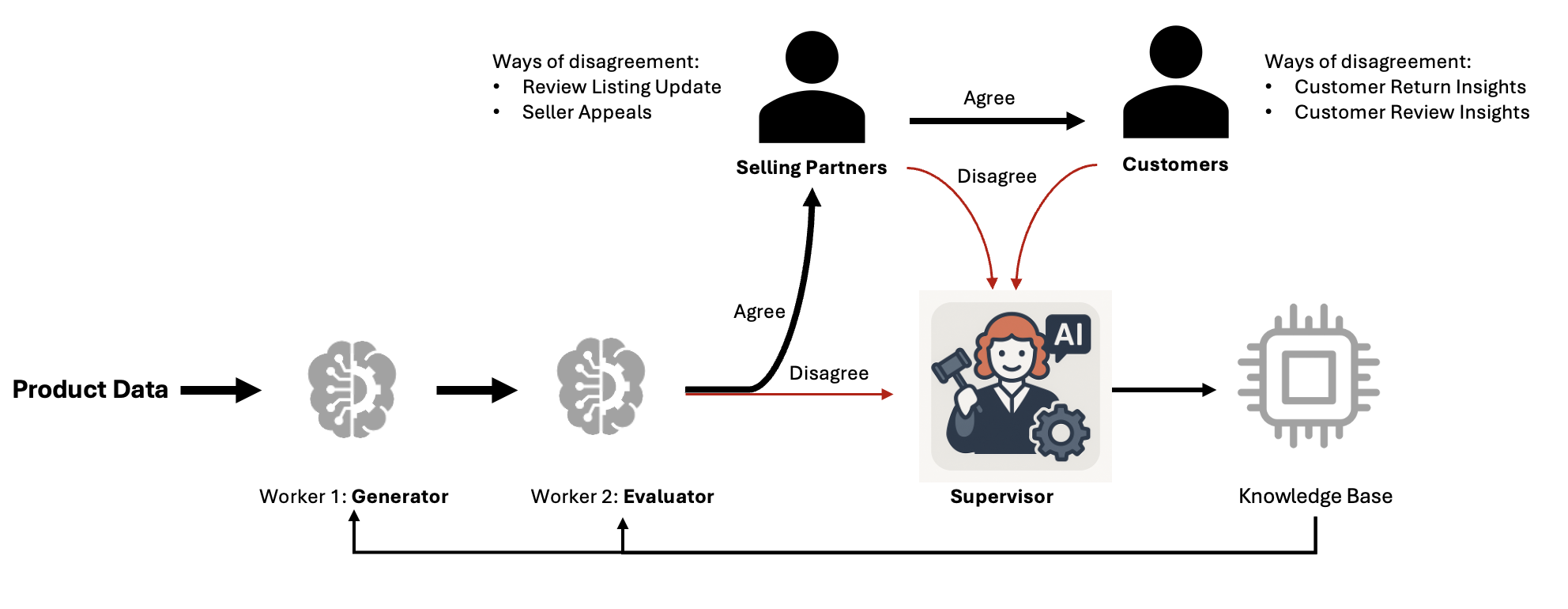
How the Amazon.com Catalog Team built self-learning generative AI at scale with Amazon BedrockArtificial Intelligence In this post, we demonstrate how the Amazon Catalog Team built a self-learning system that continuously improves accuracy while reducing costs at scale using Amazon Bedrock.
In this post, we demonstrate how the Amazon Catalog Team built a self-learning system that continuously improves accuracy while reducing costs at scale using Amazon Bedrock. Read More

Optimizing Data Transfer in Distributed AI/ML Training WorkloadsTowards Data Science A deep dive on data transfer bottlenecks, their identification, and their resolution with the help of NVIDIA Nsight™ Systems – part 3
The post Optimizing Data Transfer in Distributed AI/ML Training Workloads appeared first on Towards Data Science.
A deep dive on data transfer bottlenecks, their identification, and their resolution with the help of NVIDIA Nsight™ Systems – part 3
The post Optimizing Data Transfer in Distributed AI/ML Training Workloads appeared first on Towards Data Science. Read More
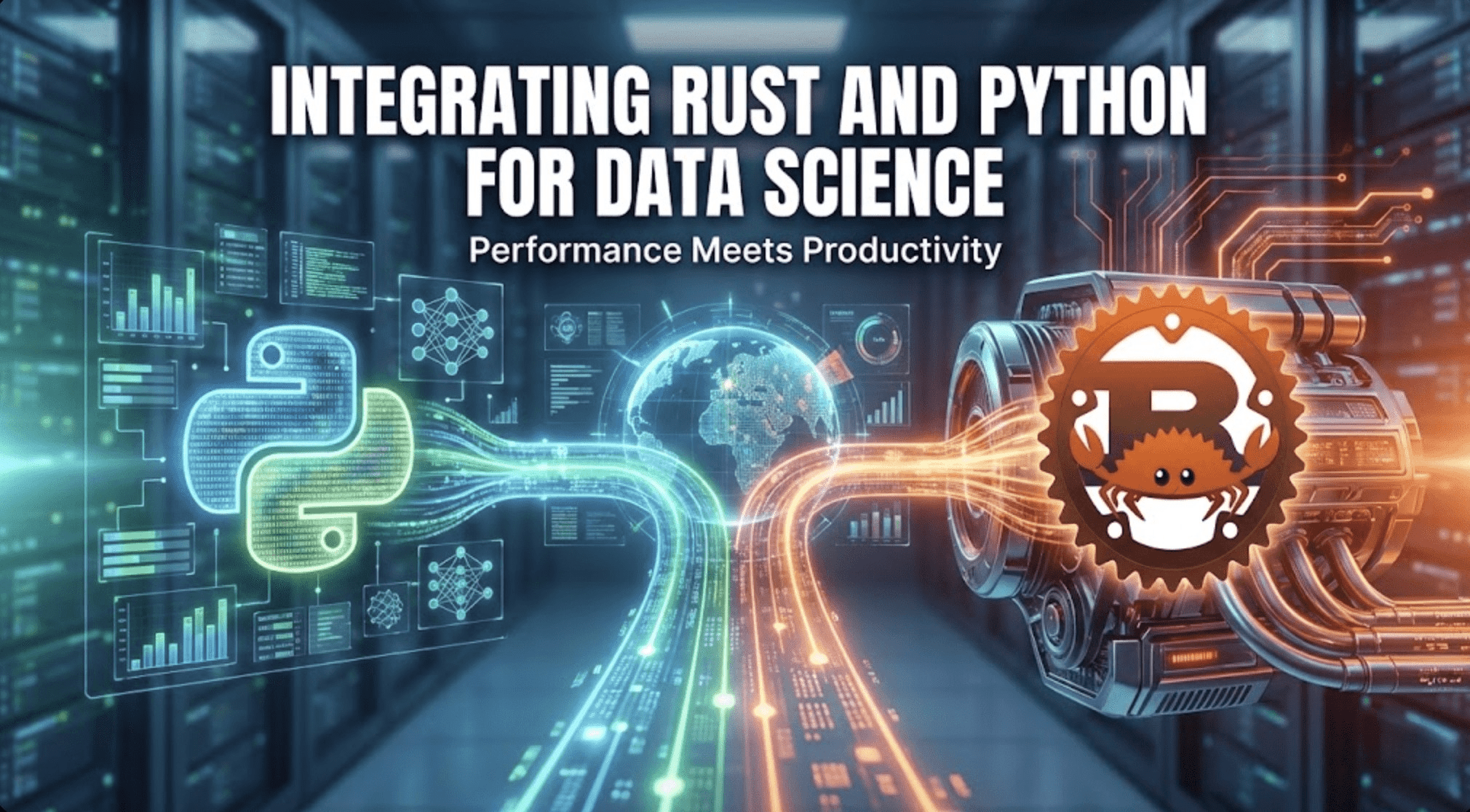
Integrating Rust and Python for Data ScienceKDnuggets Python remains at the forefront data science, it is still very popular and useful till date. But on the other hand strengthens the foundation underneath. It becomes necessary where performance, memory control, and predictability become important.
Python remains at the forefront data science, it is still very popular and useful till date. But on the other hand strengthens the foundation underneath. It becomes necessary where performance, memory control, and predictability become important. Read More
Achieving 5x Agentic Coding Performance with Few-Shot PromptingTowards Data Science Learn to leverage few-shot prompting to increase your LLMs performance
The post Achieving 5x Agentic Coding Performance with Few-Shot Prompting appeared first on Towards Data Science.
Learn to leverage few-shot prompting to increase your LLMs performance
The post Achieving 5x Agentic Coding Performance with Few-Shot Prompting appeared first on Towards Data Science. Read More

Anthropic’s usage stats paint a detailed picture of AI successAI News Anthropic’s Economic Index offers a look at how organisations and individuals are actually using large language models. The report contains the company’s analysis of a million consumer interactions on Claude.ai, plus a million enterprise API calls, all dated from November 2025. The report notes that its figures are based on observations, rather than, for example,
The post Anthropic’s usage stats paint a detailed picture of AI success appeared first on AI News.
Anthropic’s Economic Index offers a look at how organisations and individuals are actually using large language models. The report contains the company’s analysis of a million consumer interactions on Claude.ai, plus a million enterprise API calls, all dated from November 2025. The report notes that its figures are based on observations, rather than, for example,
The post Anthropic’s usage stats paint a detailed picture of AI success appeared first on AI News. Read More
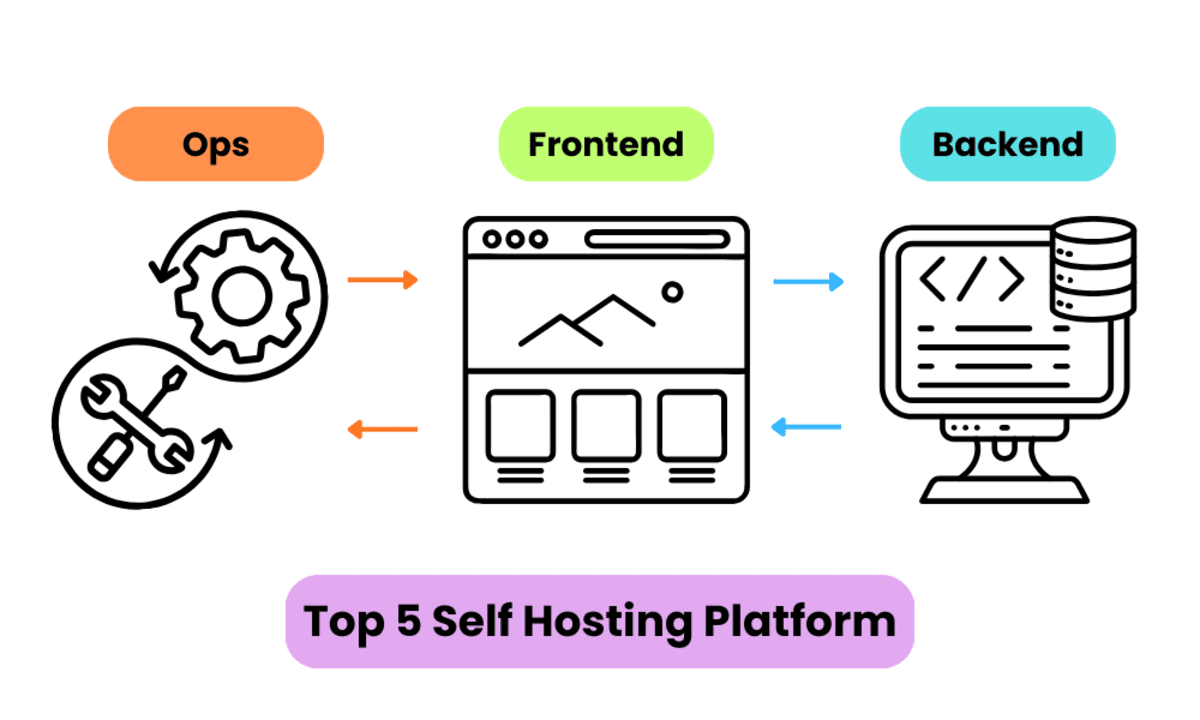
Top 5 Self Hosting Platform Alternative to Vercel, Heroku & NetlifyKDnuggets The best self hosting platforms that help developers deploy, scale, and turn their projects into production ready applications while avoiding the complexity of becoming a full time DevOps engineer.
The best self hosting platforms that help developers deploy, scale, and turn their projects into production ready applications while avoiding the complexity of becoming a full time DevOps engineer. Read More
From Transactions to Trends: Predict When a Customer Is About to Stop BuyingTowards Data Science Customer churn is usually a gradual process, not a sudden event. In this post, we analyze monthly transaction trends and convert regression slopes into degrees to clearly identify declining purchase behavior. A small negative slope today can prevent a big revenue loss tomorrow.
The post From Transactions to Trends: Predict When a Customer Is About to Stop Buying appeared first on Towards Data Science.
Customer churn is usually a gradual process, not a sudden event. In this post, we analyze monthly transaction trends and convert regression slopes into degrees to clearly identify declining purchase behavior. A small negative slope today can prevent a big revenue loss tomorrow.
The post From Transactions to Trends: Predict When a Customer Is About to Stop Buying appeared first on Towards Data Science. Read More
Defensive AI and how machine learning strengthens cyber defenseAI News Cyber threats don’t follow predictable patterns, forcing security teams to rethink how protection works at scale. Defensive AI is emerging as a practical response, combining machine learning with human oversight. Cybersecurity rarely fails because teams lack tools. It fails because threats move faster than detection can keep pace. As digital systems expand, attackers adapt in
The post Defensive AI and how machine learning strengthens cyber defense appeared first on AI News.
Cyber threats don’t follow predictable patterns, forcing security teams to rethink how protection works at scale. Defensive AI is emerging as a practical response, combining machine learning with human oversight. Cybersecurity rarely fails because teams lack tools. It fails because threats move faster than detection can keep pace. As digital systems expand, attackers adapt in
The post Defensive AI and how machine learning strengthens cyber defense appeared first on AI News. Read More
Prometheus Mind: Retrofitting Memory to Frozen Language Modelscs.AI updates on arXiv.org arXiv:2601.15324v1 Announce Type: new
Abstract: Adding memory to pretrained language models typically requires architectural changes or weight modification. We present Prometheus Mind, which retrofits memory to a frozen Qwen3-4B using 11 modular adapters (530MB, 7% overhead) — fully reversible by removing the adapters. Building this system required solving four problems: (1) Extraction — we develop Contrastive Direction Discovery (CDD), which finds semantic directions via minimal pairs without labeled data. (2) Training — end-to-end optimization collapses; stage-wise training of each adapter on simple proxy tasks succeeds. (3) Injection — learned encoders fail to generalize; we find that lm_head.weight rows already provide the mapping we need, requiring no training. (4) Hidden state collapse — transformers make “wife” and “brother” 0.98+ similar; we train projections to recover distinction (0.98 $rightarrow$ 0.09). On PrometheusExtract-132 (132 cases), the system achieves 94.4% retrieval on clean inputs (n=54, 95% CI: [84.9%, 98.1%]), degrading to 19.4% on informal inputs with ellipsis, filler words, or implicit subjects (n=36). The primary bottleneck is relation classification (47.3% accuracy), responsible for most extraction errors.
arXiv:2601.15324v1 Announce Type: new
Abstract: Adding memory to pretrained language models typically requires architectural changes or weight modification. We present Prometheus Mind, which retrofits memory to a frozen Qwen3-4B using 11 modular adapters (530MB, 7% overhead) — fully reversible by removing the adapters. Building this system required solving four problems: (1) Extraction — we develop Contrastive Direction Discovery (CDD), which finds semantic directions via minimal pairs without labeled data. (2) Training — end-to-end optimization collapses; stage-wise training of each adapter on simple proxy tasks succeeds. (3) Injection — learned encoders fail to generalize; we find that lm_head.weight rows already provide the mapping we need, requiring no training. (4) Hidden state collapse — transformers make “wife” and “brother” 0.98+ similar; we train projections to recover distinction (0.98 $rightarrow$ 0.09). On PrometheusExtract-132 (132 cases), the system achieves 94.4% retrieval on clean inputs (n=54, 95% CI: [84.9%, 98.1%]), degrading to 19.4% on informal inputs with ellipsis, filler words, or implicit subjects (n=36). The primary bottleneck is relation classification (47.3% accuracy), responsible for most extraction errors. Read More