Over 10 years we help companies reach their financial and branding goals. Engitech is a values-driven technology agency dedicated.

Gallery

Contacts

411 University St, Seattle, USA

engitech@oceanthemes.net

+1 -800-456-478-23

Insights Job Tech Jacks Blog
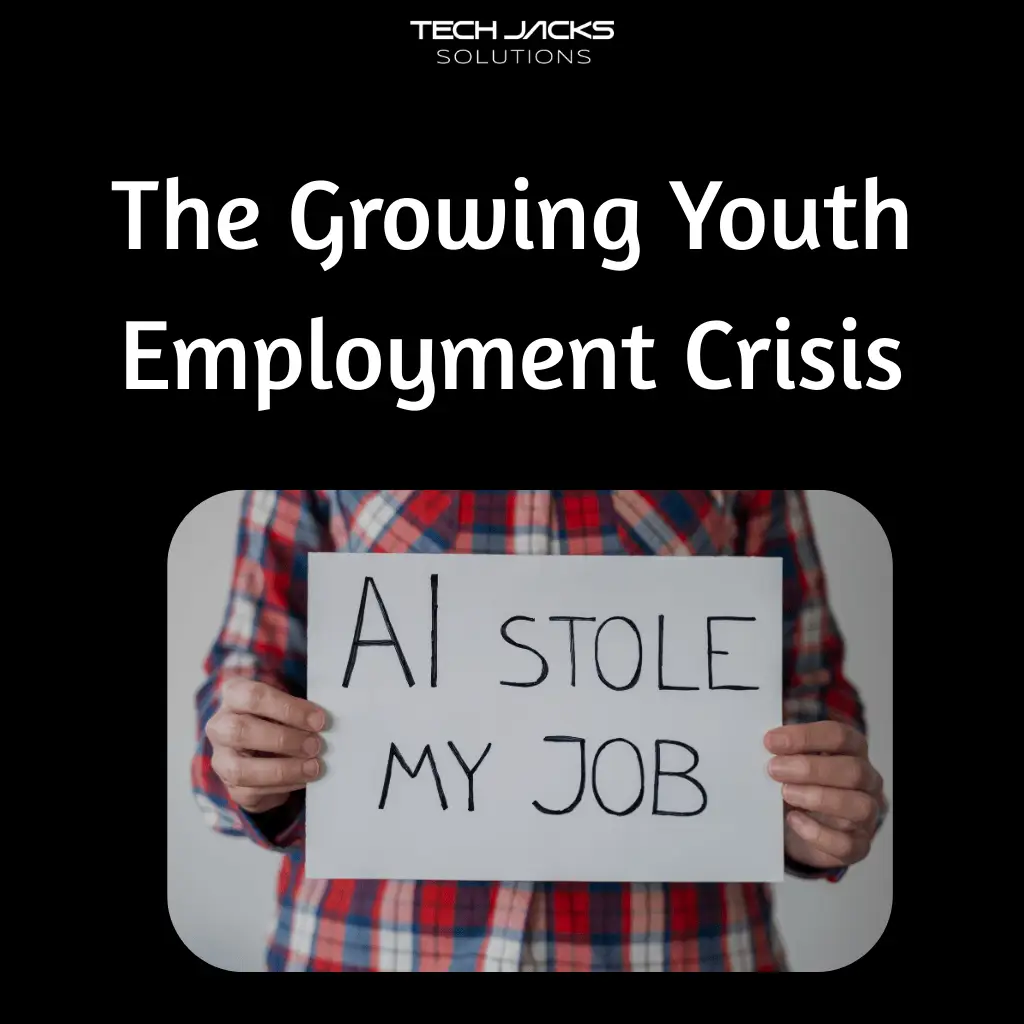
Youth Employment Crisis

Youth Employment Crisis 2025: 10.5% Unemployment as AI Automation Eliminates Entry-Level Jobs And What Leaders Must Do

Author: Derrick D. JacksonTitle: Founder & Senior Director of Cloud Security Architecture & RiskCredentials: CISSP, CRISC, CSSPLast updated September 17th, 2025 Pressed for Time? Review or Download our 2-3 min Quick Slides or the 5-7 min Article Insights to gain knowledge with the time you have! Review or Download our 2-3 min Quick Slides or the […]

Insights News
AI News & Insights Featured Image

Securing Educational LLMs: A Generalised Taxonomy of Attacks on LLMs and DREAD Risk Assessmentcs.AI updates on arXiv.org

Securing Educational LLMs: A Generalised Taxonomy of Attacks on LLMs and DREAD Risk Assessmentcs.AI updates on arXiv.orgon August 13, 2025 at 4:00 am arXiv:2508.08629v1 Announce Type: cross
Abstract: Due to perceptions of efficiency and significant productivity gains, various organisations, including in education, are adopting Large Language Models (LLMs) into their workflows. Educator-facing, learner-facing, and institution-facing LLMs, collectively, Educational Large Language Models (eLLMs), complement and enhance the effectiveness of teaching, learning, and academic operations. However, their integration into an educational setting raises significant cybersecurity concerns. A comprehensive landscape of contemporary attacks on LLMs and their impact on the educational environment is missing. This study presents a generalised taxonomy of fifty attacks on LLMs, which are categorized as attacks targeting either models or their infrastructure. The severity of these attacks is evaluated in the educational sector using the DREAD risk assessment framework. Our risk assessment indicates that token smuggling, adversarial prompts, direct injection, and multi-step jailbreak are critical attacks on eLLMs. The proposed taxonomy, its application in the educational environment, and our risk assessment will help academic and industrial practitioners to build resilient solutions that protect learners and institutions.

 arXiv:2508.08629v1 Announce Type: cross
Abstract: Due to perceptions of efficiency and significant productivity gains, various organisations, including in education, are adopting Large Language Models (LLMs) into their workflows. Educator-facing, learner-facing, and institution-facing LLMs, collectively, Educational Large Language Models (eLLMs), complement and enhance the effectiveness of teaching, learning, and academic operations. However, their integration into an educational setting raises significant cybersecurity concerns. A comprehensive landscape of contemporary attacks on LLMs and their impact on the educational environment is missing. This study presents a generalised taxonomy of fifty attacks on LLMs, which are categorized as attacks targeting either models or their infrastructure. The severity of these attacks is evaluated in the educational sector using the DREAD risk assessment framework. Our risk assessment indicates that token smuggling, adversarial prompts, direct injection, and multi-step jailbreak are critical attacks on eLLMs. The proposed taxonomy, its application in the educational environment, and our risk assessment will help academic and industrial practitioners to build resilient solutions that protect learners and institutions. Read More 

Insights News
AI News & Insights Featured Image

Coconut: A Framework for Latent Reasoning in LLMsTowards Data Science

Coconut: A Framework for Latent Reasoning in LLMsTowards Data Scienceon August 12, 2025 at 5:54 pm Explaining Coconut (Training Large Language Models to Reason in a Continuous Latent Space) in simple terms
The post Coconut: A Framework for Latent Reasoning in LLMs appeared first on Towards Data Science.

 Explaining Coconut (Training Large Language Models to Reason in a Continuous Latent Space) in simple terms
The post Coconut: A Framework for Latent Reasoning in LLMs appeared first on Towards Data Science. Read More 

Insights News
anthropic claude safety ai strategy cycle artificial intelligence 1024x674 khcNLR

Anthropic details its AI safety strategy AI Newson

Anthropic details its AI safety strategyAI Newson August 13, 2025 at 9:55 am Anthropic has detailed its safety strategy to try and keep its popular AI model, Claude, helpful while avoiding perpetuating harms. Central to this effort is Anthropic’s Safeguards team; who aren’t your average tech support group, they’re a mix of policy experts, data scientists, engineers, and threat analysts who know how bad actors think. However, Anthropic’s
The post Anthropic details its AI safety strategy appeared first on AI News.

 Anthropic has detailed its safety strategy to try and keep its popular AI model, Claude, helpful while avoiding perpetuating harms. Central to this effort is Anthropic’s Safeguards team; who aren’t your average tech support group, they’re a mix of policy experts, data scientists, engineers, and threat analysts who know how bad actors think. However, Anthropic’s
The post Anthropic details its AI safety strategy appeared first on AI News. Read More 

Insights News
GettyImages 2216139641 crop vDuK98

Why Trump’s “golden dome” missile defense idea is another ripped straight from the moviesMIT Technology Review

Why Trump’s “golden dome” missile defense idea is another ripped straight from the moviesMIT Technology Reviewon August 13, 2025 at 10:00 am In 1940, a fresh-faced Ronald Reagan starred as US Secret Service agent Brass Bancroft in Murder in the Air, an action film centered on a fictional “superweapon” that could stop enemy aircraft midflight. A mock newspaper in the movie hails it as the “greatest peace argument ever invented.” The experimental weapon is “the exclusive property…

 In 1940, a fresh-faced Ronald Reagan starred as US Secret Service agent Brass Bancroft in Murder in the Air, an action film centered on a fictional “superweapon” that could stop enemy aircraft midflight. A mock newspaper in the movie hails it as the “greatest peace argument ever invented.” The experimental weapon is “the exclusive property… Read More 

Insights News
AI News & Insights Featured Image

Impact-driven Context Filtering For Cross-file Code Completioncs.AI updates on arXiv.org

Impact-driven Context Filtering For Cross-file Code Completioncs.AI updates on arXiv.orgon August 11, 2025 at 4:00 am arXiv:2508.05970v1 Announce Type: cross
Abstract: Retrieval-augmented generation (RAG) has recently demonstrated considerable potential for repository-level code completion, as it integrates cross-file knowledge with in-file preceding code to provide comprehensive contexts for generation. To better understand the contribution of the retrieved cross-file contexts, we introduce a likelihood-based metric to evaluate the impact of each retrieved code chunk on the completion. Our analysis reveals that, despite retrieving numerous chunks, only a small subset positively contributes to the completion, while some chunks even degrade performance. To address this issue, we leverage this metric to construct a repository-level dataset where each retrieved chunk is labeled as positive, neutral, or negative based on its relevance to the target completion. We then propose an adaptive retrieval context filtering framework, CODEFILTER, trained on this dataset to mitigate the harmful effects of negative retrieved contexts in code completion. Extensive evaluation on the RepoEval and CrossCodeLongEval benchmarks demonstrates that CODEFILTER consistently improves completion accuracy compared to approaches without filtering operations across various tasks. Additionally, CODEFILTER significantly reduces the length of the input prompt, enhancing computational efficiency while exhibiting strong generalizability across different models. These results underscore the potential of CODEFILTER to enhance the accuracy, efficiency, and attributability of repository-level code completion.

 arXiv:2508.05970v1 Announce Type: cross
Abstract: Retrieval-augmented generation (RAG) has recently demonstrated considerable potential for repository-level code completion, as it integrates cross-file knowledge with in-file preceding code to provide comprehensive contexts for generation. To better understand the contribution of the retrieved cross-file contexts, we introduce a likelihood-based metric to evaluate the impact of each retrieved code chunk on the completion. Our analysis reveals that, despite retrieving numerous chunks, only a small subset positively contributes to the completion, while some chunks even degrade performance. To address this issue, we leverage this metric to construct a repository-level dataset where each retrieved chunk is labeled as positive, neutral, or negative based on its relevance to the target completion. We then propose an adaptive retrieval context filtering framework, CODEFILTER, trained on this dataset to mitigate the harmful effects of negative retrieved contexts in code completion. Extensive evaluation on the RepoEval and CrossCodeLongEval benchmarks demonstrates that CODEFILTER consistently improves completion accuracy compared to approaches without filtering operations across various tasks. Additionally, CODEFILTER significantly reduces the length of the input prompt, enhancing computational efficiency while exhibiting strong generalizability across different models. These results underscore the potential of CODEFILTER to enhance the accuracy, efficiency, and attributability of repository-level code completion. Read More 

Insights News
AI News & Insights Featured Image

LoRA in LoRA: Towards Parameter-Efficient Architecture Expansion for Continual Visual Instruction Tuningcs.AI updates on arXiv.orgon August 11, 2025 at 4:00 am

LoRA in LoRA: Towards Parameter-Efficient Architecture Expansion for Continual Visual Instruction Tuningcs.AI updates on arXiv.orgon August 11, 2025 at 4:00 am arXiv:2508.06202v1 Announce Type: cross
Abstract: Continual Visual Instruction Tuning (CVIT) enables Multimodal Large Language Models (MLLMs) to incrementally learn new tasks over time. However, this process is challenged by catastrophic forgetting, where performance on previously learned tasks deteriorates as the model adapts to new ones. A common approach to mitigate forgetting is architecture expansion, which introduces task-specific modules to prevent interference. Yet, existing methods often expand entire layers for each task, leading to significant parameter overhead and poor scalability. To overcome these issues, we introduce LoRA in LoRA (LiLoRA), a highly efficient architecture expansion method tailored for CVIT in MLLMs. LiLoRA shares the LoRA matrix A across tasks to reduce redundancy, applies an additional low-rank decomposition to matrix B to minimize task-specific parameters, and incorporates a cosine-regularized stability loss to preserve consistency in shared representations over time. Extensive experiments on a diverse CVIT benchmark show that LiLoRA consistently achieves superior performance in sequential task learning while significantly improving parameter efficiency compared to existing approaches.

 arXiv:2508.06202v1 Announce Type: cross
Abstract: Continual Visual Instruction Tuning (CVIT) enables Multimodal Large Language Models (MLLMs) to incrementally learn new tasks over time. However, this process is challenged by catastrophic forgetting, where performance on previously learned tasks deteriorates as the model adapts to new ones. A common approach to mitigate forgetting is architecture expansion, which introduces task-specific modules to prevent interference. Yet, existing methods often expand entire layers for each task, leading to significant parameter overhead and poor scalability. To overcome these issues, we introduce LoRA in LoRA (LiLoRA), a highly efficient architecture expansion method tailored for CVIT in MLLMs. LiLoRA shares the LoRA matrix A across tasks to reduce redundancy, applies an additional low-rank decomposition to matrix B to minimize task-specific parameters, and incorporates a cosine-regularized stability loss to preserve consistency in shared representations over time. Extensive experiments on a diverse CVIT benchmark show that LiLoRA consistently achieves superior performance in sequential task learning while significantly improving parameter efficiency compared to existing approaches. Read More 

Insights News
AI News & Insights Featured Image

AVA-Bench: Atomic Visual Ability Benchmark for Vision Foundation Modelscs.AI updates on arXiv.org

AVA-Bench: Atomic Visual Ability Benchmark for Vision Foundation Modelscs.AI updates on arXiv.orgon August 11, 2025 at 4:00 am arXiv:2506.09082v2 Announce Type: replace-cross
Abstract: The rise of vision foundation models (VFMs) calls for systematic evaluation. A common approach pairs VFMs with large language models (LLMs) as general-purpose heads, followed by evaluation on broad Visual Question Answering (VQA) benchmarks. However, this protocol has two key blind spots: (i) the instruction tuning data may not align with VQA test distributions, meaning a wrong prediction can stem from such data mismatch rather than a VFM’ visual shortcomings; (ii) VQA benchmarks often require multiple visual abilities, making it hard to tell whether errors stem from lacking all required abilities or just a single critical one. To address these gaps, we introduce AVA-Bench, the first benchmark that explicitly disentangles 14 Atomic Visual Abilities (AVAs) — foundational skills like localization, depth estimation, and spatial understanding that collectively support complex visual reasoning tasks. By decoupling AVAs and matching training and test distributions within each, AVA-Bench pinpoints exactly where a VFM excels or falters. Applying AVA-Bench to leading VFMs thus reveals distinctive “ability fingerprints,” turning VFM selection from educated guesswork into principled engineering. Notably, we find that a 0.5B LLM yields similar VFM rankings as a 7B LLM while cutting GPU hours by 8x, enabling more efficient evaluation. By offering a comprehensive and transparent benchmark, we hope AVA-Bench lays the foundation for the next generation of VFMs.

 arXiv:2506.09082v2 Announce Type: replace-cross
Abstract: The rise of vision foundation models (VFMs) calls for systematic evaluation. A common approach pairs VFMs with large language models (LLMs) as general-purpose heads, followed by evaluation on broad Visual Question Answering (VQA) benchmarks. However, this protocol has two key blind spots: (i) the instruction tuning data may not align with VQA test distributions, meaning a wrong prediction can stem from such data mismatch rather than a VFM’ visual shortcomings; (ii) VQA benchmarks often require multiple visual abilities, making it hard to tell whether errors stem from lacking all required abilities or just a single critical one. To address these gaps, we introduce AVA-Bench, the first benchmark that explicitly disentangles 14 Atomic Visual Abilities (AVAs) — foundational skills like localization, depth estimation, and spatial understanding that collectively support complex visual reasoning tasks. By decoupling AVAs and matching training and test distributions within each, AVA-Bench pinpoints exactly where a VFM excels or falters. Applying AVA-Bench to leading VFMs thus reveals distinctive “ability fingerprints,” turning VFM selection from educated guesswork into principled engineering. Notably, we find that a 0.5B LLM yields similar VFM rankings as a 7B LLM while cutting GPU hours by 8x, enabling more efficient evaluation. By offering a comprehensive and transparent benchmark, we hope AVA-Bench lays the foundation for the next generation of VFMs. Read More 

Insights News
AI News & Insights Featured Image

Hierarchical Pattern Decryption Methodology for Ransomware Detection Using Probabilistic Cryptographic Footprintscs.AI updates on arXiv.org

Hierarchical Pattern Decryption Methodology for Ransomware Detection Using Probabilistic Cryptographic Footprintscs.AI updates on arXiv.orgon August 11, 2025 at 4:00 am arXiv:2501.15084v2 Announce Type: replace-cross
Abstract: The increasing sophistication of encryption-based ransomware has demanded innovative approaches to detection and mitigation, prompting the development of a hierarchical framework grounded in probabilistic cryptographic analysis. By focusing on the statistical characteristics of encryption patterns, the proposed methodology introduces a layered approach that combines advanced clustering algorithms with machine learning to isolate ransomware-induced anomalies. Through comprehensive testing across diverse ransomware families, the framework demonstrated exceptional accuracy, effectively distinguishing malicious encryption operations from benign activities while maintaining low false positive rates. The system’s design integrates dynamic feedback mechanisms, enabling adaptability to varying cryptographic complexities and operational environments. Detailed entropy-based evaluations revealed its sensitivity to subtle deviations in encryption workflows, offering a robust alternative to traditional detection methods reliant on static signatures or heuristics. Computational benchmarks confirmed its scalability and efficiency, achieving consistent performance even under high data loads and complex cryptographic scenarios. The inclusion of real-time clustering and anomaly evaluation ensures rapid response capabilities, addressing critical latency challenges in ransomware detection. Performance comparisons with established methods highlighted its improvements in detection efficacy, particularly against advanced ransomware employing extended key lengths and unique cryptographic protocols.

 arXiv:2501.15084v2 Announce Type: replace-cross
Abstract: The increasing sophistication of encryption-based ransomware has demanded innovative approaches to detection and mitigation, prompting the development of a hierarchical framework grounded in probabilistic cryptographic analysis. By focusing on the statistical characteristics of encryption patterns, the proposed methodology introduces a layered approach that combines advanced clustering algorithms with machine learning to isolate ransomware-induced anomalies. Through comprehensive testing across diverse ransomware families, the framework demonstrated exceptional accuracy, effectively distinguishing malicious encryption operations from benign activities while maintaining low false positive rates. The system’s design integrates dynamic feedback mechanisms, enabling adaptability to varying cryptographic complexities and operational environments. Detailed entropy-based evaluations revealed its sensitivity to subtle deviations in encryption workflows, offering a robust alternative to traditional detection methods reliant on static signatures or heuristics. Computational benchmarks confirmed its scalability and efficiency, achieving consistent performance even under high data loads and complex cryptographic scenarios. The inclusion of real-time clustering and anomaly evaluation ensures rapid response capabilities, addressing critical latency challenges in ransomware detection. Performance comparisons with established methods highlighted its improvements in detection efficacy, particularly against advanced ransomware employing extended key lengths and unique cryptographic protocols. Read More 

Insights News
AI News & Insights Featured Image

GPT-5 is here. Now what?MIT Technology Review

GPT-5 is here. Now what?MIT Technology Reviewon August 7, 2025 at 5:00 pm At long last, OpenAI has released GPT-5. The new system abandons the distinction between OpenAI’s flagship models and its o series of reasoning models, automatically routing user queries to a fast nonreasoning model or a slower reasoning version. It is now available to everyone through the ChatGPT web interface—though nonpaying users may need to wait…

 At long last, OpenAI has released GPT-5. The new system abandons the distinction between OpenAI’s flagship models and its o series of reasoning models, automatically routing user queries to a fast nonreasoning model or a slower reasoning version. It is now available to everyone through the ChatGPT web interface—though nonpaying users may need to wait… Read More