
HybridGuard: Enhancing Minority-Class Intrusion Detection in Dew-Enabled Edge-of-Things Networkscs.AI updates on arXiv.org arXiv:2511.07793v1 Announce Type: cross
Abstract: Securing Dew-Enabled Edge-of-Things (EoT) networks against sophisticated intrusions is a critical challenge. This paper presents HybridGuard, a framework that integrates machine learning and deep learning to improve intrusion detection. HybridGuard addresses data imbalance through mutual information based feature selection, ensuring that the most relevant features are used to improve detection performance, especially for minority attack classes. The framework leverages Wasserstein Conditional Generative Adversarial Networks with Gradient Penalty (WCGAN-GP) to further reduce class imbalance and enhance detection precision. It adopts a two-phase architecture called DualNetShield to support advanced traffic analysis and anomaly detection, improving the granular identification of threats in complex EoT environments. HybridGuard is evaluated on the UNSW-NB15, CIC-IDS-2017, and IOTID20 datasets, where it demonstrates strong performance across diverse attack scenarios and outperforms existing solutions in adapting to evolving cybersecurity threats. This approach establishes HybridGuard as an effective tool for protecting EoT networks against modern intrusions.
arXiv:2511.07793v1 Announce Type: cross
Abstract: Securing Dew-Enabled Edge-of-Things (EoT) networks against sophisticated intrusions is a critical challenge. This paper presents HybridGuard, a framework that integrates machine learning and deep learning to improve intrusion detection. HybridGuard addresses data imbalance through mutual information based feature selection, ensuring that the most relevant features are used to improve detection performance, especially for minority attack classes. The framework leverages Wasserstein Conditional Generative Adversarial Networks with Gradient Penalty (WCGAN-GP) to further reduce class imbalance and enhance detection precision. It adopts a two-phase architecture called DualNetShield to support advanced traffic analysis and anomaly detection, improving the granular identification of threats in complex EoT environments. HybridGuard is evaluated on the UNSW-NB15, CIC-IDS-2017, and IOTID20 datasets, where it demonstrates strong performance across diverse attack scenarios and outperforms existing solutions in adapting to evolving cybersecurity threats. This approach establishes HybridGuard as an effective tool for protecting EoT networks against modern intrusions. Read More
Global Optimization on Graph-Structured Data via Gaussian Processes with Spectral Representationscs.AI updates on arXiv.org arXiv:2511.07734v1 Announce Type: cross
Abstract: Bayesian optimization (BO) is a powerful framework for optimizing expensive black-box objectives, yet extending it to graph-structured domains remains challenging due to the discrete and combinatorial nature of graphs. Existing approaches often rely on either full graph topology-impractical for large or partially observed graphs-or incremental exploration, which can lead to slow convergence. We introduce a scalable framework for global optimization over graphs that employs low-rank spectral representations to build Gaussian process (GP) surrogates from sparse structural observations. The method jointly infers graph structure and node representations through learnable embeddings, enabling efficient global search and principled uncertainty estimation even with limited data. We also provide theoretical analysis establishing conditions for accurate recovery of underlying graph structure under different sampling regimes. Experiments on synthetic and real-world datasets demonstrate that our approach achieves faster convergence and improved optimization performance compared to prior methods.
arXiv:2511.07734v1 Announce Type: cross
Abstract: Bayesian optimization (BO) is a powerful framework for optimizing expensive black-box objectives, yet extending it to graph-structured domains remains challenging due to the discrete and combinatorial nature of graphs. Existing approaches often rely on either full graph topology-impractical for large or partially observed graphs-or incremental exploration, which can lead to slow convergence. We introduce a scalable framework for global optimization over graphs that employs low-rank spectral representations to build Gaussian process (GP) surrogates from sparse structural observations. The method jointly infers graph structure and node representations through learnable embeddings, enabling efficient global search and principled uncertainty estimation even with limited data. We also provide theoretical analysis establishing conditions for accurate recovery of underlying graph structure under different sampling regimes. Experiments on synthetic and real-world datasets demonstrate that our approach achieves faster convergence and improved optimization performance compared to prior methods. Read More
How to Evaluate Retrieval Quality in RAG Pipelines (Part 3): DCG@k and NDCG@kTowards Data Science The third and final part for evaluating the retrieval quality of your RAG pipeline with graded measures
The post How to Evaluate Retrieval Quality in RAG Pipelines (Part 3): DCG@k and NDCG@k appeared first on Towards Data Science.
The third and final part for evaluating the retrieval quality of your RAG pipeline with graded measures
The post How to Evaluate Retrieval Quality in RAG Pipelines (Part 3): DCG@k and NDCG@k appeared first on Towards Data Science. Read More

The 5 FREE Must-Read Books for Every AI EngineerKDnuggets A handpicked list of free reads that teach you the science, logic, and real-world side of artificial intelligence.
A handpicked list of free reads that teach you the science, logic, and real-world side of artificial intelligence. Read More
Feature Detection, Part 2: Laplace & Gaussian OperatorsTowards Data Science Laplace meets Gaussian — the story of two operators in edge detection
The post Feature Detection, Part 2: Laplace & Gaussian Operators appeared first on Towards Data Science.
Laplace meets Gaussian — the story of two operators in edge detection
The post Feature Detection, Part 2: Laplace & Gaussian Operators appeared first on Towards Data Science. Read More
The Ultimate Guide to Power BI AggregationsTowards Data Science Aggregations are one of the most powerful features in Power BI — learn how to leverage this feature to improve the performance of your Power BI solution
The post The Ultimate Guide to Power BI Aggregations appeared first on Towards Data Science.
Aggregations are one of the most powerful features in Power BI — learn how to leverage this feature to improve the performance of your Power BI solution
The post The Ultimate Guide to Power BI Aggregations appeared first on Towards Data Science. Read More

Datasets for Training a Language ModelMachineLearningMastery.com A good language model should learn correct language usage, free of biases and errors.
A good language model should learn correct language usage, free of biases and errors. Read More

Baidu ERNIE multimodal AI beats GPT and Gemini in benchmarksAI News Baidu’s latest ERNIE model, a super-efficient multimodal AI, is beating GPT and Gemini on key benchmarks and targets enterprise data often ignored by text-focused models. For many businesses, valuable insights are locked in engineering schematics, factory-floor video feeds, medical scans, and logistics dashboards. Baidu’s new model, ERNIE-4.5-VL-28B-A3B-Thinking, is designed to fill this gap. What’s interesting
The post Baidu ERNIE multimodal AI beats GPT and Gemini in benchmarks appeared first on AI News.
Baidu’s latest ERNIE model, a super-efficient multimodal AI, is beating GPT and Gemini on key benchmarks and targets enterprise data often ignored by text-focused models. For many businesses, valuable insights are locked in engineering schematics, factory-floor video feeds, medical scans, and logistics dashboards. Baidu’s new model, ERNIE-4.5-VL-28B-A3B-Thinking, is designed to fill this gap. What’s interesting
The post Baidu ERNIE multimodal AI beats GPT and Gemini in benchmarks appeared first on AI News. Read More

The Benefits of an “Everything” Notebook in NotebookLMKDnuggets The goal of an “everything” notebook in NotebookLM is having your entire professional memory instantly accessible and understandable.
The goal of an “everything” notebook in NotebookLM is having your entire professional memory instantly accessible and understandable. Read More
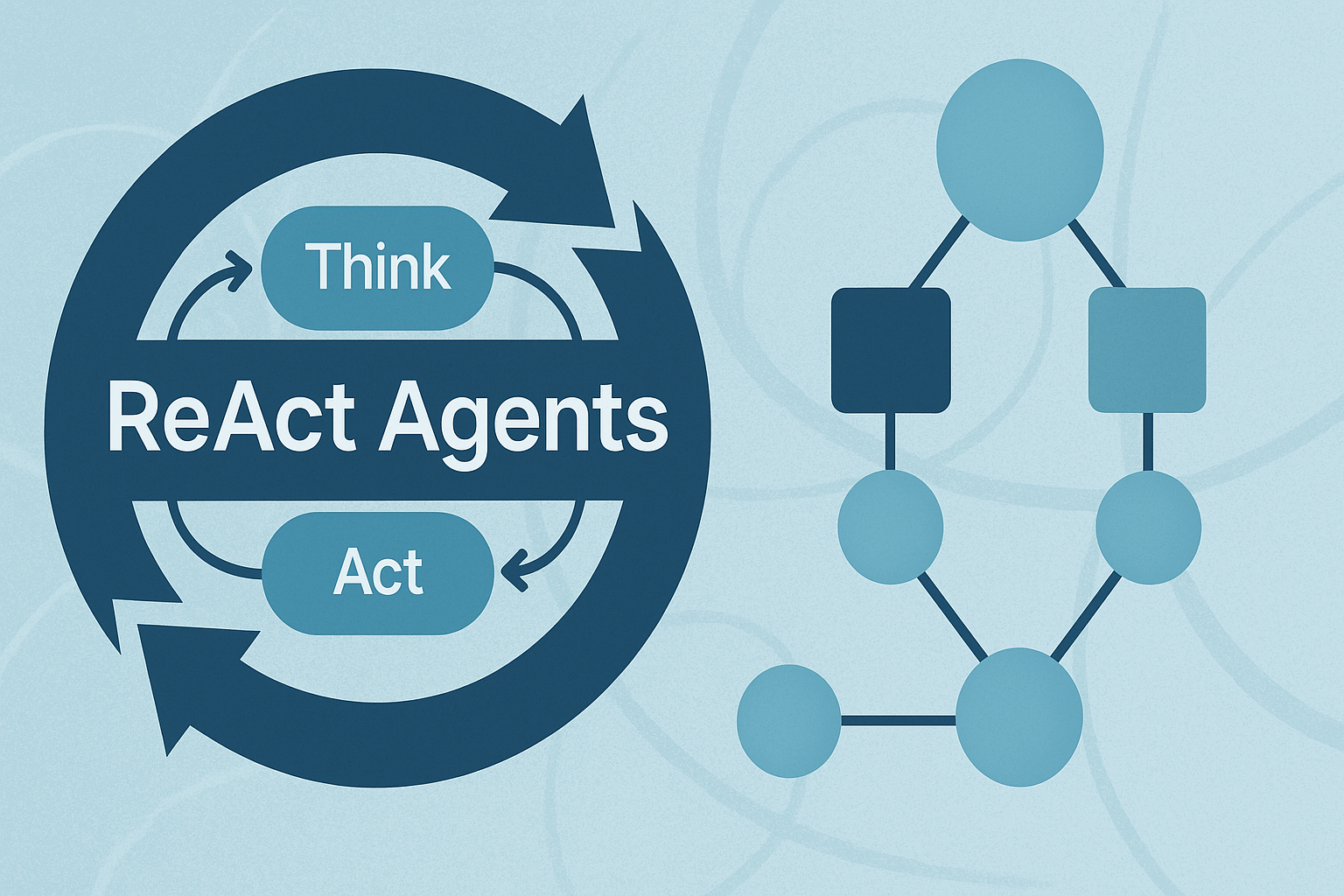
Building ReAct Agents with LangGraph: A Beginner’s GuideMachineLearningMastery.com