Weights & Biases: A KDnuggets Crash CourseKDnuggets A hands-on guide to tracking experiments, versioning models, and keeping your ML projects reproducible with Weights & Biases.
A hands-on guide to tracking experiments, versioning models, and keeping your ML projects reproducible with Weights & Biases. Read More
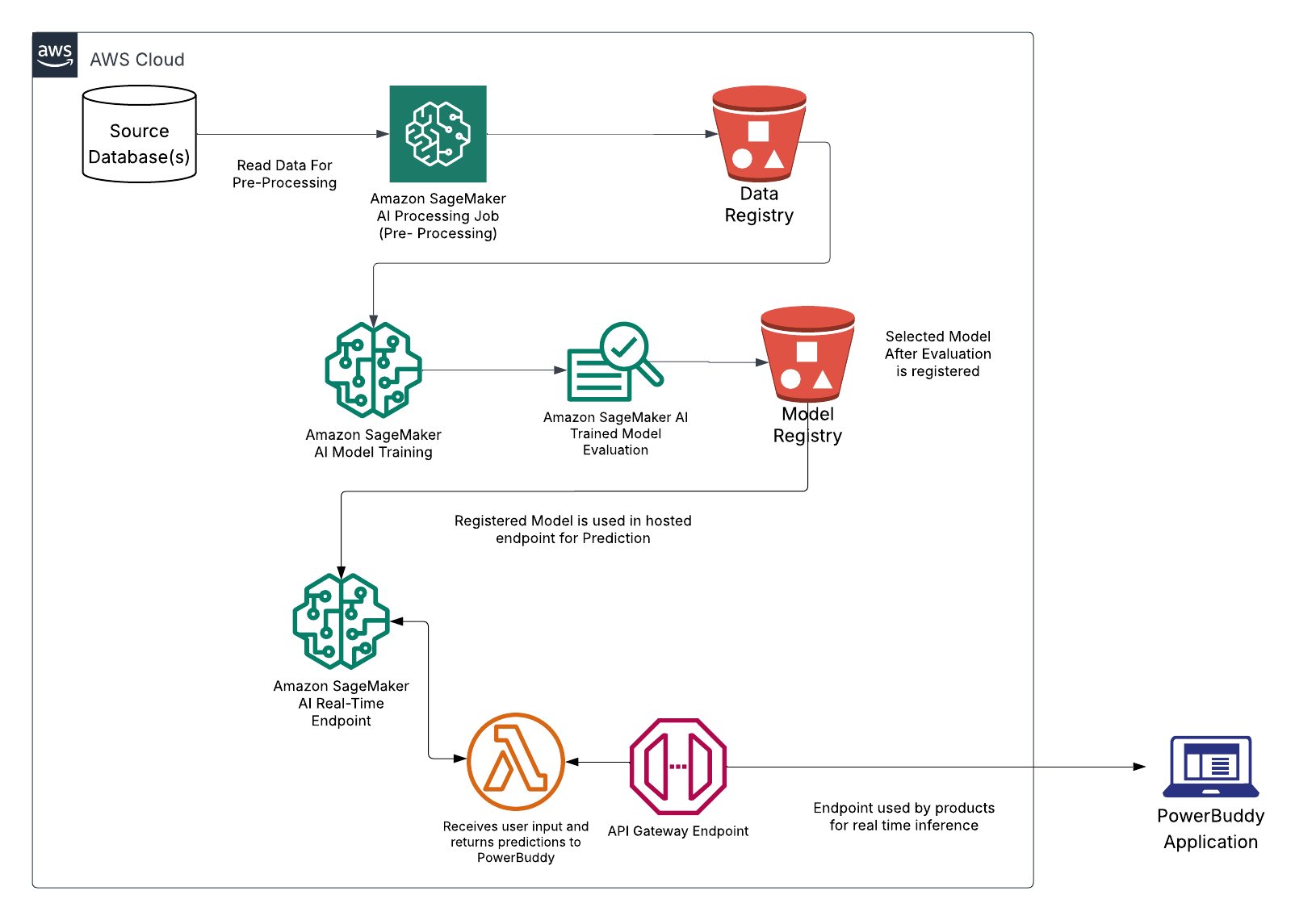
Responsible AI: How PowerSchool safeguards millions of students with AI-powered content filtering using Amazon SageMaker AIArtificial Intelligence In this post, we demonstrate how PowerSchool built and deployed a custom content filtering solution using Amazon SageMaker AI that achieved better accuracy while maintaining low false positive rates. We walk through our technical approach to fine tuning Llama 3.1 8B, our deployment architecture, and the performance results from internal validations.
In this post, we demonstrate how PowerSchool built and deployed a custom content filtering solution using Amazon SageMaker AI that achieved better accuracy while maintaining low false positive rates. We walk through our technical approach to fine tuning Llama 3.1 8B, our deployment architecture, and the performance results from internal validations. Read More

Plotly Dash — A Structured Framework for a Multi-Page DashboardTowards Data Science An easy starting point for larger and more complicated Dash dashboards
The post Plotly Dash — A Structured Framework for a Multi-Page Dashboard appeared first on Towards Data Science.
An easy starting point for larger and more complicated Dash dashboards
The post Plotly Dash — A Structured Framework for a Multi-Page Dashboard appeared first on Towards Data Science. Read More
WavInWav: Time-domain Speech Hiding via Invertible Neural Networkcs.AI updates on arXiv.org arXiv:2510.02915v1 Announce Type: cross
Abstract: Data hiding is essential for secure communication across digital media, and recent advances in Deep Neural Networks (DNNs) provide enhanced methods for embedding secret information effectively. However, previous audio hiding methods often result in unsatisfactory quality when recovering secret audio, due to their inherent limitations in the modeling of time-frequency relationships. In this paper, we explore these limitations and introduce a new DNN-based approach. We use a flow-based invertible neural network to establish a direct link between stego audio, cover audio, and secret audio, enhancing the reversibility of embedding and extracting messages. To address common issues from time-frequency transformations that degrade secret audio quality during recovery, we implement a time-frequency loss on the time-domain signal. This approach not only retains the benefits of time-frequency constraints but also enhances the reversibility of message recovery, which is vital for practical applications. We also add an encryption technique to protect the hidden data from unauthorized access. Experimental results on the VCTK and LibriSpeech datasets demonstrate that our method outperforms previous approaches in terms of subjective and objective metrics and exhibits robustness to various types of noise, suggesting its utility in targeted secure communication scenarios.
arXiv:2510.02915v1 Announce Type: cross
Abstract: Data hiding is essential for secure communication across digital media, and recent advances in Deep Neural Networks (DNNs) provide enhanced methods for embedding secret information effectively. However, previous audio hiding methods often result in unsatisfactory quality when recovering secret audio, due to their inherent limitations in the modeling of time-frequency relationships. In this paper, we explore these limitations and introduce a new DNN-based approach. We use a flow-based invertible neural network to establish a direct link between stego audio, cover audio, and secret audio, enhancing the reversibility of embedding and extracting messages. To address common issues from time-frequency transformations that degrade secret audio quality during recovery, we implement a time-frequency loss on the time-domain signal. This approach not only retains the benefits of time-frequency constraints but also enhances the reversibility of message recovery, which is vital for practical applications. We also add an encryption technique to protect the hidden data from unauthorized access. Experimental results on the VCTK and LibriSpeech datasets demonstrate that our method outperforms previous approaches in terms of subjective and objective metrics and exhibits robustness to various types of noise, suggesting its utility in targeted secure communication scenarios. Read More

7 LinkedIn Tricks to Get Noticed by RecruitersKDnuggets No recruiters contacted you recently? Here are 7 LinkedIn tricks to make you stand out.
No recruiters contacted you recently? Here are 7 LinkedIn tricks to make you stand out. Read More

Google’s new AI agent rewrites code to automate vulnerability fixesAI News Google DeepMind has deployed a new AI agent designed to autonomously find and fix critical security vulnerabilities in software code. The system, aptly-named CodeMender, has already contributed 72 security fixes to established open-source projects in the last six months. Identifying and patching vulnerabilities is a notoriously difficult and time-consuming process, even with the aid of
The post Google’s new AI agent rewrites code to automate vulnerability fixes appeared first on AI News.
Google DeepMind has deployed a new AI agent designed to autonomously find and fix critical security vulnerabilities in software code. The system, aptly-named CodeMender, has already contributed 72 security fixes to established open-source projects in the last six months. Identifying and patching vulnerabilities is a notoriously difficult and time-consuming process, even with the aid of
The post Google’s new AI agent rewrites code to automate vulnerability fixes appeared first on AI News. Read More
How I Used ChatGPT to Land My Next Data Science RoleTowards Data Science Practical AI hacks for every stage of the job search — with real prompts and examples
The post How I Used ChatGPT to Land My Next Data Science Role appeared first on Towards Data Science.
Practical AI hacks for every stage of the job search — with real prompts and examples
The post How I Used ChatGPT to Land My Next Data Science Role appeared first on Towards Data Science. Read More
How to Build a Powerful Deep Research SystemTowards Data Science Learn how to access vasts amounts of information with your own deep research system
The post How to Build a Powerful Deep Research System appeared first on Towards Data Science.
Learn how to access vasts amounts of information with your own deep research system
The post How to Build a Powerful Deep Research System appeared first on Towards Data Science. Read More
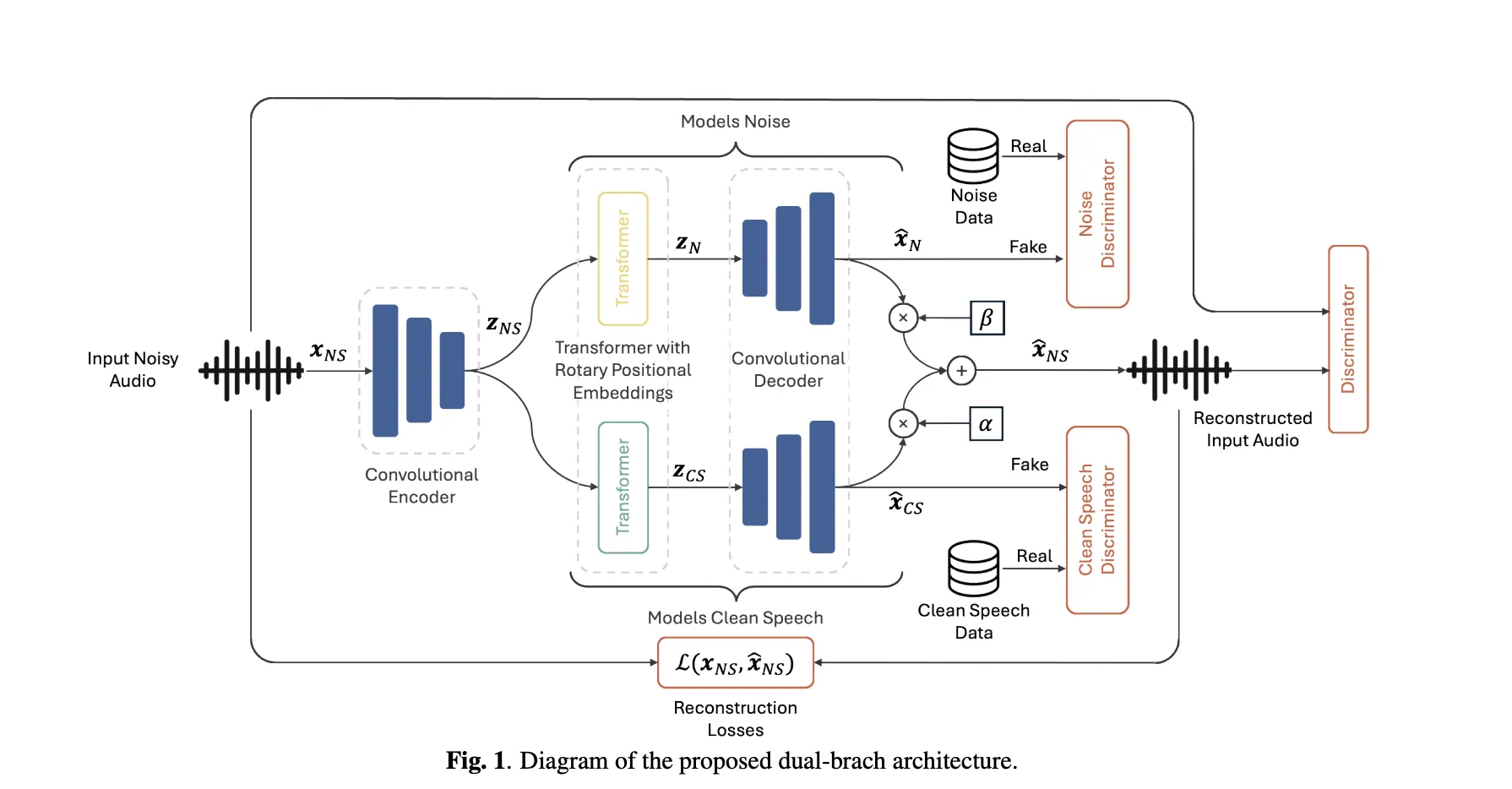
This AI Paper Proposes a Novel Dual-Branch Encoder-Decoder Architecture for Unsupervised Speech Enhancement (SE)MarkTechPost Can a speech enhancer trained only on real noisy recordings cleanly separate speech and noise—without ever seeing paired data? A team of researchers from Brno University of Technology and Johns Hopkins University proposes Unsupervised Speech Enhancement using Data-defined Priors (USE-DDP), a dual-stream encoder–decoder that separates any noisy input into two waveforms—estimated clean speech and residual
The post This AI Paper Proposes a Novel Dual-Branch Encoder-Decoder Architecture for Unsupervised Speech Enhancement (SE) appeared first on MarkTechPost.
Can a speech enhancer trained only on real noisy recordings cleanly separate speech and noise—without ever seeing paired data? A team of researchers from Brno University of Technology and Johns Hopkins University proposes Unsupervised Speech Enhancement using Data-defined Priors (USE-DDP), a dual-stream encoder–decoder that separates any noisy input into two waveforms—estimated clean speech and residual
The post This AI Paper Proposes a Novel Dual-Branch Encoder-Decoder Architecture for Unsupervised Speech Enhancement (SE) appeared first on MarkTechPost. Read More
A Coding Implementation to Build a Transformer-Based Regression Language Model to Predict Continuous Values from TextMarkTechPost We will build a Regression Language Model (RLM), a model that predicts continuous numerical values directly from text sequences in this coding implementation. Instead of classifying or generating text, we focus on training a transformer-based architecture that learns quantitative relationships hidden within natural language descriptions. We start by generating synthetic text-to-number data, tokenizing it efficiently,
The post A Coding Implementation to Build a Transformer-Based Regression Language Model to Predict Continuous Values from Text appeared first on MarkTechPost.
We will build a Regression Language Model (RLM), a model that predicts continuous numerical values directly from text sequences in this coding implementation. Instead of classifying or generating text, we focus on training a transformer-based architecture that learns quantitative relationships hidden within natural language descriptions. We start by generating synthetic text-to-number data, tokenizing it efficiently,
The post A Coding Implementation to Build a Transformer-Based Regression Language Model to Predict Continuous Values from Text appeared first on MarkTechPost. Read More