

A new way to express yourself: Gemini can now create musicGoogle DeepMind News The Gemini app now features our most advanced music generation model Lyria 3, empowering anyone to make 30-second tracks using text or images.
The Gemini app now features our most advanced music generation model Lyria 3, empowering anyone to make 30-second tracks using text or images. Read More

How financial institutions are embedding AI decision-makingAI News For leaders in the financial sector, the experimental phase of generative AI has concluded and the focus for 2026 is operational integration. While early adoption centred on content generation and efficiency in isolated workflows, the current requirement is to industrialise these capabilities. The objective is to create systems where AI agents do not merely assist
The post How financial institutions are embedding AI decision-making appeared first on AI News.
For leaders in the financial sector, the experimental phase of generative AI has concluded and the focus for 2026 is operational integration. While early adoption centred on content generation and efficiency in isolated workflows, the current requirement is to industrialise these capabilities. The objective is to create systems where AI agents do not merely assist
The post How financial institutions are embedding AI decision-making appeared first on AI News. Read More
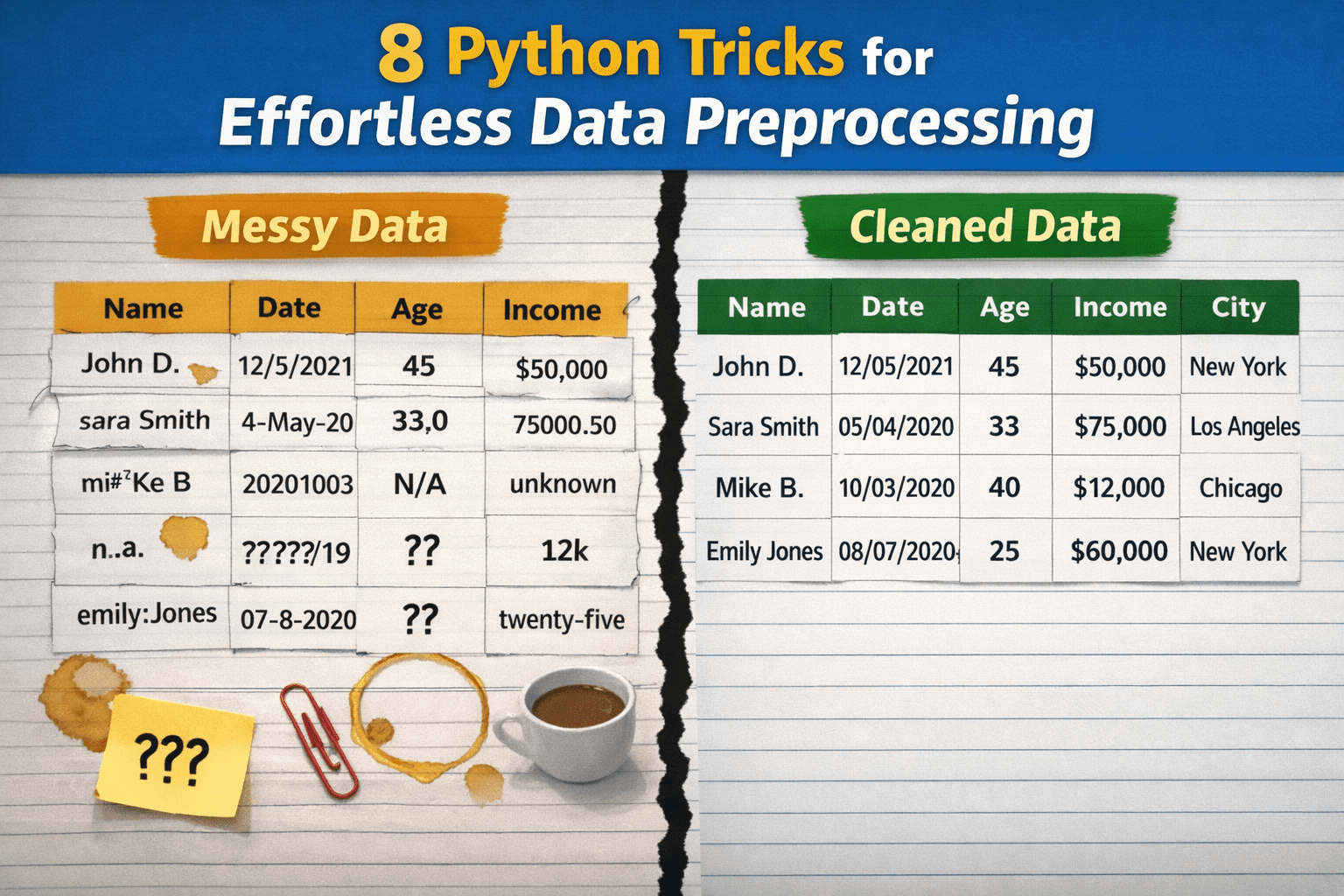
From Messy to Clean: 8 Python Tricks for Effortless Data PreprocessingKDnuggets 8 Python tricks to turn raw, messy data into clean, neatly preprocessed data with minimal effort.
8 Python tricks to turn raw, messy data into clean, neatly preprocessed data with minimal effort. Read More
[Tutorial] Building a Visual Document Retrieval Pipeline with ColPali and Late Interaction ScoringMarkTechPost In this tutorial, we build an end-to-end visual document retrieval pipeline using ColPali. We focus on making the setup robust by resolving common dependency conflicts and ensuring the environment stays stable. We render PDF pages as images, embed them using ColPali’s multi-vector representations, and rely on late-interaction scoring to retrieve the most relevant pages for
The post [Tutorial] Building a Visual Document Retrieval Pipeline with ColPali and Late Interaction Scoring appeared first on MarkTechPost.
In this tutorial, we build an end-to-end visual document retrieval pipeline using ColPali. We focus on making the setup robust by resolving common dependency conflicts and ensuring the environment stays stable. We render PDF pages as images, embed them using ColPali’s multi-vector representations, and rely on late-interaction scoring to retrieve the most relevant pages for
The post [Tutorial] Building a Visual Document Retrieval Pipeline with ColPali and Late Interaction Scoring appeared first on MarkTechPost. Read More
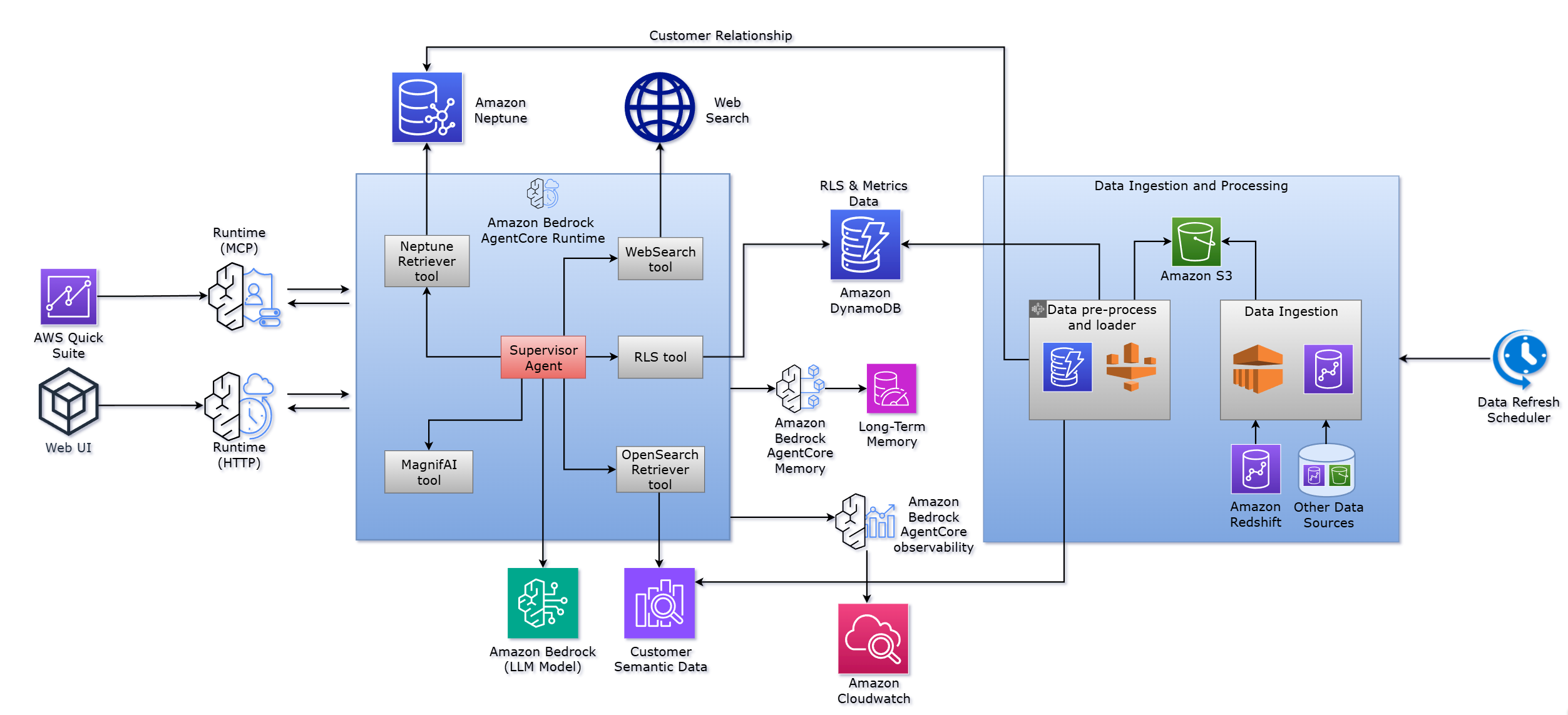
Build unified intelligence with Amazon Bedrock AgentCoreArtificial Intelligence In this post, we demonstrate how to build unified intelligence systems using Amazon Bedrock AgentCore through our real-world implementation of the Customer Agent and Knowledge Engine (CAKE).
In this post, we demonstrate how to build unified intelligence systems using Amazon Bedrock AgentCore through our real-world implementation of the Customer Agent and Knowledge Engine (CAKE). Read More

The Reasonable Effectiveness of Virtue Ethics in AI AlignmentThe Gradient Preface
This essay argues that rational people don’t have goals, and that rational AIs shouldn’t have goals. Human actions are rational not because we direct them at some final ‘goals,’ but because we align actions to practices[1]: networks of actions, action-dispositions, action-evaluation criteria,
Preface
This essay argues that rational people don’t have goals, and that rational AIs shouldn’t have goals. Human actions are rational not because we direct them at some final ‘goals,’ but because we align actions to practices[1]: networks of actions, action-dispositions, action-evaluation criteria, Read More

Tavus Launches Phoenix-4: A Gaussian-Diffusion Model Bringing Real-Time Emotional Intelligence And Sub-600ms Latency To Generative Video AIMarkTechPost The ‘uncanny valley’ is the final frontier for generative video. We have seen AI avatars that can talk, but they often lack the soul of human interaction. They suffer from stiff movements and a lack of emotional context. Tavus aims to fix this with the launch of Phoenix-4, a new generative AI model designed for
The post Tavus Launches Phoenix-4: A Gaussian-Diffusion Model Bringing Real-Time Emotional Intelligence And Sub-600ms Latency To Generative Video AI appeared first on MarkTechPost.
The ‘uncanny valley’ is the final frontier for generative video. We have seen AI avatars that can talk, but they often lack the soul of human interaction. They suffer from stiff movements and a lack of emotional context. Tavus aims to fix this with the launch of Phoenix-4, a new generative AI model designed for
The post Tavus Launches Phoenix-4: A Gaussian-Diffusion Model Bringing Real-Time Emotional Intelligence And Sub-600ms Latency To Generative Video AI appeared first on MarkTechPost. Read More
Can AI Solve Failures in Your Supply Chain?Towards Data Science When your warehouse and transportation teams blame each other for late deliveries, who’s right? We can ask an agent connected to the data settle the debate.
The post Can AI Solve Failures in Your Supply Chain? appeared first on Towards Data Science.
When your warehouse and transportation teams blame each other for late deliveries, who’s right? We can ask an agent connected to the data settle the debate.
The post Can AI Solve Failures in Your Supply Chain? appeared first on Towards Data Science. Read More
Google DeepMind Releases Lyria 3: An Advanced Music Generation AI Model that Turns Photos and Text into Custom Tracks with Included Lyrics and VocalsMarkTechPost Google DeepMind is pushing the boundaries of generative AI again. This time, the focus is not on text or images. It is on music. The Google team recently introduced Lyria 3, their most advanced music generation model to date. Lyria 3 represents a significant shift in how machines handle complex audio waveforms and creative intent.
The post Google DeepMind Releases Lyria 3: An Advanced Music Generation AI Model that Turns Photos and Text into Custom Tracks with Included Lyrics and Vocals appeared first on MarkTechPost.
Google DeepMind is pushing the boundaries of generative AI again. This time, the focus is not on text or images. It is on music. The Google team recently introduced Lyria 3, their most advanced music generation model to date. Lyria 3 represents a significant shift in how machines handle complex audio waveforms and creative intent.
The post Google DeepMind Releases Lyria 3: An Advanced Music Generation AI Model that Turns Photos and Text into Custom Tracks with Included Lyrics and Vocals appeared first on MarkTechPost. Read More
Building Cost-Efficient Agentic RAG on Long-Text Documents in SQL TablesTowards Data Science Designing a hybrid SQL + vector retrieval system without schema changes, data migration, or performance trade-offs
The post Building Cost-Efficient Agentic RAG on Long-Text Documents in SQL Tables appeared first on Towards Data Science.
Designing a hybrid SQL + vector retrieval system without schema changes, data migration, or performance trade-offs
The post Building Cost-Efficient Agentic RAG on Long-Text Documents in SQL Tables appeared first on Towards Data Science. Read More