
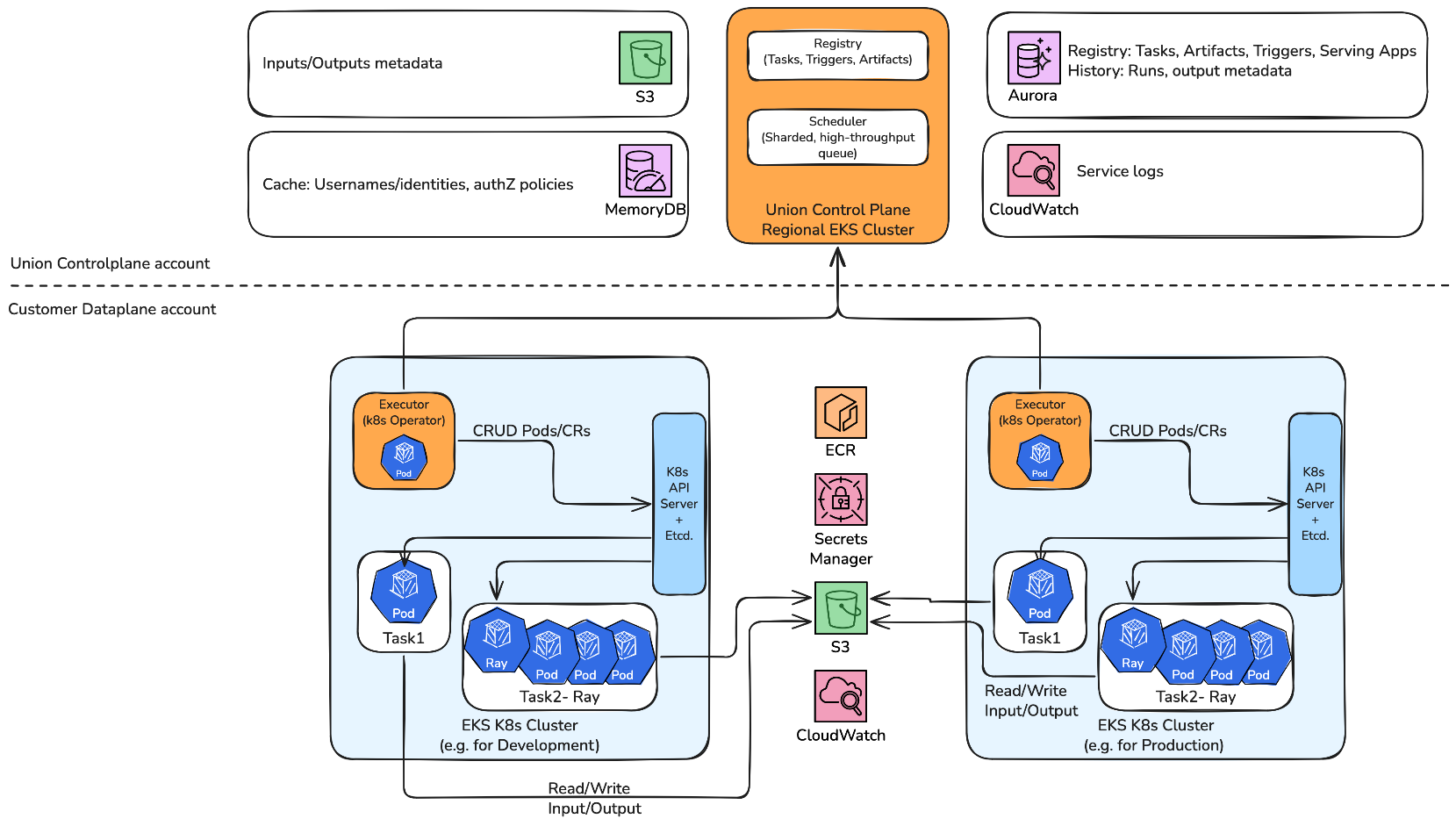
Build AI workflows on Amazon EKS with Union.ai and FlyteArtificial Intelligence In this post, we explain how you can use the Flyte Python SDK to orchestrate and scale AI/ML workflows. We explore how the Union.ai 2.0 system enables deployment of Flyte on Amazon Elastic Kubernetes Service (Amazon EKS), integrating seamlessly with AWS services like Amazon Simple Storage Service (Amazon S3), Amazon Aurora, AWS Identity and Access Management (IAM), and Amazon CloudWatch. We explore the solution through an AI workflow example, using the new Amazon S3 Vectors service.
In this post, we explain how you can use the Flyte Python SDK to orchestrate and scale AI/ML workflows. We explore how the Union.ai 2.0 system enables deployment of Flyte on Amazon Elastic Kubernetes Service (Amazon EKS), integrating seamlessly with AWS services like Amazon Simple Storage Service (Amazon S3), Amazon Aurora, AWS Identity and Access Management (IAM), and Amazon CloudWatch. We explore the solution through an AI workflow example, using the new Amazon S3 Vectors service. Read More

Amazon Quick Suite now supports key pair authentication to Snowflake data sourceArtificial Intelligence In this blog post, we will guide you through establishing data source connectivity between Amazon Quick Sight and Snowflake through secure key pair authentication.
In this blog post, we will guide you through establishing data source connectivity between Amazon Quick Sight and Snowflake through secure key pair authentication. Read More

Gemini 3.1 Pro: A smarter model for your most complex tasksGoogle DeepMind News 3.1 Pro is designed for tasks where a simple answer isn’t enough.
3.1 Pro is designed for tasks where a simple answer isn’t enough. Read More
Understanding the Chi-Square Test Beyond the FormulaTowards Data Science How categorical data becomes statistical evidence.
The post Understanding the Chi-Square Test Beyond the Formula appeared first on Towards Data Science.
How categorical data becomes statistical evidence.
The post Understanding the Chi-Square Test Beyond the Formula appeared first on Towards Data Science. Read More
DBS pilots system that lets AI agents make payments for customersAI News Artificial intelligence is moving closer to the point where it can act, not advise. A new pilot by DBS Bank shows how that change may soon affect everyday payments, as financial institutions begin testing systems that allow AI agents to complete purchases on behalf of customers. DBS is working with Visa to trial Visa Intelligent
The post DBS pilots system that lets AI agents make payments for customers appeared first on AI News.
Artificial intelligence is moving closer to the point where it can act, not advise. A new pilot by DBS Bank shows how that change may soon affect everyday payments, as financial institutions begin testing systems that allow AI agents to complete purchases on behalf of customers. DBS is working with Visa to trial Visa Intelligent
The post DBS pilots system that lets AI agents make payments for customers appeared first on AI News. Read More
Top 5 AI Code Review Tools for DevelopersKDnuggets Code reviews shouldn’t be a bottleneck. The best AI code review tools now catch bugs, anti-patterns, security flaws, and more in seconds before they ever hit production.
Code reviews shouldn’t be a bottleneck. The best AI code review tools now catch bugs, anti-patterns, security flaws, and more in seconds before they ever hit production. Read More

Infosys AI implementation framework offers business leaders guidanceAI News As a large provider of technology services operating in multiple industries, Infosys is one of the names that quickly come to mind when decision-makers consider possible providers of consultation on and practical implementation of any AI project – discrete or organisation-wide. Infosys delivers these services through its Topaz Fabric, leveraging its partnerships with specific AI
The post Infosys AI implementation framework offers business leaders guidance appeared first on AI News.
As a large provider of technology services operating in multiple industries, Infosys is one of the names that quickly come to mind when decision-makers consider possible providers of consultation on and practical implementation of any AI project – discrete or organisation-wide. Infosys delivers these services through its Topaz Fabric, leveraging its partnerships with specific AI
The post Infosys AI implementation framework offers business leaders guidance appeared first on AI News. Read More
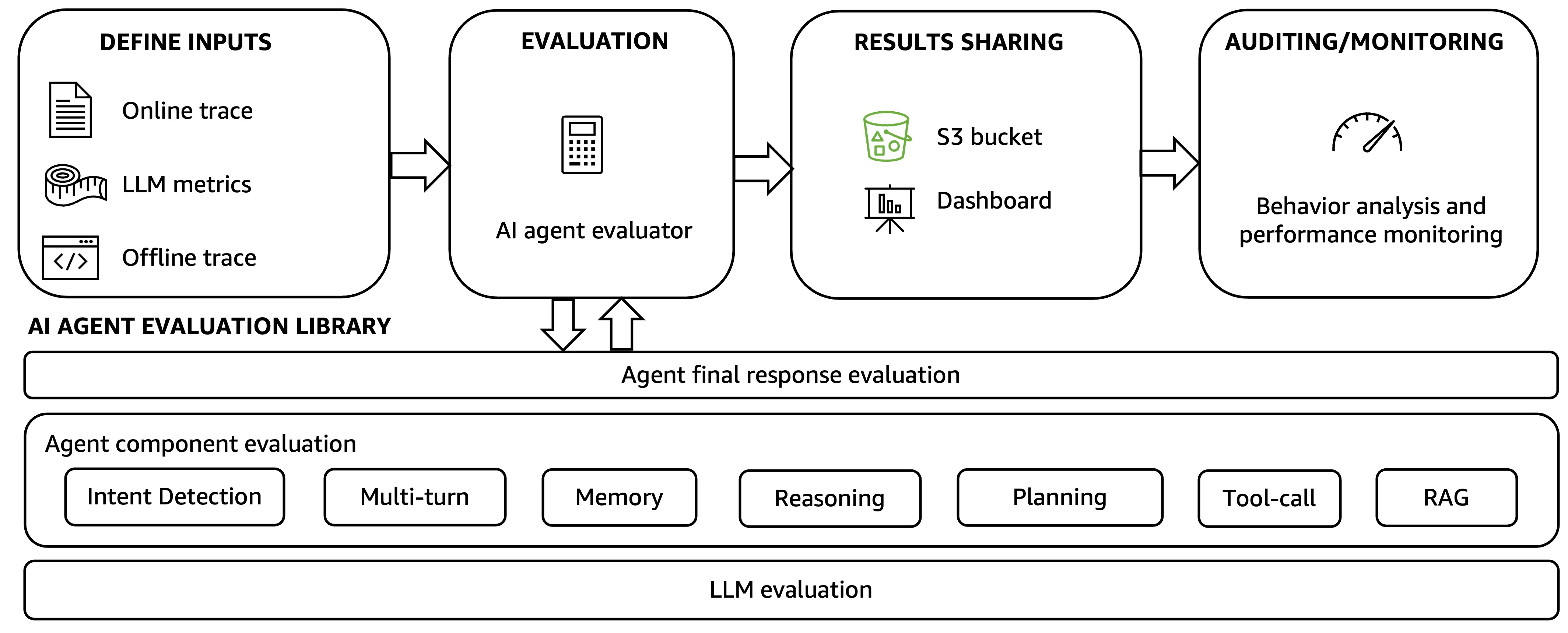
Evaluating AI agents: Real-world lessons from building agentic systems at AmazonArtificial Intelligence In this post, we present a comprehensive evaluation framework for Amazon agentic AI systems that addresses the complexity of agentic AI applications at Amazon through two core components: a generic evaluation workflow that standardizes assessment procedures across diverse agent implementations, and an agent evaluation library that provides systematic measurements and metrics in Amazon Bedrock AgentCore Evaluations, along with Amazon use case-specific evaluation approaches and metrics.
In this post, we present a comprehensive evaluation framework for Amazon agentic AI systems that addresses the complexity of agentic AI applications at Amazon through two core components: a generic evaluation workflow that standardizes assessment procedures across diverse agent implementations, and an agent evaluation library that provides systematic measurements and metrics in Amazon Bedrock AgentCore Evaluations, along with Amazon use case-specific evaluation approaches and metrics. Read More
Why Every Analytics Engineer Needs to Understand Data ArchitectureTowards Data Science Get the data architecture right, and everything else becomes easier.
I know it sounds simple, but in reality, little nuances in designing your data architecture may have costly implications. This article provides a crash course on the architectures that shape your daily decisions – from relational databases to event-driven systems.
The post Why Every Analytics Engineer Needs to Understand Data Architecture appeared first on Towards Data Science.
Get the data architecture right, and everything else becomes easier.
I know it sounds simple, but in reality, little nuances in designing your data architecture may have costly implications. This article provides a crash course on the architectures that shape your daily decisions – from relational databases to event-driven systems.
The post Why Every Analytics Engineer Needs to Understand Data Architecture appeared first on Towards Data Science. Read More
Agentic AI for Modern Deep Learning ExperimentationTowards Data Science Stop babysitting training runs. Start shipping research. Autonomous experiment management built for/by deep learning engineers.
The post Agentic AI for Modern Deep Learning Experimentation appeared first on Towards Data Science.
Stop babysitting training runs. Start shipping research. Autonomous experiment management built for/by deep learning engineers.
The post Agentic AI for Modern Deep Learning Experimentation appeared first on Towards Data Science. Read More