Taming Silent Failures: A Framework for Verifiable AI Reliabilitycs.AI updates on arXiv.org arXiv:2510.22224v1 Announce Type: cross
Abstract: The integration of Artificial Intelligence (AI) into safety-critical systems introduces a new reliability paradigm: silent failures, where AI produces confident but incorrect outputs that can be dangerous. This paper introduces the Formal Assurance and Monitoring Environment (FAME), a novel framework that confronts this challenge. FAME synergizes the mathematical rigor of offline formal synthesis with the vigilance of online runtime monitoring to create a verifiable safety net around opaque AI components. We demonstrate its efficacy in an autonomous vehicle perception system, where FAME successfully detected 93.5% of critical safety violations that were otherwise silent. By contextualizing our framework within the ISO 26262 and ISO/PAS 8800 standards, we provide reliability engineers with a practical, certifiable pathway for deploying trustworthy AI. FAME represents a crucial shift from accepting probabilistic performance to enforcing provable safety in next-generation systems.
arXiv:2510.22224v1 Announce Type: cross
Abstract: The integration of Artificial Intelligence (AI) into safety-critical systems introduces a new reliability paradigm: silent failures, where AI produces confident but incorrect outputs that can be dangerous. This paper introduces the Formal Assurance and Monitoring Environment (FAME), a novel framework that confronts this challenge. FAME synergizes the mathematical rigor of offline formal synthesis with the vigilance of online runtime monitoring to create a verifiable safety net around opaque AI components. We demonstrate its efficacy in an autonomous vehicle perception system, where FAME successfully detected 93.5% of critical safety violations that were otherwise silent. By contextualizing our framework within the ISO 26262 and ISO/PAS 8800 standards, we provide reliability engineers with a practical, certifiable pathway for deploying trustworthy AI. FAME represents a crucial shift from accepting probabilistic performance to enforcing provable safety in next-generation systems. Read More
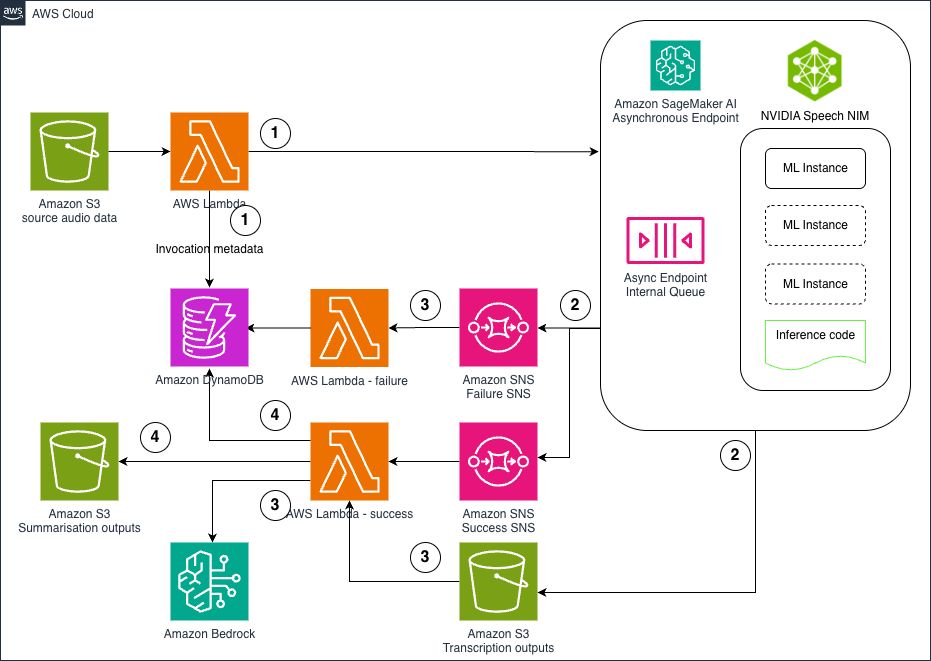
Hosting NVIDIA speech NIM models on Amazon SageMaker AI: Parakeet ASRArtificial Intelligence In this post, we explore how to deploy NVIDIA’s Parakeet ASR model on Amazon SageMaker AI using asynchronous inference endpoints to create a scalable, cost-effective pipeline for processing large volumes of audio data. The solution combines state-of-the-art speech recognition capabilities with AWS managed services like Lambda, S3, and Bedrock to automatically transcribe audio files and generate intelligent summaries, enabling organizations to unlock valuable insights from customer calls, meeting recordings, and other audio content at scale .
In this post, we explore how to deploy NVIDIA’s Parakeet ASR model on Amazon SageMaker AI using asynchronous inference endpoints to create a scalable, cost-effective pipeline for processing large volumes of audio data. The solution combines state-of-the-art speech recognition capabilities with AWS managed services like Lambda, S3, and Bedrock to automatically transcribe audio files and generate intelligent summaries, enabling organizations to unlock valuable insights from customer calls, meeting recordings, and other audio content at scale . Read More
Using NumPy to Analyze My Daily Habits (Sleep, Screen Time & Mood)Towards Data Science Can I use NumPy to figure out how my habits affect my mood and productivity?
The post Using NumPy to Analyze My Daily Habits (Sleep, Screen Time & Mood) appeared first on Towards Data Science.
Can I use NumPy to figure out how my habits affect my mood and productivity?
The post Using NumPy to Analyze My Daily Habits (Sleep, Screen Time & Mood) appeared first on Towards Data Science. Read More
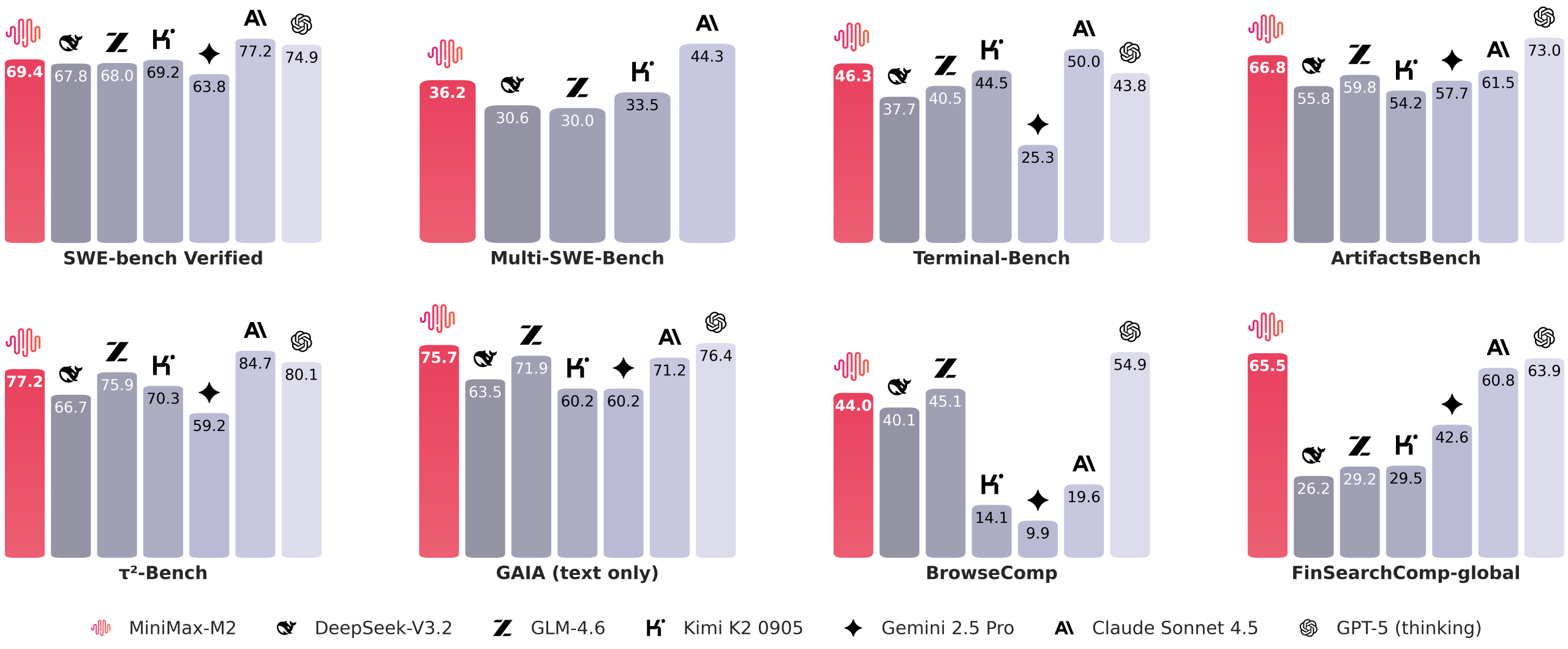
MiniMax Releases MiniMax M2: A Mini Open Model Built for Max Coding and Agentic Workflows at 8% Claude Sonnet Price and ~2x FasterMarkTechPost Can an open source MoE truly power agentic coding workflows at a fraction of flagship model costs while sustaining long-horizon tool use across MCP, shell, browser, retrieval, and code? MiniMax team has just released MiniMax-M2, a mixture of experts MoE model optimized for coding and agent workflows. The weights are published on Hugging Face under
The post MiniMax Releases MiniMax M2: A Mini Open Model Built for Max Coding and Agentic Workflows at 8% Claude Sonnet Price and ~2x Faster appeared first on MarkTechPost.
Can an open source MoE truly power agentic coding workflows at a fraction of flagship model costs while sustaining long-horizon tool use across MCP, shell, browser, retrieval, and code? MiniMax team has just released MiniMax-M2, a mixture of experts MoE model optimized for coding and agent workflows. The weights are published on Hugging Face under
The post MiniMax Releases MiniMax M2: A Mini Open Model Built for Max Coding and Agentic Workflows at 8% Claude Sonnet Price and ~2x Faster appeared first on MarkTechPost. Read More

OpenAI’s bold India play: Free ChatGPT Go accessAI News OpenAI just made its biggest bet on India yet. Starting November 4, the company will hand out free year-long access to ChatGPT Go — a move that puts every marketing executive on notice about how aggressively AI companies are fighting for the world’s fastest-growing digital market. OpenAI will offer its ChatGPT Go plan to users
The post OpenAI’s bold India play: Free ChatGPT Go access appeared first on AI News.
OpenAI just made its biggest bet on India yet. Starting November 4, the company will hand out free year-long access to ChatGPT Go — a move that puts every marketing executive on notice about how aggressively AI companies are fighting for the world’s fastest-growing digital market. OpenAI will offer its ChatGPT Go plan to users
The post OpenAI’s bold India play: Free ChatGPT Go access appeared first on AI News. Read More
Breakthrough optical processor lets AI compute at the speed of lightArtificial Intelligence News — ScienceDaily Researchers at Tsinghua University developed the Optical Feature Extraction Engine (OFE2), an optical engine that processes data at 12.5 GHz using light rather than electricity. Its integrated diffraction and data preparation modules enable unprecedented speed and efficiency for AI tasks. Demonstrations in imaging and trading showed improved accuracy, lower latency, and reduced power demand. This innovation pushes optical computing toward real-world, high-performance AI.
Researchers at Tsinghua University developed the Optical Feature Extraction Engine (OFE2), an optical engine that processes data at 12.5 GHz using light rather than electricity. Its integrated diffraction and data preparation modules enable unprecedented speed and efficiency for AI tasks. Demonstrations in imaging and trading showed improved accuracy, lower latency, and reduced power demand. This innovation pushes optical computing toward real-world, high-performance AI. Read More

OpenAI restructures, enters ‘next chapter’ of Microsoft partnershipAI News OpenAI has completed a major reorganisation and, in the same breath, signed a new definitive partnership agreement with Microsoft. Starting with OpenAI’s reorganisation, the aim is to solidify the nonprofit’s control over the for-profit business and establish the newly named OpenAI Foundation as a global philanthropic powerhouse, holding equity in the commercial arm valued at
The post OpenAI restructures, enters ‘next chapter’ of Microsoft partnership appeared first on AI News.
OpenAI has completed a major reorganisation and, in the same breath, signed a new definitive partnership agreement with Microsoft. Starting with OpenAI’s reorganisation, the aim is to solidify the nonprofit’s control over the for-profit business and establish the newly named OpenAI Foundation as a global philanthropic powerhouse, holding equity in the commercial arm valued at
The post OpenAI restructures, enters ‘next chapter’ of Microsoft partnership appeared first on AI News. Read More
Water Cooler Small Talk, Ep. 9: What “Thinking” and “Reasoning” Really Mean in AI and LLMsTowards Data Science Understanding how AI models “reason” and why it’s not what humans do when we think
The post Water Cooler Small Talk, Ep. 9: What “Thinking” and “Reasoning” Really Mean in AI and LLMs appeared first on Towards Data Science.
Understanding how AI models “reason” and why it’s not what humans do when we think
The post Water Cooler Small Talk, Ep. 9: What “Thinking” and “Reasoning” Really Mean in AI and LLMs appeared first on Towards Data Science. Read More

API Development for Web Apps and Data ProductsKDnuggets Application programming interfaces are essential for modern web applications and data products. They allow different systems to communicate with each other and share data securely.
Application programming interfaces are essential for modern web applications and data products. They allow different systems to communicate with each other and share data securely. Read More
Using Claude Skills with Neo4jTowards Data Science A hands-on exploration of Claude Skills and their potential applications in Neo4j
The post Using Claude Skills with Neo4j appeared first on Towards Data Science.
A hands-on exploration of Claude Skills and their potential applications in Neo4j
The post Using Claude Skills with Neo4j appeared first on Towards Data Science. Read More