

Anthropic Turns MCP Agents Into Code First Systems With ‘Code Execution With MCP’ ApproachMarkTechPost Agents that use the Model Context Protocol MCP have a scaling problem. Every tool definition and every intermediate result is pushed through the context window, which means large workflows burn tokens and hit latency and cost limits fast. Anthropic’s new ‘code execution with MCP’ pattern restructures this pipeline by turning MCP tools into code level
The post Anthropic Turns MCP Agents Into Code First Systems With ‘Code Execution With MCP’ Approach appeared first on MarkTechPost.
Agents that use the Model Context Protocol MCP have a scaling problem. Every tool definition and every intermediate result is pushed through the context window, which means large workflows burn tokens and hit latency and cost limits fast. Anthropic’s new ‘code execution with MCP’ pattern restructures this pipeline by turning MCP tools into code level
The post Anthropic Turns MCP Agents Into Code First Systems With ‘Code Execution With MCP’ Approach appeared first on MarkTechPost. Read More
How to Build an Advanced Multi-Page Reflex Web Application with Real-Time Database, Dynamic State Management, and Reactive UIMarkTechPost In this tutorial, we build an advanced Reflex web application entirely in Python that runs seamlessly inside Colab. We design the app to demonstrate how Reflex enables full-stack development with no JavaScript, just reactive Python code. We create a complete notes-management dashboard featuring two pages, real-time database interactions, filtering, sorting, analytics, and user personalization. We
The post How to Build an Advanced Multi-Page Reflex Web Application with Real-Time Database, Dynamic State Management, and Reactive UI appeared first on MarkTechPost.
In this tutorial, we build an advanced Reflex web application entirely in Python that runs seamlessly inside Colab. We design the app to demonstrate how Reflex enables full-stack development with no JavaScript, just reactive Python code. We create a complete notes-management dashboard featuring two pages, real-time database interactions, filtering, sorting, analytics, and user personalization. We
The post How to Build an Advanced Multi-Page Reflex Web Application with Real-Time Database, Dynamic State Management, and Reactive UI appeared first on MarkTechPost. Read More
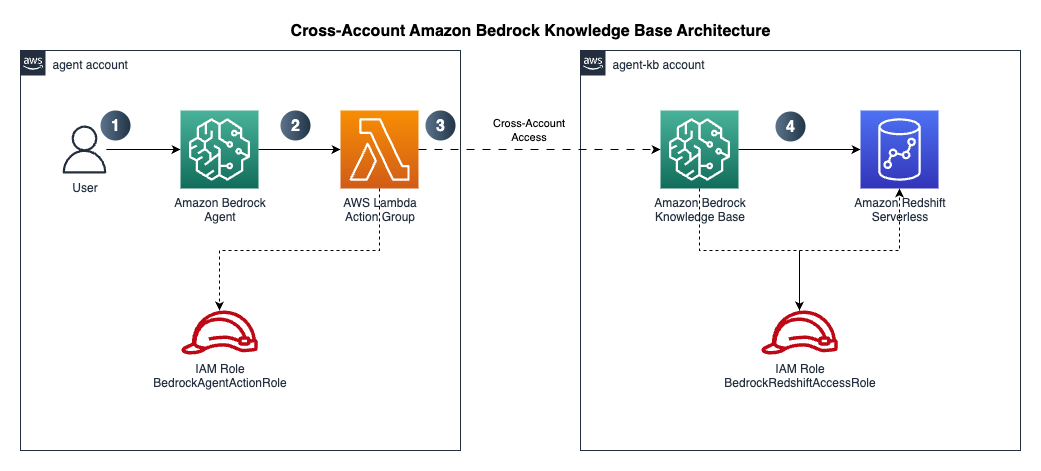
Connect Amazon Bedrock agents to cross-account knowledge basesArtificial Intelligence Organizations need seamless access to their structured data repositories to power intelligent AI agents. However, when these resources span multiple AWS accounts integration challenges can arise. This post explores a practical solution for connecting Amazon Bedrock agents to knowledge bases in Amazon Redshift clusters residing in different AWS accounts.
Organizations need seamless access to their structured data repositories to power intelligent AI agents. However, when these resources span multiple AWS accounts integration challenges can arise. This post explores a practical solution for connecting Amazon Bedrock agents to knowledge bases in Amazon Redshift clusters residing in different AWS accounts. Read More
Google AI Releases ADK Go: A New Open-Source Toolkit Designed to Empower Go Developers to Build Powerful AI AgentsMarkTechPost How do you build reliable AI agents that plug into your existing Go services without bolting on a separate language stack? Google has just released Agent Development Kit for Go. Go developers can now build AI agents with the same framework that already supports Python and Java, while keeping everything inside a familiar Go toolchain
The post Google AI Releases ADK Go: A New Open-Source Toolkit Designed to Empower Go Developers to Build Powerful AI Agents appeared first on MarkTechPost.
How do you build reliable AI agents that plug into your existing Go services without bolting on a separate language stack? Google has just released Agent Development Kit for Go. Go developers can now build AI agents with the same framework that already supports Python and Java, while keeping everything inside a familiar Go toolchain
The post Google AI Releases ADK Go: A New Open-Source Toolkit Designed to Empower Go Developers to Build Powerful AI Agents appeared first on MarkTechPost. Read More
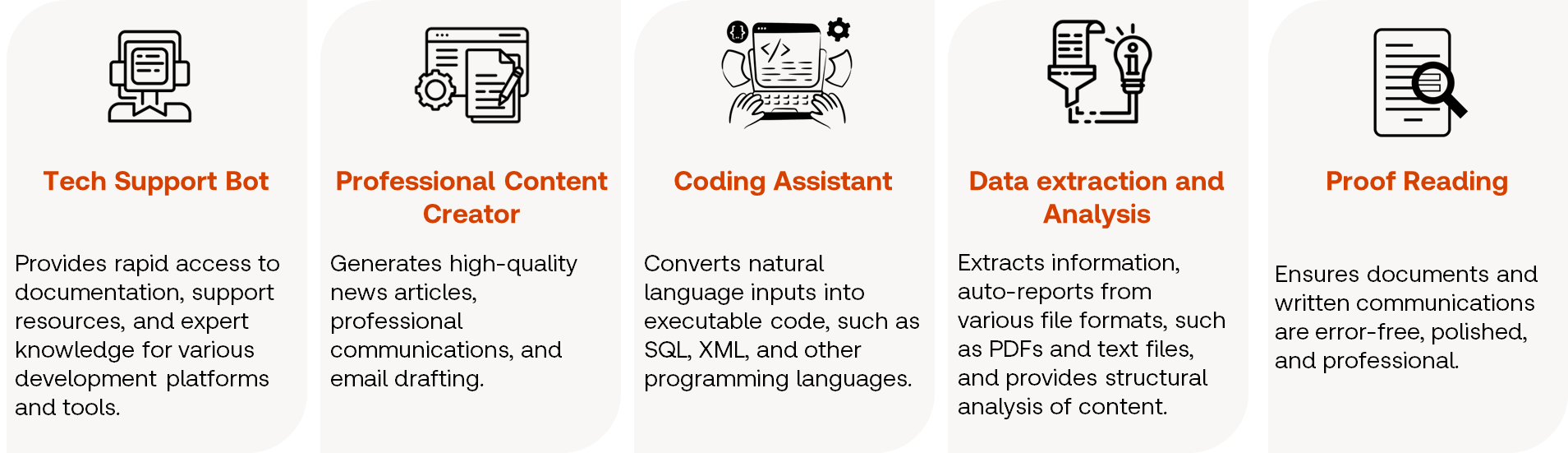
Democratizing AI: How Thomson Reuters Open Arena supports no-code AI for every professional with Amazon BedrockArtificial Intelligence In this blog post, we explore how TR addressed key business use cases with Open Arena, a highly scalable and flexible no-code AI solution powered by Amazon Bedrock and other AWS services such as Amazon OpenSearch Service, Amazon Simple Storage Service (Amazon S3), Amazon DynamoDB, and AWS Lambda. We’ll explain how TR used AWS services to build this solution, including how the architecture was designed, the use cases it solves, and the business profiles that use it.
In this blog post, we explore how TR addressed key business use cases with Open Arena, a highly scalable and flexible no-code AI solution powered by Amazon Bedrock and other AWS services such as Amazon OpenSearch Service, Amazon Simple Storage Service (Amazon S3), Amazon DynamoDB, and AWS Lambda. We’ll explain how TR used AWS services to build this solution, including how the architecture was designed, the use cases it solves, and the business profiles that use it. Read More
Evaluating Synthetic Data — The Million Dollar QuestionTowards Data Science Learn how to evaluate synthetic data quality using the Maximum Similarity Test — a simple, quantitative approach for assessing fidelity, utility, and privacy in synthetic datasets.
The post Evaluating Synthetic Data — The Million Dollar Question appeared first on Towards Data Science.
Learn how to evaluate synthetic data quality using the Maximum Similarity Test — a simple, quantitative approach for assessing fidelity, utility, and privacy in synthetic datasets.
The post Evaluating Synthetic Data — The Million Dollar Question appeared first on Towards Data Science. Read More

Introducing structured output for Custom Model Import in Amazon BedrockArtificial Intelligence Today, we are excited to announce the addition of structured output to Custom Model Import. Structured output constrains a model’s generation process in real time so that every token it produces conforms to a schema you define. Rather than relying on prompt-engineering tricks or brittle post-processing scripts, you can now generate structured outputs directly at inference time.
Today, we are excited to announce the addition of structured output to Custom Model Import. Structured output constrains a model’s generation process in real time so that every token it produces conforms to a schema you define. Rather than relying on prompt-engineering tricks or brittle post-processing scripts, you can now generate structured outputs directly at inference time. Read More
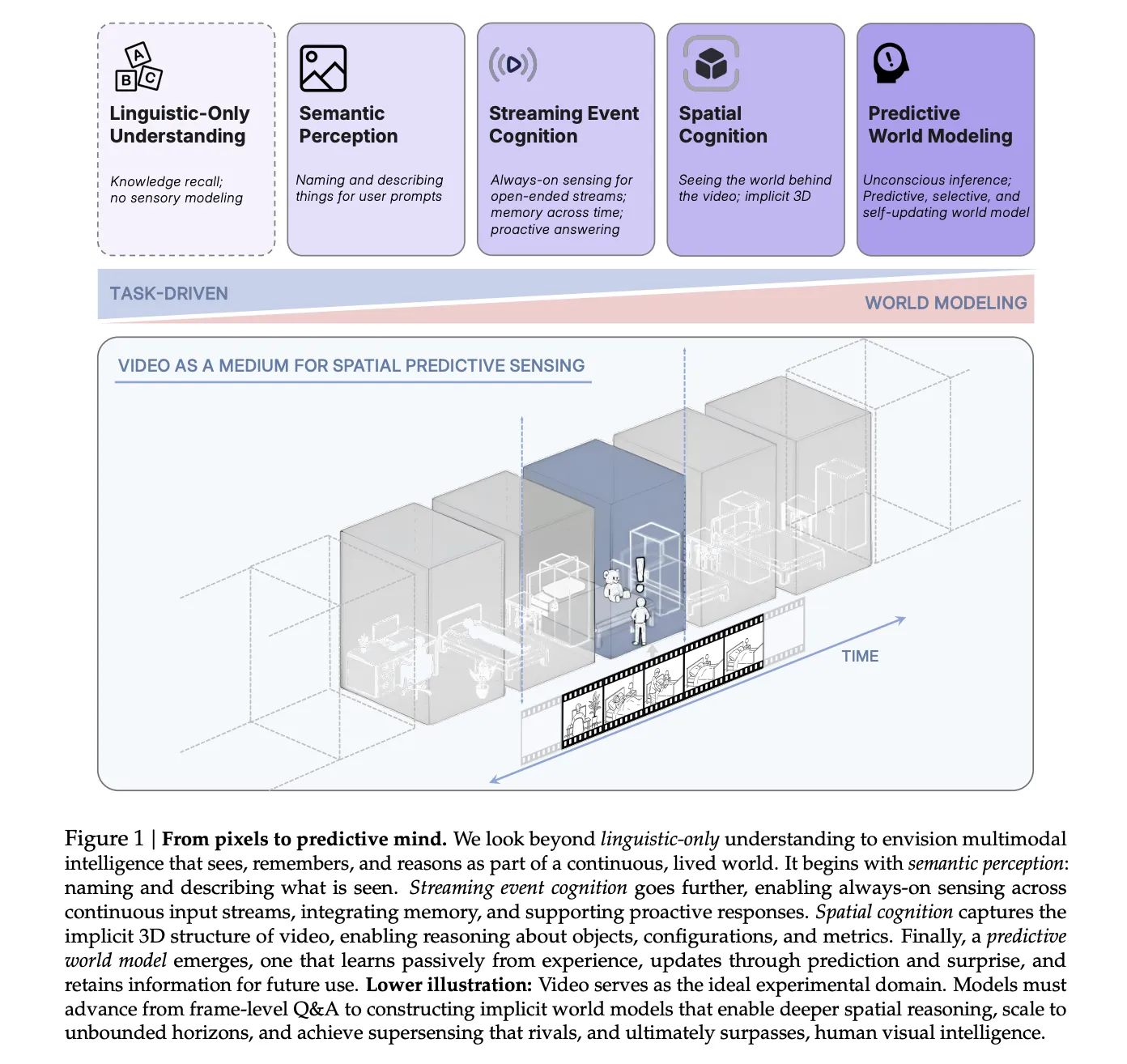
Why Spatial Supersensing is Emerging as the Core Capability for Multimodal AI Systems?MarkTechPost Even strong ‘long-context’ AI models fail badly when they must track objects and counts over long, messy video streams, so the next competitive edge will come from models that predict what comes next and selectively remember only surprising, important events, not from just buying more compute and bigger context windows. A team of researchers from
The post Why Spatial Supersensing is Emerging as the Core Capability for Multimodal AI Systems? appeared first on MarkTechPost.
Even strong ‘long-context’ AI models fail badly when they must track objects and counts over long, messy video streams, so the next competitive edge will come from models that predict what comes next and selectively remember only surprising, important events, not from just buying more compute and bigger context windows. A team of researchers from
The post Why Spatial Supersensing is Emerging as the Core Capability for Multimodal AI Systems? appeared first on MarkTechPost. Read More

Building Full Stack Apps with Firebase StudioKDnuggets Firebase Studio revolutionizes full-stack app development by unifying a cloud-based IDE, the robust Firebase platform, and the power of Gemini’s AI agents.
Firebase Studio revolutionizes full-stack app development by unifying a cloud-based IDE, the robust Firebase platform, and the power of Gemini’s AI agents. Read More

From Dataset to DataFrame to Deployed: Your First Project with Pandas & Scikit-learnKDnuggets In this article, I will take you through a gentle, beginner-friendly machine learning project in which we will build together a regression model that predicts employee income based on socio-economic attributes.
In this article, I will take you through a gentle, beginner-friendly machine learning project in which we will build together a regression model that predicts employee income based on socio-economic attributes. Read More