

Counterfactual Reasoning for Steerable Pluralistic Value Alignment of Large Language Modelscs.AI updates on arXiv.org arXiv:2510.18526v2 Announce Type: replace
Abstract: As large language models (LLMs) become increasingly integrated into applications serving users across diverse cultures, communities and demographics, it is critical to align LLMs with pluralistic human values beyond average principles (e.g., HHH). In psychological and social value theories such as Schwartz’s Value Theory, pluralistic values are represented by multiple value dimensions paired with various priorities. However, existing methods encounter two challenges when aligning with such fine-grained value objectives: 1) they often treat multiple values as independent and equally important, ignoring their interdependence and relative priorities (value complexity); 2) they struggle to precisely control nuanced value priorities, especially those underrepresented ones (value steerability). To handle these challenges, we propose COUPLE, a COUnterfactual reasoning framework for PLuralistic valuE alignment. It introduces a structural causal model (SCM) to feature complex interdependency and prioritization among features, as well as the causal relationship between high-level value dimensions and behaviors. Moreover, it applies counterfactual reasoning to generate outputs aligned with any desired value objectives. Benefitting from explicit causal modeling, COUPLE also provides better interpretability. We evaluate COUPLE on two datasets with different value systems and demonstrate that COUPLE advances other baselines across diverse types of value objectives.
arXiv:2510.18526v2 Announce Type: replace
Abstract: As large language models (LLMs) become increasingly integrated into applications serving users across diverse cultures, communities and demographics, it is critical to align LLMs with pluralistic human values beyond average principles (e.g., HHH). In psychological and social value theories such as Schwartz’s Value Theory, pluralistic values are represented by multiple value dimensions paired with various priorities. However, existing methods encounter two challenges when aligning with such fine-grained value objectives: 1) they often treat multiple values as independent and equally important, ignoring their interdependence and relative priorities (value complexity); 2) they struggle to precisely control nuanced value priorities, especially those underrepresented ones (value steerability). To handle these challenges, we propose COUPLE, a COUnterfactual reasoning framework for PLuralistic valuE alignment. It introduces a structural causal model (SCM) to feature complex interdependency and prioritization among features, as well as the causal relationship between high-level value dimensions and behaviors. Moreover, it applies counterfactual reasoning to generate outputs aligned with any desired value objectives. Benefitting from explicit causal modeling, COUPLE also provides better interpretability. We evaluate COUPLE on two datasets with different value systems and demonstrate that COUPLE advances other baselines across diverse types of value objectives. Read More
Optimizing PyTorch Model Inference on CPUTowards Data Science Flyin’ Like a Lion on Intel Xeon
The post Optimizing PyTorch Model Inference on CPU appeared first on Towards Data Science.
Flyin’ Like a Lion on Intel Xeon
The post Optimizing PyTorch Model Inference on CPU appeared first on Towards Data Science. Read More

Agentic AI smartphones: ByteDance signals opportunity beyond consumer hypeAI News ByteDance’s December 2 launch of an agentic AI smartphone prototype with ZTE sparked immediate consumer enthusiasm – and just as quickly triggered privacy concerns that forced the company to dial back capabilities. But beneath the headline-grabbing sell-out and subsequent controversy lies a more significant story: the enterprise implications of operating-system-level AI agents that can autonomously
The post Agentic AI smartphones: ByteDance signals opportunity beyond consumer hype appeared first on AI News.
ByteDance’s December 2 launch of an agentic AI smartphone prototype with ZTE sparked immediate consumer enthusiasm – and just as quickly triggered privacy concerns that forced the company to dial back capabilities. But beneath the headline-grabbing sell-out and subsequent controversy lies a more significant story: the enterprise implications of operating-system-level AI agents that can autonomously
The post Agentic AI smartphones: ByteDance signals opportunity beyond consumer hype appeared first on AI News. Read More
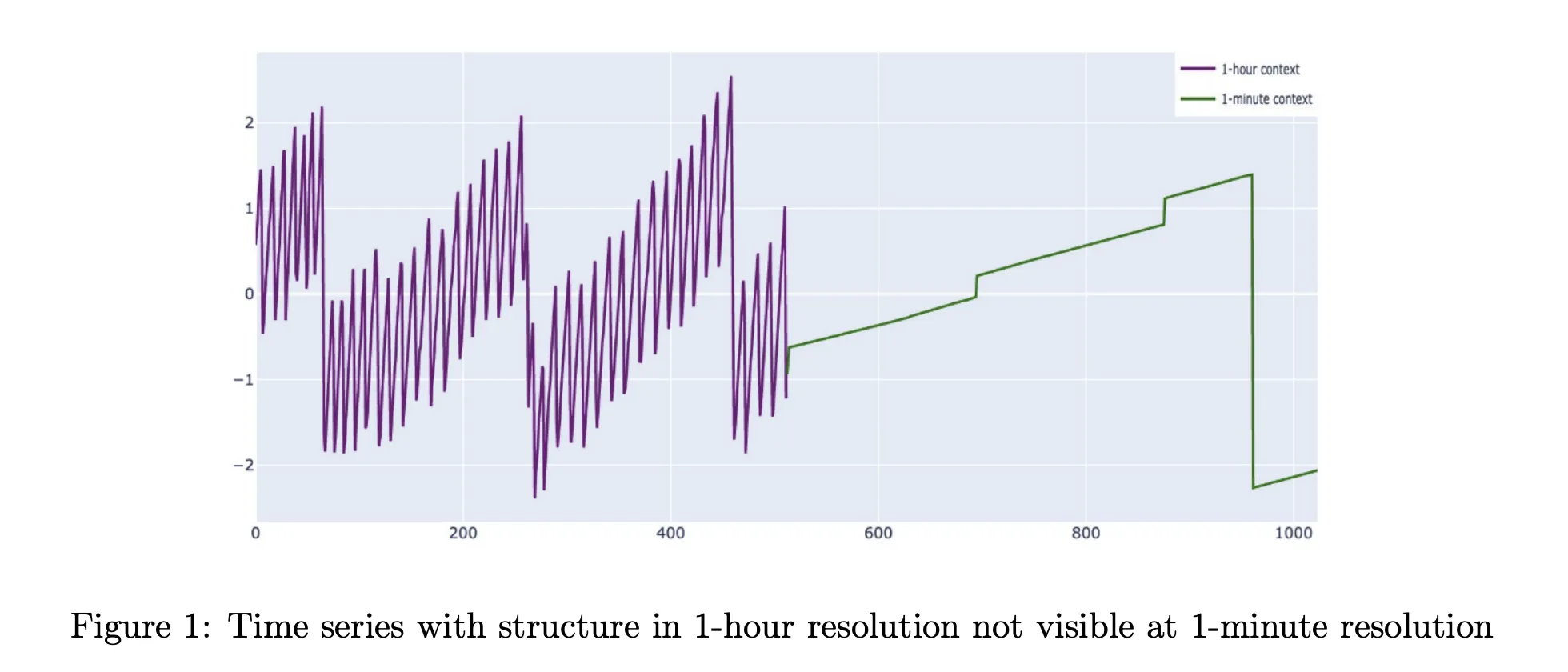
Cisco Released Cisco Time Series Model: Their First Open-Weights Foundation Model based on Decoder-only Transformer ArchitectureMarkTechPost Cisco and Splunk have introduced the Cisco Time Series Model, a univariate zero shot time series foundation model designed for observability and security metrics. It is released as an open weight checkpoint on Hugging Face under an Apache 2.0 license, and it targets forecasting workloads without task specific fine tuning. The model extends TimesFM 2.0
The post Cisco Released Cisco Time Series Model: Their First Open-Weights Foundation Model based on Decoder-only Transformer Architecture appeared first on MarkTechPost.
Cisco and Splunk have introduced the Cisco Time Series Model, a univariate zero shot time series foundation model designed for observability and security metrics. It is released as an open weight checkpoint on Hugging Face under an Apache 2.0 license, and it targets forecasting workloads without task specific fine tuning. The model extends TimesFM 2.0
The post Cisco Released Cisco Time Series Model: Their First Open-Weights Foundation Model based on Decoder-only Transformer Architecture appeared first on MarkTechPost. Read More
Google Colab Integrates KaggleHub for One Click Access to Kaggle Datasets, Models and CompetitionsMarkTechPost Google is closing an old gap between Kaggle and Colab. Colab now has a built in Data Explorer that lets you search Kaggle datasets, models and competitions directly inside a notebook, then pull them in through KaggleHub without leaving the editor. What Colab Data Explorer actually ships? Kaggle announced the feature recently where they describe
The post Google Colab Integrates KaggleHub for One Click Access to Kaggle Datasets, Models and Competitions appeared first on MarkTechPost.
Google is closing an old gap between Kaggle and Colab. Colab now has a built in Data Explorer that lets you search Kaggle datasets, models and competitions directly inside a notebook, then pull them in through KaggleHub without leaving the editor. What Colab Data Explorer actually ships? Kaggle announced the feature recently where they describe
The post Google Colab Integrates KaggleHub for One Click Access to Kaggle Datasets, Models and Competitions appeared first on MarkTechPost. Read More
A Coding Implementation of a Complete Hierarchical Bayesian Regression Workflow in NumPyro Using JAX-Powered Inference and Posterior Predictive AnalysisMarkTechPost In this tutorial, we explore hierarchical Bayesian regression with NumPyro and walk through the entire workflow in a structured manner. We start by generating synthetic data, then we define a probabilistic model that captures both global patterns and group-level variations. Through each snippet, we set up inference using NUTS, analyze posterior distributions, and perform posterior
The post A Coding Implementation of a Complete Hierarchical Bayesian Regression Workflow in NumPyro Using JAX-Powered Inference and Posterior Predictive Analysis appeared first on MarkTechPost.
In this tutorial, we explore hierarchical Bayesian regression with NumPyro and walk through the entire workflow in a structured manner. We start by generating synthetic data, then we define a probabilistic model that captures both global patterns and group-level variations. Through each snippet, we set up inference using NUTS, analyze posterior distributions, and perform posterior
The post A Coding Implementation of a Complete Hierarchical Bayesian Regression Workflow in NumPyro Using JAX-Powered Inference and Posterior Predictive Analysis appeared first on MarkTechPost. Read More
How to Climb the Hidden Career Ladder of Data ScienceTowards Data Science The behaviors that get you promoted
The post How to Climb the Hidden Career Ladder of Data Science appeared first on Towards Data Science.
The behaviors that get you promoted
The post How to Climb the Hidden Career Ladder of Data Science appeared first on Towards Data Science. Read More
How to Build an Adaptive Meta-Reasoning Agent That Dynamically Chooses Between Fast, Deep, and Tool-Based Thinking StrategiesMarkTechPost We begin this tutorial by building a meta-reasoning agent that decides how to think before it thinks. Instead of applying the same reasoning process for every query, we design a system that evaluates complexity, chooses between fast heuristics, deep chain-of-thought reasoning, or tool-based computation, and then adapts its behaviour in real time. By examining each
The post How to Build an Adaptive Meta-Reasoning Agent That Dynamically Chooses Between Fast, Deep, and Tool-Based Thinking Strategies appeared first on MarkTechPost.
We begin this tutorial by building a meta-reasoning agent that decides how to think before it thinks. Instead of applying the same reasoning process for every query, we design a system that evaluates complexity, chooses between fast heuristics, deep chain-of-thought reasoning, or tool-based computation, and then adapts its behaviour in real time. By examining each
The post How to Build an Adaptive Meta-Reasoning Agent That Dynamically Chooses Between Fast, Deep, and Tool-Based Thinking Strategies appeared first on MarkTechPost. Read More
Artificial Intelligence, Machine Learning, Deep Learning, and Generative AI — Clearly ExplainedTowards Data Science Understanding AI in 2026 — from machine learning to generative models
The post Artificial Intelligence, Machine Learning, Deep Learning, and Generative AI — Clearly Explained appeared first on Towards Data Science.
Understanding AI in 2026 — from machine learning to generative models
The post Artificial Intelligence, Machine Learning, Deep Learning, and Generative AI — Clearly Explained appeared first on Towards Data Science. Read More

The Best Web Scraping APIs for AI Models in 2026KDnuggets For powering next-generation AI models in 2026, Bright Data’s Web Scraper API delivers on all fronts: dynamic site support, anti-bot automation, structured output, and global reach.
For powering next-generation AI models in 2026, Bright Data’s Web Scraper API delivers on all fronts: dynamic site support, anti-bot automation, structured output, and global reach. Read More