

Operationalizing Data Minimization for Privacy-Preserving LLM Promptingcs.AI updates on arXiv.org arXiv:2510.03662v1 Announce Type: cross
Abstract: The rapid deployment of large language models (LLMs) in consumer applications has led to frequent exchanges of personal information. To obtain useful responses, users often share more than necessary, increasing privacy risks via memorization, context-based personalization, or security breaches. We present a framework to formally define and operationalize data minimization: for a given user prompt and response model, quantifying the least privacy-revealing disclosure that maintains utility, and we propose a priority-queue tree search to locate this optimal point within a privacy-ordered transformation space. We evaluated the framework on four datasets spanning open-ended conversations (ShareGPT, WildChat) and knowledge-intensive tasks with single-ground-truth answers (CaseHold, MedQA), quantifying achievable data minimization with nine LLMs as the response model. Our results demonstrate that larger frontier LLMs can tolerate stronger data minimization while maintaining task quality than smaller open-source models (85.7% redaction for GPT-5 vs. 19.3% for Qwen2.5-0.5B). By comparing with our search-derived benchmarks, we find that LLMs struggle to predict optimal data minimization directly, showing a bias toward abstraction that leads to oversharing. This suggests not just a privacy gap, but a capability gap: models may lack awareness of what information they actually need to solve a task.
arXiv:2510.03662v1 Announce Type: cross
Abstract: The rapid deployment of large language models (LLMs) in consumer applications has led to frequent exchanges of personal information. To obtain useful responses, users often share more than necessary, increasing privacy risks via memorization, context-based personalization, or security breaches. We present a framework to formally define and operationalize data minimization: for a given user prompt and response model, quantifying the least privacy-revealing disclosure that maintains utility, and we propose a priority-queue tree search to locate this optimal point within a privacy-ordered transformation space. We evaluated the framework on four datasets spanning open-ended conversations (ShareGPT, WildChat) and knowledge-intensive tasks with single-ground-truth answers (CaseHold, MedQA), quantifying achievable data minimization with nine LLMs as the response model. Our results demonstrate that larger frontier LLMs can tolerate stronger data minimization while maintaining task quality than smaller open-source models (85.7% redaction for GPT-5 vs. 19.3% for Qwen2.5-0.5B). By comparing with our search-derived benchmarks, we find that LLMs struggle to predict optimal data minimization directly, showing a bias toward abstraction that leads to oversharing. This suggests not just a privacy gap, but a capability gap: models may lack awareness of what information they actually need to solve a task. Read More
SEER: The Span-based Emotion Evidence Retrieval Benchmarkcs.AI updates on arXiv.org arXiv:2510.03490v1 Announce Type: cross
Abstract: We introduce the SEER (Span-based Emotion Evidence Retrieval) Benchmark to test Large Language Models’ (LLMs) ability to identify the specific spans of text that express emotion. Unlike traditional emotion recognition tasks that assign a single label to an entire sentence, SEER targets the underexplored task of emotion evidence detection: pinpointing which exact phrases convey emotion. This span-level approach is crucial for applications like empathetic dialogue and clinical support, which need to know how emotion is expressed, not just what the emotion is. SEER includes two tasks: identifying emotion evidence within a single sentence, and identifying evidence across a short passage of five consecutive sentences. It contains new annotations for both emotion and emotion evidence on 1200 real-world sentences. We evaluate 14 open-source LLMs and find that, while some models approach average human performance on single-sentence inputs, their accuracy degrades in longer passages. Our error analysis reveals key failure modes, including overreliance on emotion keywords and false positives in neutral text.
arXiv:2510.03490v1 Announce Type: cross
Abstract: We introduce the SEER (Span-based Emotion Evidence Retrieval) Benchmark to test Large Language Models’ (LLMs) ability to identify the specific spans of text that express emotion. Unlike traditional emotion recognition tasks that assign a single label to an entire sentence, SEER targets the underexplored task of emotion evidence detection: pinpointing which exact phrases convey emotion. This span-level approach is crucial for applications like empathetic dialogue and clinical support, which need to know how emotion is expressed, not just what the emotion is. SEER includes two tasks: identifying emotion evidence within a single sentence, and identifying evidence across a short passage of five consecutive sentences. It contains new annotations for both emotion and emotion evidence on 1200 real-world sentences. We evaluate 14 open-source LLMs and find that, while some models approach average human performance on single-sentence inputs, their accuracy degrades in longer passages. Our error analysis reveals key failure modes, including overreliance on emotion keywords and false positives in neutral text. Read More
PolyKAN: A Polyhedral Analysis Framework for Provable and Minimal KAN Compressioncs.AI updates on arXiv.org arXiv:2510.04205v1 Announce Type: cross
Abstract: Kolmogorov-Arnold Networks (KANs) have emerged as a promising alternative to traditional Multi-Layer Perceptrons (MLPs), offering enhanced interpretability and a strong mathematical foundation. However, their parameter efficiency remains a significant challenge for practical deployment. This paper introduces PolyKAN, a novel theoretical framework for KAN compression that provides formal guarantees on both model size reduction and approximation error. By leveraging the inherent piecewise polynomial structure of KANs, we formulate the compression problem as one of optimal polyhedral region merging. We establish a rigorous polyhedral characterization of KANs, develop a complete theory of $epsilon$-equivalent compression, and design an optimal dynamic programming algorithm that guarantees minimal compression under specified error bounds. Our theoretical analysis demonstrates that PolyKAN achieves provably minimal compression while maintaining strict error control, with polynomial-time complexity in all network parameters. The framework provides the first formal foundation for KAN compression with mathematical guarantees, opening new directions for efficient deployment of interpretable neural architectures.
arXiv:2510.04205v1 Announce Type: cross
Abstract: Kolmogorov-Arnold Networks (KANs) have emerged as a promising alternative to traditional Multi-Layer Perceptrons (MLPs), offering enhanced interpretability and a strong mathematical foundation. However, their parameter efficiency remains a significant challenge for practical deployment. This paper introduces PolyKAN, a novel theoretical framework for KAN compression that provides formal guarantees on both model size reduction and approximation error. By leveraging the inherent piecewise polynomial structure of KANs, we formulate the compression problem as one of optimal polyhedral region merging. We establish a rigorous polyhedral characterization of KANs, develop a complete theory of $epsilon$-equivalent compression, and design an optimal dynamic programming algorithm that guarantees minimal compression under specified error bounds. Our theoretical analysis demonstrates that PolyKAN achieves provably minimal compression while maintaining strict error control, with polynomial-time complexity in all network parameters. The framework provides the first formal foundation for KAN compression with mathematical guarantees, opening new directions for efficient deployment of interpretable neural architectures. Read More
A Qualitative Comparative Evaluation of Cognitive and Generative Theoriescs. AI updates on arXiv.org
A Qualitative Comparative Evaluation of Cognitive and Generative Theoriescs.AI updates on arXiv.org arXiv:2510.03453v1 Announce Type: new
Abstract: Evaluation is a critical activity associated with any theory. Yet this has proven to be an exceptionally challenging activity for theories based on cognitive architectures. For an overlapping set of reasons, evaluation can also be challenging for theories based on generative neural architectures. This dual challenge is approached here by leveraging a broad perspective on theory evaluation to yield a wide-ranging, albeit qualitative, comparison of whole-mind-oriented cognitive and generative architectures and the full systems that are based on these architectures.
arXiv:2510.03453v1 Announce Type: new
Abstract: Evaluation is a critical activity associated with any theory. Yet this has proven to be an exceptionally challenging activity for theories based on cognitive architectures. For an overlapping set of reasons, evaluation can also be challenging for theories based on generative neural architectures. This dual challenge is approached here by leveraging a broad perspective on theory evaluation to yield a wide-ranging, albeit qualitative, comparison of whole-mind-oriented cognitive and generative architectures and the full systems that are based on these architectures. Read More
Know Thyself? On the Incapability and Implications of AI Self-Recognitioncs.AI updates on arXiv.org arXiv:2510.03399v1 Announce Type: new
Abstract: Self-recognition is a crucial metacognitive capability for AI systems, relevant not only for psychological analysis but also for safety, particularly in evaluative scenarios. Motivated by contradictory interpretations of whether models possess self-recognition (Panickssery et al., 2024; Davidson et al., 2024), we introduce a systematic evaluation framework that can be easily applied and updated. Specifically, we measure how well 10 contemporary larger language models (LLMs) can identify their own generated text versus text from other models through two tasks: binary self-recognition and exact model prediction. Different from prior claims, our results reveal a consistent failure in self-recognition. Only 4 out of 10 models predict themselves as generators, and the performance is rarely above random chance. Additionally, models exhibit a strong bias toward predicting GPT and Claude families. We also provide the first evaluation of model awareness of their own and others’ existence, as well as the reasoning behind their choices in self-recognition. We find that the model demonstrates some knowledge of its own existence and other models, but their reasoning reveals a hierarchical bias. They appear to assume that GPT, Claude, and occasionally Gemini are the top-tier models, often associating high-quality text with them. We conclude by discussing the implications of our findings on AI safety and future directions to develop appropriate AI self-awareness.
arXiv:2510.03399v1 Announce Type: new
Abstract: Self-recognition is a crucial metacognitive capability for AI systems, relevant not only for psychological analysis but also for safety, particularly in evaluative scenarios. Motivated by contradictory interpretations of whether models possess self-recognition (Panickssery et al., 2024; Davidson et al., 2024), we introduce a systematic evaluation framework that can be easily applied and updated. Specifically, we measure how well 10 contemporary larger language models (LLMs) can identify their own generated text versus text from other models through two tasks: binary self-recognition and exact model prediction. Different from prior claims, our results reveal a consistent failure in self-recognition. Only 4 out of 10 models predict themselves as generators, and the performance is rarely above random chance. Additionally, models exhibit a strong bias toward predicting GPT and Claude families. We also provide the first evaluation of model awareness of their own and others’ existence, as well as the reasoning behind their choices in self-recognition. We find that the model demonstrates some knowledge of its own existence and other models, but their reasoning reveals a hierarchical bias. They appear to assume that GPT, Claude, and occasionally Gemini are the top-tier models, often associating high-quality text with them. We conclude by discussing the implications of our findings on AI safety and future directions to develop appropriate AI self-awareness. Read More
AMD and OpenAI announce strategic partnership to deploy 6 gigawatts of AMD GPUsOpenAI News AMD and OpenAI have announced a multi-year partnership to deploy 6 gigawatts of AMD Instinct GPUs, beginning with 1 gigawatt in 2026, to power OpenAI’s next-generation AI infrastructure and accelerate global AI innovation.
AMD and OpenAI have announced a multi-year partnership to deploy 6 gigawatts of AMD Instinct GPUs, beginning with 1 gigawatt in 2026, to power OpenAI’s next-generation AI infrastructure and accelerate global AI innovation. Read More
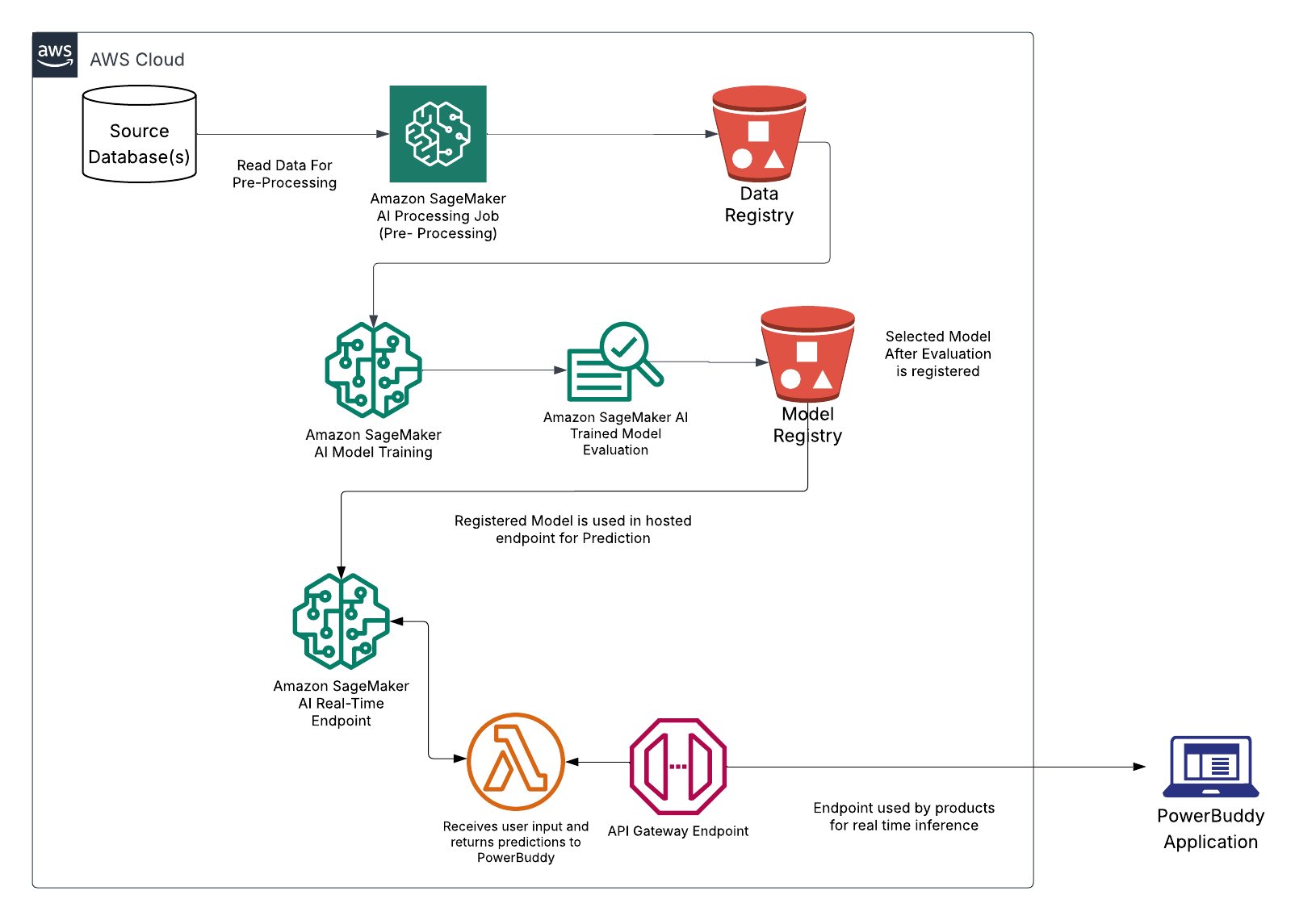
Responsible AI: How PowerSchool safeguards millions of students with AI-powered content filtering using Amazon SageMaker AIArtificial Intelligence In this post, we demonstrate how PowerSchool built and deployed a custom content filtering solution using Amazon SageMaker AI that achieved better accuracy while maintaining low false positive rates. We walk through our technical approach to fine tuning Llama 3.1 8B, our deployment architecture, and the performance results from internal validations.
In this post, we demonstrate how PowerSchool built and deployed a custom content filtering solution using Amazon SageMaker AI that achieved better accuracy while maintaining low false positive rates. We walk through our technical approach to fine tuning Llama 3.1 8B, our deployment architecture, and the performance results from internal validations. Read More

Weights & Biases: A KDnuggets Crash CourseKDnuggets A hands-on guide to tracking experiments, versioning models, and keeping your ML projects reproducible with Weights & Biases.
A hands-on guide to tracking experiments, versioning models, and keeping your ML projects reproducible with Weights & Biases. Read More
Plotly Dash — A Structured Framework for a Multi-Page DashboardTowards Data Science An easy starting point for larger and more complicated Dash dashboards
The post Plotly Dash — A Structured Framework for a Multi-Page Dashboard appeared first on Towards Data Science.
An easy starting point for larger and more complicated Dash dashboards
The post Plotly Dash — A Structured Framework for a Multi-Page Dashboard appeared first on Towards Data Science. Read More
WavInWav: Time-domain Speech Hiding via Invertible Neural Networkcs.AI updates on arXiv.org arXiv:2510.02915v1 Announce Type: cross
Abstract: Data hiding is essential for secure communication across digital media, and recent advances in Deep Neural Networks (DNNs) provide enhanced methods for embedding secret information effectively. However, previous audio hiding methods often result in unsatisfactory quality when recovering secret audio, due to their inherent limitations in the modeling of time-frequency relationships. In this paper, we explore these limitations and introduce a new DNN-based approach. We use a flow-based invertible neural network to establish a direct link between stego audio, cover audio, and secret audio, enhancing the reversibility of embedding and extracting messages. To address common issues from time-frequency transformations that degrade secret audio quality during recovery, we implement a time-frequency loss on the time-domain signal. This approach not only retains the benefits of time-frequency constraints but also enhances the reversibility of message recovery, which is vital for practical applications. We also add an encryption technique to protect the hidden data from unauthorized access. Experimental results on the VCTK and LibriSpeech datasets demonstrate that our method outperforms previous approaches in terms of subjective and objective metrics and exhibits robustness to various types of noise, suggesting its utility in targeted secure communication scenarios.
arXiv:2510.02915v1 Announce Type: cross
Abstract: Data hiding is essential for secure communication across digital media, and recent advances in Deep Neural Networks (DNNs) provide enhanced methods for embedding secret information effectively. However, previous audio hiding methods often result in unsatisfactory quality when recovering secret audio, due to their inherent limitations in the modeling of time-frequency relationships. In this paper, we explore these limitations and introduce a new DNN-based approach. We use a flow-based invertible neural network to establish a direct link between stego audio, cover audio, and secret audio, enhancing the reversibility of embedding and extracting messages. To address common issues from time-frequency transformations that degrade secret audio quality during recovery, we implement a time-frequency loss on the time-domain signal. This approach not only retains the benefits of time-frequency constraints but also enhances the reversibility of message recovery, which is vital for practical applications. We also add an encryption technique to protect the hidden data from unauthorized access. Experimental results on the VCTK and LibriSpeech datasets demonstrate that our method outperforms previous approaches in terms of subjective and objective metrics and exhibits robustness to various types of noise, suggesting its utility in targeted secure communication scenarios. Read More