

How Lumana is redefining AI’s role in video surveillanceAI News For all the progress in artificial intelligence, most video security systems still fail at recognising context in real-world conditions. The majority of cameras can capture real-time footage, but struggle to interpret it. This is a problem turning into a growing concern for smart city designers, manufacturers and schools, each of which may depend on AI
The post How Lumana is redefining AI’s role in video surveillance appeared first on AI News.
For all the progress in artificial intelligence, most video security systems still fail at recognising context in real-world conditions. The majority of cameras can capture real-time footage, but struggle to interpret it. This is a problem turning into a growing concern for smart city designers, manufacturers and schools, each of which may depend on AI
The post How Lumana is redefining AI’s role in video surveillance appeared first on AI News. Read More
Learning World Models for Interactive Video Generationcs.AI updates on arXiv.org arXiv:2505.21996v2 Announce Type: replace-cross
Abstract: Foundational world models must be both interactive and preserve spatiotemporal coherence for effective future planning with action choices. However, present models for long video generation have limited inherent world modeling capabilities due to two main challenges: compounding errors and insufficient memory mechanisms. We enhance image-to-video models with interactive capabilities through additional action conditioning and autoregressive framework, and reveal that compounding error is inherently irreducible in autoregressive video generation, while insufficient memory mechanism leads to incoherence of world models. We propose video retrieval augmented generation (VRAG) with explicit global state conditioning, which significantly reduces long-term compounding errors and increases spatiotemporal consistency of world models. In contrast, naive autoregressive generation with extended context windows and retrieval-augmented generation prove less effective for video generation, primarily due to the limited in-context learning capabilities of current video models. Our work illuminates the fundamental challenges in video world models and establishes a comprehensive benchmark for improving video generation models with internal world modeling capabilities.
arXiv:2505.21996v2 Announce Type: replace-cross
Abstract: Foundational world models must be both interactive and preserve spatiotemporal coherence for effective future planning with action choices. However, present models for long video generation have limited inherent world modeling capabilities due to two main challenges: compounding errors and insufficient memory mechanisms. We enhance image-to-video models with interactive capabilities through additional action conditioning and autoregressive framework, and reveal that compounding error is inherently irreducible in autoregressive video generation, while insufficient memory mechanism leads to incoherence of world models. We propose video retrieval augmented generation (VRAG) with explicit global state conditioning, which significantly reduces long-term compounding errors and increases spatiotemporal consistency of world models. In contrast, naive autoregressive generation with extended context windows and retrieval-augmented generation prove less effective for video generation, primarily due to the limited in-context learning capabilities of current video models. Our work illuminates the fundamental challenges in video world models and establishes a comprehensive benchmark for improving video generation models with internal world modeling capabilities. Read More
Human-in-the-loop Online Rejection Sampling for Robotic Manipulationcs.AI updates on arXiv.org arXiv:2510.26406v1 Announce Type: cross
Abstract: Reinforcement learning (RL) is widely used to produce robust robotic manipulation policies, but fine-tuning vision-language-action (VLA) models with RL can be unstable due to inaccurate value estimates and sparse supervision at intermediate steps. In contrast, imitation learning (IL) is easy to train but often underperforms due to its offline nature. In this paper, we propose Hi-ORS, a simple yet effective post-training method that utilizes rejection sampling to achieve both training stability and high robustness. Hi-ORS stabilizes value estimation by filtering out negatively rewarded samples during online fine-tuning, and adopts a reward-weighted supervised training objective to provide dense intermediate-step supervision. For systematic study, we develop an asynchronous inference-training framework that supports flexible online human-in-the-loop corrections, which serve as explicit guidance for learning error-recovery behaviors. Across three real-world tasks and two embodiments, Hi-ORS fine-tunes a pi-base policy to master contact-rich manipulation in just 1.5 hours of real-world training, outperforming RL and IL baselines by a substantial margin in both effectiveness and efficiency. Notably, the fine-tuned policy exhibits strong test-time scalability by reliably executing complex error-recovery behaviors to achieve better performance.
arXiv:2510.26406v1 Announce Type: cross
Abstract: Reinforcement learning (RL) is widely used to produce robust robotic manipulation policies, but fine-tuning vision-language-action (VLA) models with RL can be unstable due to inaccurate value estimates and sparse supervision at intermediate steps. In contrast, imitation learning (IL) is easy to train but often underperforms due to its offline nature. In this paper, we propose Hi-ORS, a simple yet effective post-training method that utilizes rejection sampling to achieve both training stability and high robustness. Hi-ORS stabilizes value estimation by filtering out negatively rewarded samples during online fine-tuning, and adopts a reward-weighted supervised training objective to provide dense intermediate-step supervision. For systematic study, we develop an asynchronous inference-training framework that supports flexible online human-in-the-loop corrections, which serve as explicit guidance for learning error-recovery behaviors. Across three real-world tasks and two embodiments, Hi-ORS fine-tunes a pi-base policy to master contact-rich manipulation in just 1.5 hours of real-world training, outperforming RL and IL baselines by a substantial margin in both effectiveness and efficiency. Notably, the fine-tuned policy exhibits strong test-time scalability by reliably executing complex error-recovery behaviors to achieve better performance. Read More
Let Hypothesis Break Your Python Code Before Your Users DoTowards Data Science Property-based tests that find bugs you didn’t know existed.
The post Let Hypothesis Break Your Python Code Before Your Users Do appeared first on Towards Data Science.
Property-based tests that find bugs you didn’t know existed.
The post Let Hypothesis Break Your Python Code Before Your Users Do appeared first on Towards Data Science. Read More
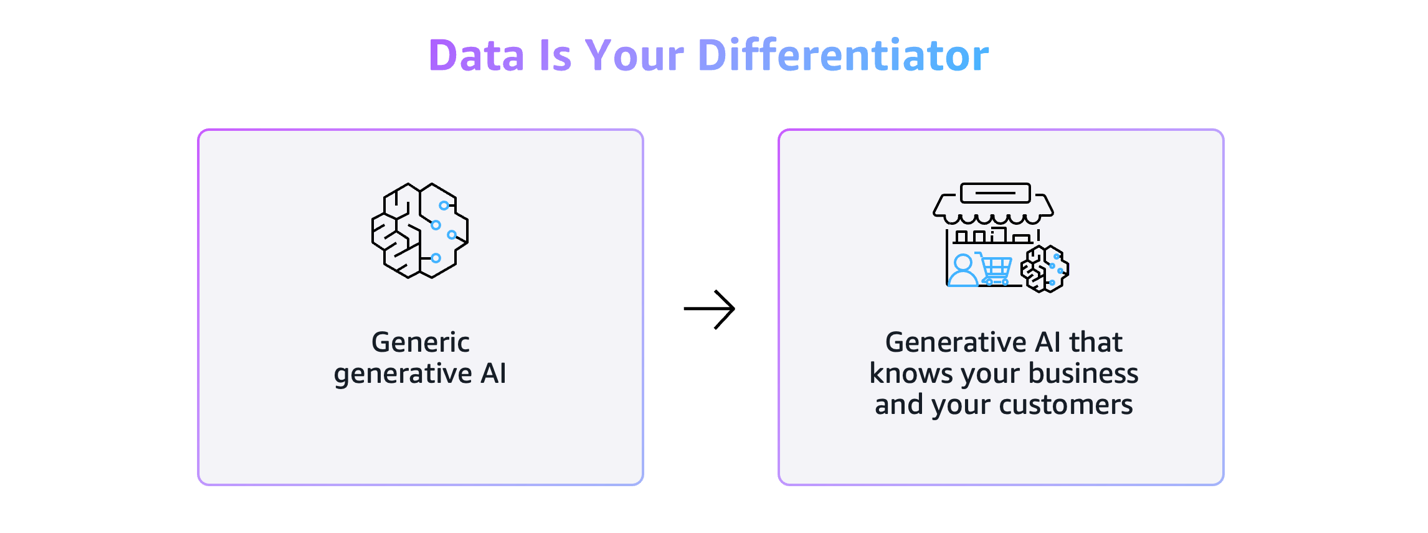
Custom Intelligence: Building AI that matches your business DNAArtificial Intelligence In 2024, we launched the Custom Model Program within the AWS Generative AI Innovation Center to provide comprehensive support throughout every stage of model customization and optimization. Over the past two years, this program has delivered exceptional results by partnering with global enterprises and startups across diverse industries—including legal, financial services, healthcare and life sciences,
In 2024, we launched the Custom Model Program within the AWS Generative AI Innovation Center to provide comprehensive support throughout every stage of model customization and optimization. Over the past two years, this program has delivered exceptional results by partnering with global enterprises and startups across diverse industries—including legal, financial services, healthcare and life sciences, Read More
RF-DETR Under the Hood: The Insights of a Real-Time Transformer DetectionTowards Data Science From rigid grids to adaptive attention, this is the evolutionary path that made detection transformers fast, flexible, and formidable.
The post RF-DETR Under the Hood: The Insights of a Real-Time Transformer Detection appeared first on Towards Data Science.
From rigid grids to adaptive attention, this is the evolutionary path that made detection transformers fast, flexible, and formidable.
The post RF-DETR Under the Hood: The Insights of a Real-Time Transformer Detection appeared first on Towards Data Science. Read More
Symbolically Scaffolded Play: Designing Role-Sensitive Prompts for Generative NPC Dialoguecs.AI updates on arXiv.org arXiv:2510.25820v1 Announce Type: new
Abstract: Large Language Models (LLMs) promise to transform interactive games by enabling non-player characters (NPCs) to sustain unscripted dialogue. Yet it remains unclear whether constrained prompts actually improve player experience. We investigate this question through The Interview, a voice-based detective game powered by GPT-4o. A within-subjects usability study ($N=10$) compared high-constraint (HCP) and low-constraint (LCP) prompts, revealing no reliable experiential differences beyond sensitivity to technical breakdowns. Guided by these findings, we redesigned the HCP into a hybrid JSON+RAG scaffold and conducted a synthetic evaluation with an LLM judge, positioned as an early-stage complement to usability testing. Results uncovered a novel pattern: scaffolding effects were role-dependent: the Interviewer (quest-giver NPC) gained stability, while suspect NPCs lost improvisational believability. These findings overturn the assumption that tighter constraints inherently enhance play. Extending fuzzy-symbolic scaffolding, we introduce textit{Symbolically Scaffolded Play}, a framework in which symbolic structures are expressed as fuzzy, numerical boundaries that stabilize coherence where needed while preserving improvisation where surprise sustains engagement.
arXiv:2510.25820v1 Announce Type: new
Abstract: Large Language Models (LLMs) promise to transform interactive games by enabling non-player characters (NPCs) to sustain unscripted dialogue. Yet it remains unclear whether constrained prompts actually improve player experience. We investigate this question through The Interview, a voice-based detective game powered by GPT-4o. A within-subjects usability study ($N=10$) compared high-constraint (HCP) and low-constraint (LCP) prompts, revealing no reliable experiential differences beyond sensitivity to technical breakdowns. Guided by these findings, we redesigned the HCP into a hybrid JSON+RAG scaffold and conducted a synthetic evaluation with an LLM judge, positioned as an early-stage complement to usability testing. Results uncovered a novel pattern: scaffolding effects were role-dependent: the Interviewer (quest-giver NPC) gained stability, while suspect NPCs lost improvisational believability. These findings overturn the assumption that tighter constraints inherently enhance play. Extending fuzzy-symbolic scaffolding, we introduce textit{Symbolically Scaffolded Play}, a framework in which symbolic structures are expressed as fuzzy, numerical boundaries that stabilize coherence where needed while preserving improvisation where surprise sustains engagement. Read More
The Machine Learning Projects Employers Want to SeeTowards Data Science What machine learning projects will actually get you interviews and jobs
The post The Machine Learning Projects Employers Want to See appeared first on Towards Data Science.
What machine learning projects will actually get you interviews and jobs
The post The Machine Learning Projects Employers Want to See appeared first on Towards Data Science. Read More
Bridging the Gap Between Molecule and Textual Descriptions via Substructure-aware Alignmentcs.AI updates on arXiv.org arXiv:2510.26157v1 Announce Type: cross
Abstract: Molecule and text representation learning has gained increasing interest due to its potential for enhancing the understanding of chemical information. However, existing models often struggle to capture subtle differences between molecules and their descriptions, as they lack the ability to learn fine-grained alignments between molecular substructures and chemical phrases. To address this limitation, we introduce MolBridge, a novel molecule-text learning framework based on substructure-aware alignments. Specifically, we augment the original molecule-description pairs with additional alignment signals derived from molecular substructures and chemical phrases. To effectively learn from these enriched alignments, MolBridge employs substructure-aware contrastive learning, coupled with a self-refinement mechanism that filters out noisy alignment signals. Experimental results show that MolBridge effectively captures fine-grained correspondences and outperforms state-of-the-art baselines on a wide range of molecular benchmarks, highlighting the significance of substructure-aware alignment in molecule-text learning.
arXiv:2510.26157v1 Announce Type: cross
Abstract: Molecule and text representation learning has gained increasing interest due to its potential for enhancing the understanding of chemical information. However, existing models often struggle to capture subtle differences between molecules and their descriptions, as they lack the ability to learn fine-grained alignments between molecular substructures and chemical phrases. To address this limitation, we introduce MolBridge, a novel molecule-text learning framework based on substructure-aware alignments. Specifically, we augment the original molecule-description pairs with additional alignment signals derived from molecular substructures and chemical phrases. To effectively learn from these enriched alignments, MolBridge employs substructure-aware contrastive learning, coupled with a self-refinement mechanism that filters out noisy alignment signals. Experimental results show that MolBridge effectively captures fine-grained correspondences and outperforms state-of-the-art baselines on a wide range of molecular benchmarks, highlighting the significance of substructure-aware alignment in molecule-text learning. Read More
Nirvana: A Specialized Generalist Model With Task-Aware Memory Mechanismcs.AI updates on arXiv.org arXiv:2510.26083v1 Announce Type: cross
Abstract: Specialized Generalist Models (SGMs) aim to preserve broad capabilities while achieving expert-level performance in target domains. However, traditional LLM structures including Transformer, Linear Attention, and hybrid models do not employ specialized memory mechanism guided by task information. In this paper, we present Nirvana, an SGM with specialized memory mechanism, linear time complexity, and test-time task information extraction. Besides, we propose the Task-Aware Memory Trigger ($textit{Trigger}$) that flexibly adjusts memory mechanism based on the current task’s requirements. In Trigger, each incoming sample is treated as a self-supervised fine-tuning task, enabling Nirvana to adapt its task-related parameters on the fly to domain shifts. We also design the Specialized Memory Updater ($textit{Updater}$) that dynamically memorizes the context guided by Trigger. We conduct experiments on both general language tasks and specialized medical tasks. On a variety of natural language modeling benchmarks, Nirvana achieves competitive or superior results compared to the existing LLM structures. To prove the effectiveness of Trigger on specialized tasks, we test Nirvana’s performance on a challenging medical task, i.e., Magnetic Resonance Imaging (MRI). We post-train frozen Nirvana backbone with lightweight codecs on paired electromagnetic signals and MRI images. Despite the frozen Nirvana backbone, Trigger guides the model to adapt to the MRI domain with the change of task-related parameters. Nirvana achieves higher-quality MRI reconstruction compared to conventional MRI models as well as the models with traditional LLMs’ backbone, and can also generate accurate preliminary clinical reports accordingly.
arXiv:2510.26083v1 Announce Type: cross
Abstract: Specialized Generalist Models (SGMs) aim to preserve broad capabilities while achieving expert-level performance in target domains. However, traditional LLM structures including Transformer, Linear Attention, and hybrid models do not employ specialized memory mechanism guided by task information. In this paper, we present Nirvana, an SGM with specialized memory mechanism, linear time complexity, and test-time task information extraction. Besides, we propose the Task-Aware Memory Trigger ($textit{Trigger}$) that flexibly adjusts memory mechanism based on the current task’s requirements. In Trigger, each incoming sample is treated as a self-supervised fine-tuning task, enabling Nirvana to adapt its task-related parameters on the fly to domain shifts. We also design the Specialized Memory Updater ($textit{Updater}$) that dynamically memorizes the context guided by Trigger. We conduct experiments on both general language tasks and specialized medical tasks. On a variety of natural language modeling benchmarks, Nirvana achieves competitive or superior results compared to the existing LLM structures. To prove the effectiveness of Trigger on specialized tasks, we test Nirvana’s performance on a challenging medical task, i.e., Magnetic Resonance Imaging (MRI). We post-train frozen Nirvana backbone with lightweight codecs on paired electromagnetic signals and MRI images. Despite the frozen Nirvana backbone, Trigger guides the model to adapt to the MRI domain with the change of task-related parameters. Nirvana achieves higher-quality MRI reconstruction compared to conventional MRI models as well as the models with traditional LLMs’ backbone, and can also generate accurate preliminary clinical reports accordingly. Read More