

Real-Time Procedural Learning From Experience for AI Agentscs.AI updates on arXiv.org arXiv:2511.22074v1 Announce Type: new
Abstract: Learning how to do things from trial and error in real time is a hallmark of biological intelligence, yet most LLM-based agents lack mechanisms to acquire procedural knowledge after deployment. We propose Procedural Recall for Agents with eXperiences Indexed by State (PRAXIS), a lightweight post-training learning mechanism that stores the consequences of actions and retrieves them by jointly matching environmental and internal states of past episodes to the current state. PRAXIS augments agentic action selection with retrieved state-action-result exemplars that are generated in real time. When evaluated on the REAL web browsing benchmark, PRAXIS improves task completion accuracy, reliability, and cost efficiency across different foundation model backbones, and shows preliminary generalization to unseen tasks in similar environments. These results demonstrate that PRAXIS enables the practical adoption of AI agents in fast-evolving stateful environments by helping them learn new procedures effectively.
arXiv:2511.22074v1 Announce Type: new
Abstract: Learning how to do things from trial and error in real time is a hallmark of biological intelligence, yet most LLM-based agents lack mechanisms to acquire procedural knowledge after deployment. We propose Procedural Recall for Agents with eXperiences Indexed by State (PRAXIS), a lightweight post-training learning mechanism that stores the consequences of actions and retrieves them by jointly matching environmental and internal states of past episodes to the current state. PRAXIS augments agentic action selection with retrieved state-action-result exemplars that are generated in real time. When evaluated on the REAL web browsing benchmark, PRAXIS improves task completion accuracy, reliability, and cost efficiency across different foundation model backbones, and shows preliminary generalization to unseen tasks in similar environments. These results demonstrate that PRAXIS enables the practical adoption of AI agents in fast-evolving stateful environments by helping them learn new procedures effectively. Read More
Predicting Public Health Impacts of Electricity Usagecs.AI updates on arXiv.org arXiv:2511.22031v1 Announce Type: cross
Abstract: The electric power sector is a leading source of air pollutant emissions, impacting the public health of nearly every community. Although regulatory measures have reduced air pollutants, fossil fuels remain a significant component of the energy supply, highlighting the need for more advanced demand-side approaches to reduce the public health impacts. To enable health-informed demand-side management, we introduce HealthPredictor, a domain-specific AI model that provides an end-to-end pipeline linking electricity use to public health outcomes. The model comprises three components: a fuel mix predictor that estimates the contribution of different generation sources, an air quality converter that models pollutant emissions and atmospheric dispersion, and a health impact assessor that translates resulting pollutant changes into monetized health damages. Across multiple regions in the United States, our health-driven optimization framework yields substantially lower prediction errors in terms of public health impacts than fuel mix-driven baselines. A case study on electric vehicle charging schedules illustrates the public health gains enabled by our method and the actionable guidance it can offer for health-informed energy management. Overall, this work shows how AI models can be explicitly designed to enable health-informed energy management for advancing public health and broader societal well-being. Our datasets and code are released at: https://github.com/Ren-Research/Health-Impact-Predictor.
arXiv:2511.22031v1 Announce Type: cross
Abstract: The electric power sector is a leading source of air pollutant emissions, impacting the public health of nearly every community. Although regulatory measures have reduced air pollutants, fossil fuels remain a significant component of the energy supply, highlighting the need for more advanced demand-side approaches to reduce the public health impacts. To enable health-informed demand-side management, we introduce HealthPredictor, a domain-specific AI model that provides an end-to-end pipeline linking electricity use to public health outcomes. The model comprises three components: a fuel mix predictor that estimates the contribution of different generation sources, an air quality converter that models pollutant emissions and atmospheric dispersion, and a health impact assessor that translates resulting pollutant changes into monetized health damages. Across multiple regions in the United States, our health-driven optimization framework yields substantially lower prediction errors in terms of public health impacts than fuel mix-driven baselines. A case study on electric vehicle charging schedules illustrates the public health gains enabled by our method and the actionable guidance it can offer for health-informed energy management. Overall, this work shows how AI models can be explicitly designed to enable health-informed energy management for advancing public health and broader societal well-being. Our datasets and code are released at: https://github.com/Ren-Research/Health-Impact-Predictor. Read More
RemedyGS: Defend 3D Gaussian Splatting against Computation Cost Attackscs.AI updates on arXiv.org arXiv:2511.22147v1 Announce Type: cross
Abstract: As a mainstream technique for 3D reconstruction, 3D Gaussian splatting (3DGS) has been applied in a wide range of applications and services. Recent studies have revealed critical vulnerabilities in this pipeline and introduced computation cost attacks that lead to malicious resource occupancies and even denial-of-service (DoS) conditions, thereby hindering the reliable deployment of 3DGS. In this paper, we propose the first effective and comprehensive black-box defense framework, named RemedyGS, against such computation cost attacks, safeguarding 3DGS reconstruction systems and services. Our pipeline comprises two key components: a detector to identify the attacked input images with poisoned textures and a purifier to recover the benign images from their attacked counterparts, mitigating the adverse effects of these attacks. Moreover, we incorporate adversarial training into the purifier to enforce distributional alignment between the recovered and original natural images, thereby enhancing the defense efficacy. Experimental results demonstrate that our framework effectively defends against white-box, black-box, and adaptive attacks in 3DGS systems, achieving state-of-the-art performance in both safety and utility.
arXiv:2511.22147v1 Announce Type: cross
Abstract: As a mainstream technique for 3D reconstruction, 3D Gaussian splatting (3DGS) has been applied in a wide range of applications and services. Recent studies have revealed critical vulnerabilities in this pipeline and introduced computation cost attacks that lead to malicious resource occupancies and even denial-of-service (DoS) conditions, thereby hindering the reliable deployment of 3DGS. In this paper, we propose the first effective and comprehensive black-box defense framework, named RemedyGS, against such computation cost attacks, safeguarding 3DGS reconstruction systems and services. Our pipeline comprises two key components: a detector to identify the attacked input images with poisoned textures and a purifier to recover the benign images from their attacked counterparts, mitigating the adverse effects of these attacks. Moreover, we incorporate adversarial training into the purifier to enforce distributional alignment between the recovered and original natural images, thereby enhancing the defense efficacy. Experimental results demonstrate that our framework effectively defends against white-box, black-box, and adaptive attacks in 3DGS systems, achieving state-of-the-art performance in both safety and utility. Read More
AI summaries in online search influence users’ attitudescs.AI updates on arXiv.org arXiv:2511.22809v1 Announce Type: cross
Abstract: This study examined how AI-generated summaries, which have become visually prominent in online search results, affect how users think about different issues. In a preregistered randomized controlled experiment, participants (N = 2,004) viewed mock search result pages varying in the presence (vs. absence), placement (top vs. middle), and stance (benefit-framed vs. harm-framed) of AI-generated summaries across four publicly debated topics. Compared to a no-summary control group, participants exposed to AI-generated summaries reported issue attitudes, behavioral intentions, and policy support that aligned more closely with the AI summary stance. The summaries placed at the top of the page produced stronger shifts in users’ issue attitudes (but not behavioral intentions or policy support) than those placed at the middle of the page. We also observed moderating effects from issue familiarity and general trust toward AI. In addition, users perceived the AI summaries more useful when it emphasized health harms versus benefits. These findings suggest that AI-generated search summaries can significantly shape public perceptions, raising important implications for the design and regulation of AI-integrated information ecosystems.
arXiv:2511.22809v1 Announce Type: cross
Abstract: This study examined how AI-generated summaries, which have become visually prominent in online search results, affect how users think about different issues. In a preregistered randomized controlled experiment, participants (N = 2,004) viewed mock search result pages varying in the presence (vs. absence), placement (top vs. middle), and stance (benefit-framed vs. harm-framed) of AI-generated summaries across four publicly debated topics. Compared to a no-summary control group, participants exposed to AI-generated summaries reported issue attitudes, behavioral intentions, and policy support that aligned more closely with the AI summary stance. The summaries placed at the top of the page produced stronger shifts in users’ issue attitudes (but not behavioral intentions or policy support) than those placed at the middle of the page. We also observed moderating effects from issue familiarity and general trust toward AI. In addition, users perceived the AI summaries more useful when it emphasized health harms versus benefits. These findings suggest that AI-generated search summaries can significantly shape public perceptions, raising important implications for the design and regulation of AI-integrated information ecosystems. Read More
How to Design an Advanced Multi-Page Interactive Analytics Dashboard with Dynamic Filtering, Live KPIs, and Rich Visual Exploration Using PanelMarkTechPost In this tutorial, we build an advanced multi-page interactive dashboard using Panel. Through each component of implementation, we explore how to generate synthetic data, apply rich filters, visualize dynamic time-series trends, compare segments and regions, and even simulate live KPI updates. We design the system step by step so we can truly understand how each
The post How to Design an Advanced Multi-Page Interactive Analytics Dashboard with Dynamic Filtering, Live KPIs, and Rich Visual Exploration Using Panel appeared first on MarkTechPost.
In this tutorial, we build an advanced multi-page interactive dashboard using Panel. Through each component of implementation, we explore how to generate synthetic data, apply rich filters, visualize dynamic time-series trends, compare segments and regions, and even simulate live KPI updates. We design the system step by step so we can truly understand how each
The post How to Design an Advanced Multi-Page Interactive Analytics Dashboard with Dynamic Filtering, Live KPIs, and Rich Visual Exploration Using Panel appeared first on MarkTechPost. Read More
The Machine Learning and Deep Learning “Advent Calendar” Series: The BlueprintTowards Data Science Opening the black box of ML models, step by step, directly in Excel
The post The Machine Learning and Deep Learning “Advent Calendar” Series: The Blueprint appeared first on Towards Data Science.
Opening the black box of ML models, step by step, directly in Excel
The post The Machine Learning and Deep Learning “Advent Calendar” Series: The Blueprint appeared first on Towards Data Science. Read More
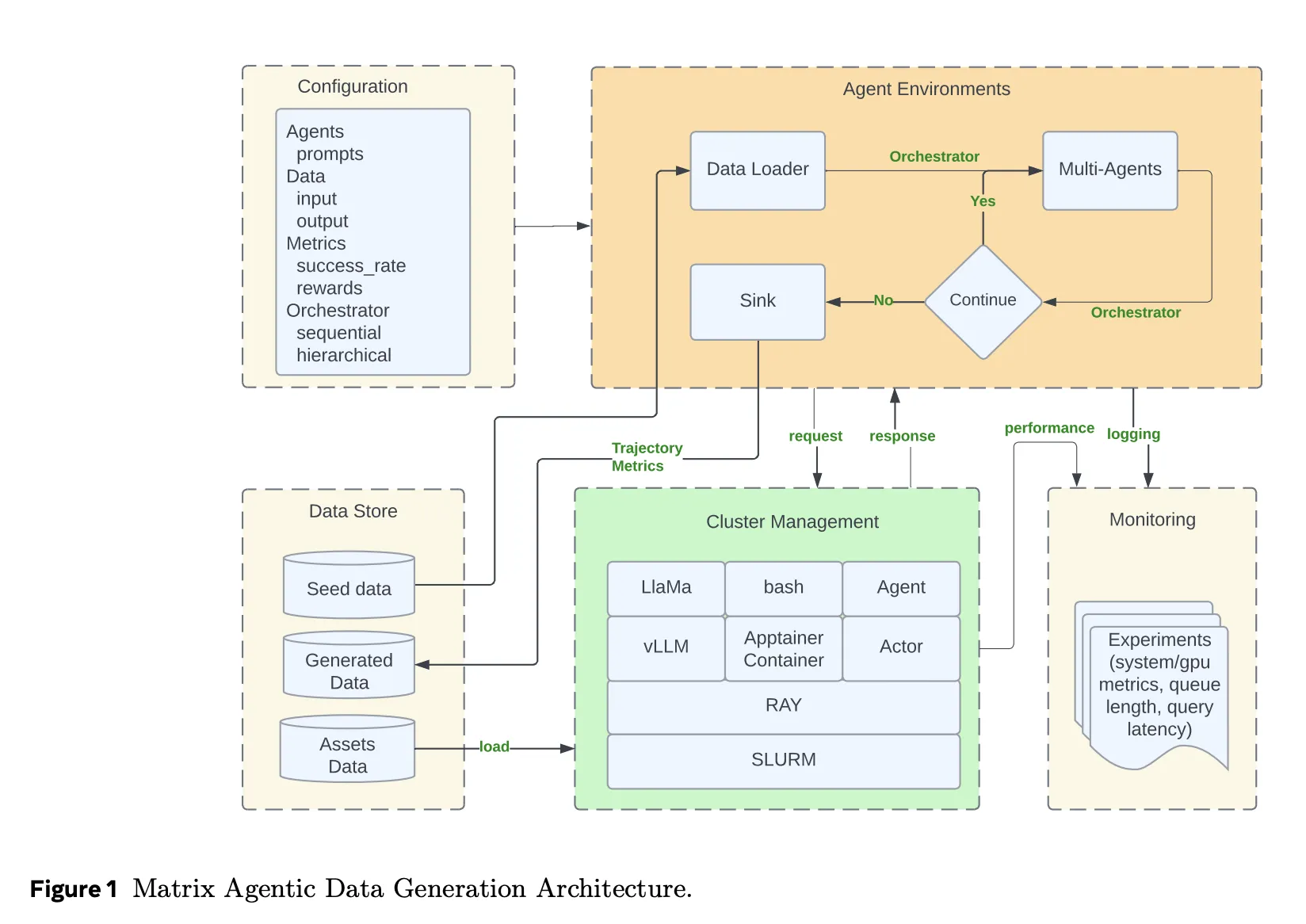
Meta AI Researchers Introduce Matrix: A Ray Native a Decentralized Framework for Multi Agent Synthetic Data GenerationMarkTechPost How do you keep synthetic data fresh and diverse for modern AI models without turning a single orchestration pipeline into the bottleneck? Meta AI researchers introduce Matrix, a decentralized framework where both control and data flow are serialized into messages that move through distributed queues. As LLM training increasingly relies on synthetic conversations, tool traces
The post Meta AI Researchers Introduce Matrix: A Ray Native a Decentralized Framework for Multi Agent Synthetic Data Generation appeared first on MarkTechPost.
How do you keep synthetic data fresh and diverse for modern AI models without turning a single orchestration pipeline into the bottleneck? Meta AI researchers introduce Matrix, a decentralized framework where both control and data flow are serialized into messages that move through distributed queues. As LLM training increasingly relies on synthetic conversations, tool traces
The post Meta AI Researchers Introduce Matrix: A Ray Native a Decentralized Framework for Multi Agent Synthetic Data Generation appeared first on MarkTechPost. Read More
The Greedy Boruta Algorithm: Faster Feature Selection Without Sacrificing RecallTowards Data Science A modification to the Boruta algorithm that dramatically reduces computation while maintaining high sensitivity
The post The Greedy Boruta Algorithm: Faster Feature Selection Without Sacrificing Recall appeared first on Towards Data Science.
A modification to the Boruta algorithm that dramatically reduces computation while maintaining high sensitivity
The post The Greedy Boruta Algorithm: Faster Feature Selection Without Sacrificing Recall appeared first on Towards Data Science. Read More

The Best Proxy Providers for Large-Scale Scraping for 2026KDnuggets Robust proxies allow you to rotate identities, reach any region, and bypass sophisticated anti-bot systems, all while protecting your infrastructure from blocks and blacklisting.
Robust proxies allow you to rotate identities, reach any region, and bypass sophisticated anti-bot systems, all while protecting your infrastructure from blocks and blacklisting. Read More
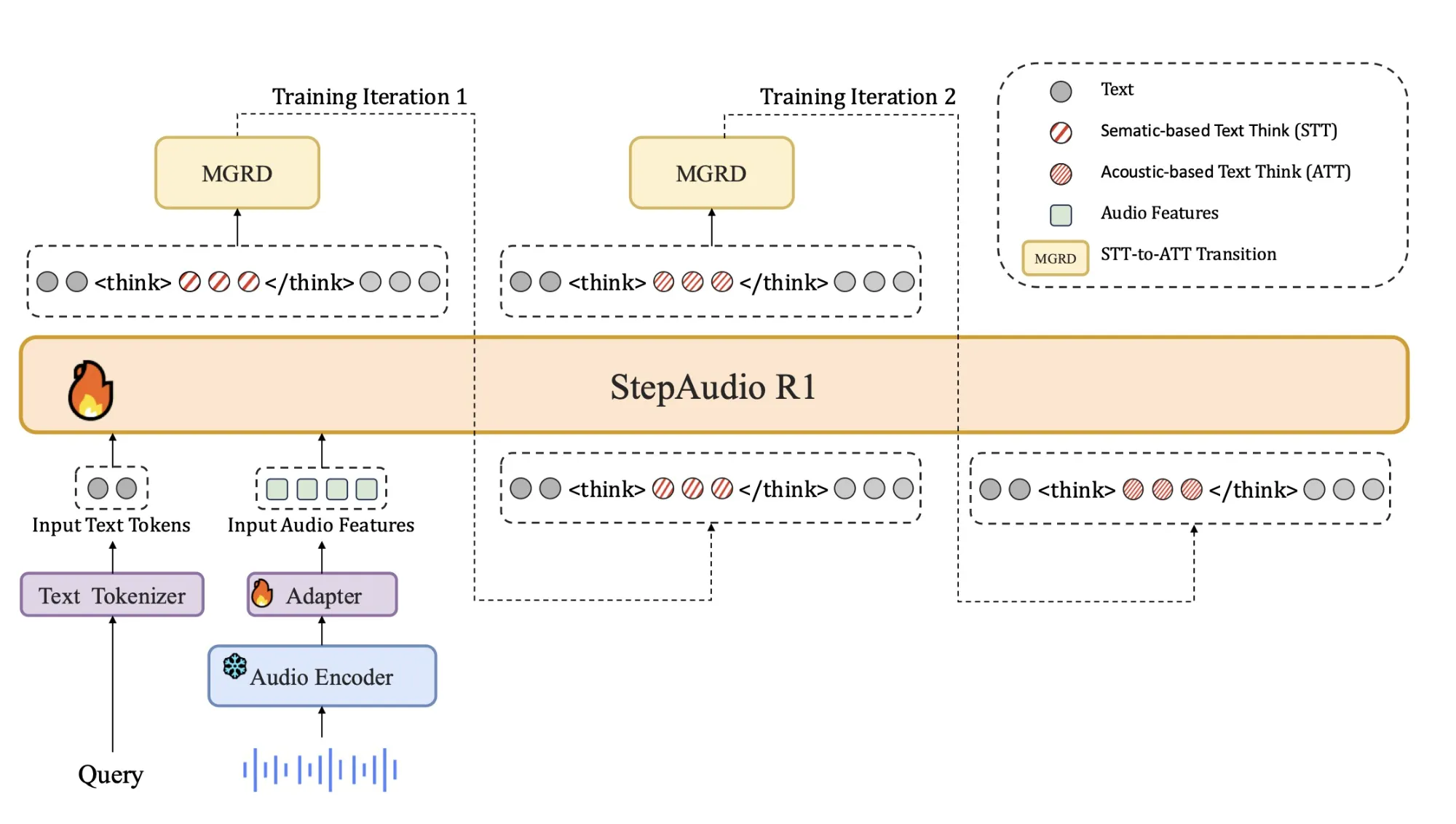
StepFun AI Releases Step-Audio-R1: A New Audio LLM that Finally Benefits from Test Time Compute ScalingMarkTechPost Why do current audio AI models often perform worse when they generate longer reasoning instead of grounding their decisions in the actual sound. StepFun research team releases Step-Audio-R1, a new audio LLM designed for test time compute scaling, address this failure mode by showing that the accuracy drop with chain of thought is not an
The post StepFun AI Releases Step-Audio-R1: A New Audio LLM that Finally Benefits from Test Time Compute Scaling appeared first on MarkTechPost.
Why do current audio AI models often perform worse when they generate longer reasoning instead of grounding their decisions in the actual sound. StepFun research team releases Step-Audio-R1, a new audio LLM designed for test time compute scaling, address this failure mode by showing that the accuracy drop with chain of thought is not an
The post StepFun AI Releases Step-Audio-R1: A New Audio LLM that Finally Benefits from Test Time Compute Scaling appeared first on MarkTechPost. Read More