


A Well-Designed Experiment Can Teach You More Than a Time Machine!Towards Data Scienceon July 23, 2025 at 2:50 am How experimentation is more powerful than knowing counterfactuals
The post A Well-Designed Experiment Can Teach You More Than a Time Machine! appeared first on Towards Data Science.
How experimentation is more powerful than knowing counterfactuals
The post A Well-Designed Experiment Can Teach You More Than a Time Machine! appeared first on Towards Data Science. Read More
When LLMs Try to Reason: Experiments in Text and Vision-Based AbstractionTowards Data Scienceon July 22, 2025 at 7:35 pm Can large language models learn to reason abstractly from just a few examples? In this piece, I explore this question by testing both text-based (o3-mini) and image-capable (gpt-4.1) models on abstract grid transformation tasks. These experiments reveal the extent to which current models rely on pattern matching, procedural heuristics, and symbolic shortcuts rather than robust generalization. Even with multimodal inputs, reasoning often breaks down in the face of subtle abstraction. The results offer a window into the current capabilities and limitations of in-context meta-learning with LLMs.
The post When LLMs Try to Reason: Experiments in Text and Vision-Based Abstraction appeared first on Towards Data Science.
Can large language models learn to reason abstractly from just a few examples? In this piece, I explore this question by testing both text-based (o3-mini) and image-capable (gpt-4.1) models on abstract grid transformation tasks. These experiments reveal the extent to which current models rely on pattern matching, procedural heuristics, and symbolic shortcuts rather than robust generalization. Even with multimodal inputs, reasoning often breaks down in the face of subtle abstraction. The results offer a window into the current capabilities and limitations of in-context meta-learning with LLMs.
The post When LLMs Try to Reason: Experiments in Text and Vision-Based Abstraction appeared first on Towards Data Science. Read More
The Rise of AI Teammates in Software Engineering (SE) 3.0: How Autonomous Coding Agents Are Reshaping Software Engineeringcs.AI updates on arXiv.orgon July 22, 2025 at 4:00 am arXiv:2507.15003v1 Announce Type: cross
Abstract: The future of software engineering–SE 3.0–is unfolding with the rise of AI teammates: autonomous, goal-driven systems collaborating with human developers. Among these, autonomous coding agents are especially transformative, now actively initiating, reviewing, and evolving code at scale. This paper introduces AIDev, the first large-scale dataset capturing how such agents operate in the wild. Spanning over 456,000 pull requests by five leading agents–OpenAI Codex, Devin, GitHub Copilot, Cursor, and Claude Code–across 61,000 repositories and 47,000 developers, AIDev provides an unprecedented empirical foundation for studying autonomous teammates in software development.
Unlike prior work that has largely theorized the rise of AI-native software engineering, AIDev offers structured, open data to support research in benchmarking, agent readiness, optimization, collaboration modeling, and AI governance. The dataset includes rich metadata on PRs, authorship, review timelines, code changes, and integration outcomes–enabling exploration beyond synthetic benchmarks like SWE-bench. For instance, although agents often outperform humans in speed, their PRs are accepted less frequently, revealing a trust and utility gap. Furthermore, while agents accelerate code submission–one developer submitted as many PRs in three days as they had in three years–these are structurally simpler (via code complexity metrics).
We envision AIDev as a living resource: extensible, analyzable, and ready for the SE and AI communities. Grounding SE 3.0 in real-world evidence, AIDev enables a new generation of research into AI-native workflows and supports building the next wave of symbiotic human-AI collaboration. The dataset is publicly available at https://github.com/SAILResearch/AI_Teammates_in_SE3.
> AI Agent, Agentic AI, Coding Agent, Agentic Coding, Software Engineering Agent
arXiv:2507.15003v1 Announce Type: cross
Abstract: The future of software engineering–SE 3.0–is unfolding with the rise of AI teammates: autonomous, goal-driven systems collaborating with human developers. Among these, autonomous coding agents are especially transformative, now actively initiating, reviewing, and evolving code at scale. This paper introduces AIDev, the first large-scale dataset capturing how such agents operate in the wild. Spanning over 456,000 pull requests by five leading agents–OpenAI Codex, Devin, GitHub Copilot, Cursor, and Claude Code–across 61,000 repositories and 47,000 developers, AIDev provides an unprecedented empirical foundation for studying autonomous teammates in software development.
Unlike prior work that has largely theorized the rise of AI-native software engineering, AIDev offers structured, open data to support research in benchmarking, agent readiness, optimization, collaboration modeling, and AI governance. The dataset includes rich metadata on PRs, authorship, review timelines, code changes, and integration outcomes–enabling exploration beyond synthetic benchmarks like SWE-bench. For instance, although agents often outperform humans in speed, their PRs are accepted less frequently, revealing a trust and utility gap. Furthermore, while agents accelerate code submission–one developer submitted as many PRs in three days as they had in three years–these are structurally simpler (via code complexity metrics).
We envision AIDev as a living resource: extensible, analyzable, and ready for the SE and AI communities. Grounding SE 3.0 in real-world evidence, AIDev enables a new generation of research into AI-native workflows and supports building the next wave of symbiotic human-AI collaboration. The dataset is publicly available at https://github.com/SAILResearch/AI_Teammates_in_SE3.
> AI Agent, Agentic AI, Coding Agent, Agentic Coding, Software Engineering Agent Read More
Benchmarking Foundation Models with Multimodal Public Electronic Health Recordscs.AI updates on arXiv.orgon July 22, 2025 at 4:00 am arXiv:2507.14824v1 Announce Type: cross
Abstract: Foundation models have emerged as a powerful approach for processing electronic health records (EHRs), offering flexibility to handle diverse medical data modalities. In this study, we present a comprehensive benchmark that evaluates the performance, fairness, and interpretability of foundation models, both as unimodal encoders and as multimodal learners, using the publicly available MIMIC-IV database. To support consistent and reproducible evaluation, we developed a standardized data processing pipeline that harmonizes heterogeneous clinical records into an analysis-ready format. We systematically compared eight foundation models, encompassing both unimodal and multimodal models, as well as domain-specific and general-purpose variants. Our findings demonstrate that incorporating multiple data modalities leads to consistent improvements in predictive performance without introducing additional bias. Through this benchmark, we aim to support the development of effective and trustworthy multimodal artificial intelligence (AI) systems for real-world clinical applications. Our code is available at https://github.com/nliulab/MIMIC-Multimodal.
arXiv:2507.14824v1 Announce Type: cross
Abstract: Foundation models have emerged as a powerful approach for processing electronic health records (EHRs), offering flexibility to handle diverse medical data modalities. In this study, we present a comprehensive benchmark that evaluates the performance, fairness, and interpretability of foundation models, both as unimodal encoders and as multimodal learners, using the publicly available MIMIC-IV database. To support consistent and reproducible evaluation, we developed a standardized data processing pipeline that harmonizes heterogeneous clinical records into an analysis-ready format. We systematically compared eight foundation models, encompassing both unimodal and multimodal models, as well as domain-specific and general-purpose variants. Our findings demonstrate that incorporating multiple data modalities leads to consistent improvements in predictive performance without introducing additional bias. Through this benchmark, we aim to support the development of effective and trustworthy multimodal artificial intelligence (AI) systems for real-world clinical applications. Our code is available at https://github.com/nliulab/MIMIC-Multimodal. Read More
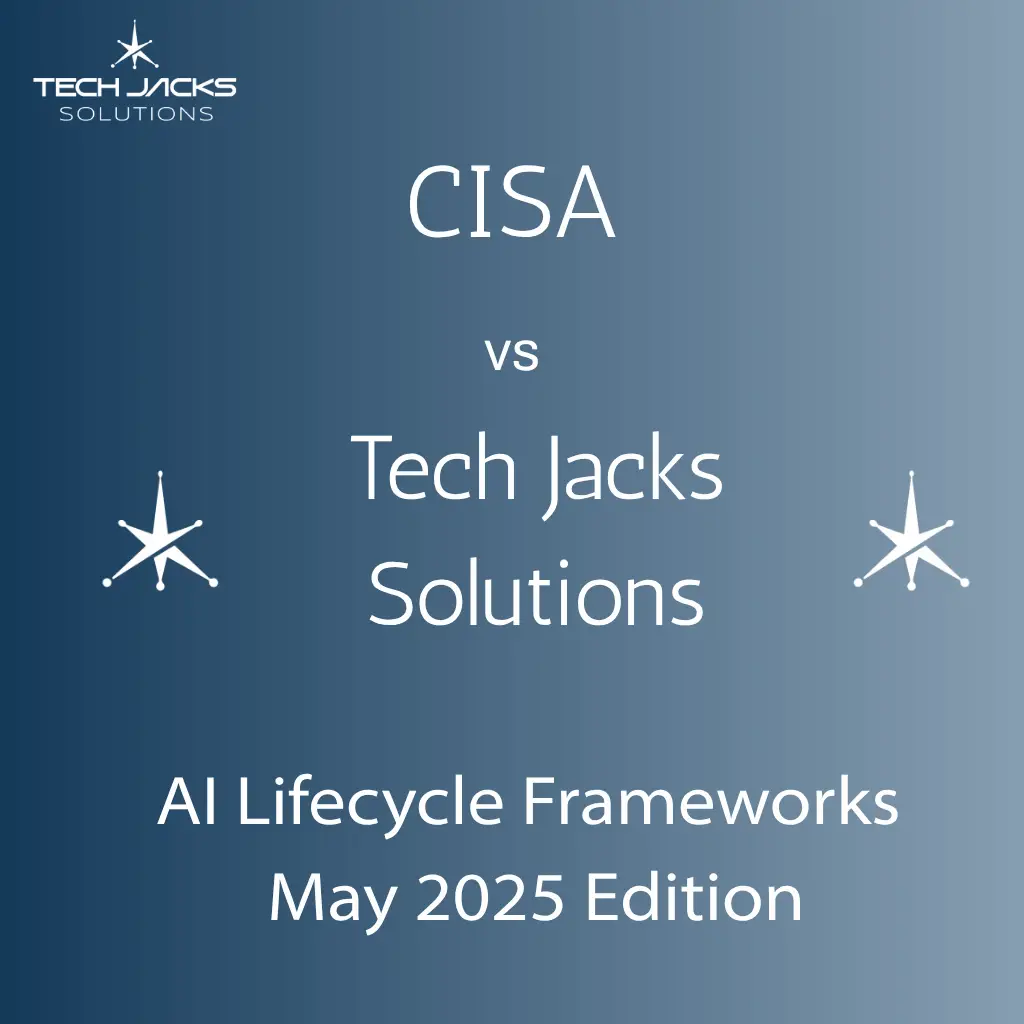
A comparative analysis showing how different approaches to AI frameworks serve distinct organizational needs while maintaining industry alignment. In this article you will learn: The Reality Check As organizations race to implement AI systems, they’re juggling security threats, regulatory demands, and business pressures all at once. It’s messy, and frankly, it’s not surprising. Around 70% […]

AI Explainability Your smartphone can recognize your face in milliseconds. But ask it why it thinks that’s you instead of your twin, and you’ll get digital silence. Or a Confabulation (le’t s keep it real). This isn’t a small problem. We’re building AI systems that make medical diagnoses, approve loans, and control autonomous vehicles. Yet […]
New to LLMs? Start Here Towards Data Scienceon May 23, 2025 at 7:51 pm A guide to Agents, LLMs, RAG, Fine-tuning, LangChain with practical examples to start building
The post New to LLMs? Start Here appeared first on Towards Data Science.
A guide to Agents, LLMs, RAG, Fine-tuning, LangChain with practical examples to start building
The post New to LLMs? Start Here appeared first on Towards Data Science. Read More
Estimating Product-Level Price Elasticities Using Hierarchical BayesianTowards Data Scienceon May 23, 2025 at 11:58 pm Using one model to personalize ML results
The post Estimating Product-Level Price Elasticities Using Hierarchical Bayesian appeared first on Towards Data Science.
Using one model to personalize ML results
The post Estimating Product-Level Price Elasticities Using Hierarchical Bayesian appeared first on Towards Data Science. Read More
How to Evaluate LLMs and Algorithms — The Right WayTowards Data Scienceon May 23, 2025 at 2:02 pm Never miss a new edition of The Variable, our weekly newsletter featuring a top-notch selection of editors’ picks, deep dives, community news, and more. Subscribe today! All the hard work it takes to integrate large language models and powerful algorithms into your workflows can go to waste if the outputs you see don’t live up to expectations.
The post How to Evaluate LLMs and Algorithms — The Right Way appeared first on Towards Data Science.
Never miss a new edition of The Variable, our weekly newsletter featuring a top-notch selection of editors’ picks, deep dives, community news, and more. Subscribe today! All the hard work it takes to integrate large language models and powerful algorithms into your workflows can go to waste if the outputs you see don’t live up to expectations.
The post How to Evaluate LLMs and Algorithms — The Right Way appeared first on Towards Data Science. Read More
Author: Derrick D. JacksonTitle: Founder & Senior Director of Cloud Security Architecture & RiskCredentials: CISSP, CRISC, CCSPLast updated October 8th, 2025 Hello Everyone, Help us grow our community by sharing and/or supporting us on other platforms. This allow us to show verification that what we are doing is valued. It also allows us to plan and […]