

Style Attack Disguise: When Fonts Become a Camouflage for Adversarial Intent AI updates on arXiv.org
Style Attack Disguise: When Fonts Become a Camouflage for Adversarial Intentcs.AI updates on arXiv.org arXiv:2510.19641v1 Announce Type: cross
Abstract: With social media growth, users employ stylistic fonts and font-like emoji to express individuality, creating visually appealing text that remains human-readable. However, these fonts introduce hidden vulnerabilities in NLP models: while humans easily read stylistic text, models process these characters as distinct tokens, causing interference. We identify this human-model perception gap and propose a style-based attack, Style Attack Disguise (SAD). We design two sizes: light for query efficiency and strong for superior attack performance. Experiments on sentiment classification and machine translation across traditional models, LLMs, and commercial services demonstrate SAD’s strong attack performance. We also show SAD’s potential threats to multimodal tasks including text-to-image and text-to-speech generation.
arXiv:2510.19641v1 Announce Type: cross
Abstract: With social media growth, users employ stylistic fonts and font-like emoji to express individuality, creating visually appealing text that remains human-readable. However, these fonts introduce hidden vulnerabilities in NLP models: while humans easily read stylistic text, models process these characters as distinct tokens, causing interference. We identify this human-model perception gap and propose a style-based attack, Style Attack Disguise (SAD). We design two sizes: light for query efficiency and strong for superior attack performance. Experiments on sentiment classification and machine translation across traditional models, LLMs, and commercial services demonstrate SAD’s strong attack performance. We also show SAD’s potential threats to multimodal tasks including text-to-image and text-to-speech generation. Read More
ToMMeR — Efficient Entity Mention Detection from Large Language Modelscs.AI updates on arXiv.org arXiv:2510.19410v1 Announce Type: cross
Abstract: Identifying which text spans refer to entities — mention detection — is both foundational for information extraction and a known performance bottleneck. We introduce ToMMeR, a lightweight model (<300K parameters) probing mention detection capabilities from early LLM layers. Across 13 NER benchmarks, ToMMeR achieves 93% recall zero-shot, with over 90% precision using an LLM as a judge showing that ToMMeR rarely produces spurious predictions despite high recall. Cross-model analysis reveals that diverse architectures (14M-15B parameters) converge on similar mention boundaries (DICE >75%), confirming that mention detection emerges naturally from language modeling. When extended with span classification heads, ToMMeR achieves near SOTA NER performance (80-87% F1 on standard benchmarks). Our work provides evidence that structured entity representations exist in early transformer layers and can be efficiently recovered with minimal parameters.
arXiv:2510.19410v1 Announce Type: cross
Abstract: Identifying which text spans refer to entities — mention detection — is both foundational for information extraction and a known performance bottleneck. We introduce ToMMeR, a lightweight model (<300K parameters) probing mention detection capabilities from early LLM layers. Across 13 NER benchmarks, ToMMeR achieves 93% recall zero-shot, with over 90% precision using an LLM as a judge showing that ToMMeR rarely produces spurious predictions despite high recall. Cross-model analysis reveals that diverse architectures (14M-15B parameters) converge on similar mention boundaries (DICE >75%), confirming that mention detection emerges naturally from language modeling. When extended with span classification heads, ToMMeR achieves near SOTA NER performance (80-87% F1 on standard benchmarks). Our work provides evidence that structured entity representations exist in early transformer layers and can be efficiently recovered with minimal parameters. Read More
Graph Unlearning Meets Influence-aware Negative Preference Optimizationcs.AI updates on arXiv.org arXiv:2510.19479v1 Announce Type: cross
Abstract: Recent advancements in graph unlearning models have enhanced model utility by preserving the node representation essentially invariant, while using gradient ascent on the forget set to achieve unlearning. However, this approach causes a drastic degradation in model utility during the unlearning process due to the rapid divergence speed of gradient ascent. In this paper, we introduce textbf{INPO}, an textbf{I}nfluence-aware textbf{N}egative textbf{P}reference textbf{O}ptimization framework that focuses on slowing the divergence speed and improving the robustness of the model utility to the unlearning process. Specifically, we first analyze that NPO has slower divergence speed and theoretically propose that unlearning high-influence edges can reduce impact of unlearning. We design an influence-aware message function to amplify the influence of unlearned edges and mitigate the tight topological coupling between the forget set and the retain set. The influence of each edge is quickly estimated by a removal-based method. Additionally, we propose a topological entropy loss from the perspective of topology to avoid excessive information loss in the local structure during unlearning. Extensive experiments conducted on five real-world datasets demonstrate that INPO-based model achieves state-of-the-art performance on all forget quality metrics while maintaining the model’s utility. Codes are available at href{https://github.com/sh-qiangchen/INPO}{https://github.com/sh-qiangchen/INPO}.
arXiv:2510.19479v1 Announce Type: cross
Abstract: Recent advancements in graph unlearning models have enhanced model utility by preserving the node representation essentially invariant, while using gradient ascent on the forget set to achieve unlearning. However, this approach causes a drastic degradation in model utility during the unlearning process due to the rapid divergence speed of gradient ascent. In this paper, we introduce textbf{INPO}, an textbf{I}nfluence-aware textbf{N}egative textbf{P}reference textbf{O}ptimization framework that focuses on slowing the divergence speed and improving the robustness of the model utility to the unlearning process. Specifically, we first analyze that NPO has slower divergence speed and theoretically propose that unlearning high-influence edges can reduce impact of unlearning. We design an influence-aware message function to amplify the influence of unlearned edges and mitigate the tight topological coupling between the forget set and the retain set. The influence of each edge is quickly estimated by a removal-based method. Additionally, we propose a topological entropy loss from the perspective of topology to avoid excessive information loss in the local structure during unlearning. Extensive experiments conducted on five real-world datasets demonstrate that INPO-based model achieves state-of-the-art performance on all forget quality metrics while maintaining the model’s utility. Codes are available at href{https://github.com/sh-qiangchen/INPO}{https://github.com/sh-qiangchen/INPO}. Read More
Collaborative penetration testing suite for emerging generative AI algorithm AI updates on arXiv.org
Collaborative penetration testing suite for emerging generative AI algorithmscs.AI updates on arXiv.org arXiv:2510.19303v1 Announce Type: cross
Abstract: Problem Space: AI Vulnerabilities and Quantum Threats Generative AI vulnerabilities: model inversion, data poisoning, adversarial inputs. Quantum threats Shor Algorithm breaking RSA ECC encryption. Challenge Secure generative AI models against classical and quantum cyberattacks. Proposed Solution Collaborative Penetration Testing Suite Five Integrated Components: DAST SAST OWASP ZAP, Burp Suite, SonarQube, Fortify. IAST Contrast Assess integrated with CI CD pipeline. Blockchain Logging Hyperledger Fabric for tamper-proof logs. Quantum Cryptography Lattice based RLWE protocols. AI Red Team Simulations Adversarial ML & Quantum-assisted attacks. Integration Layer: Unified workflow for AI, cybersecurity, and quantum experts. Key Results 300+ vulnerabilities identified across test environments. 70% reduction in high-severity issues within 2 weeks. 90% resolution efficiency for blockchain-logged vulnerabilities. Quantum-resistant cryptography maintained 100% integrity in tests. Outcome: Quantum AI Security Protocol integrating Blockchain Quantum Cryptography AI Red Teaming.
arXiv:2510.19303v1 Announce Type: cross
Abstract: Problem Space: AI Vulnerabilities and Quantum Threats Generative AI vulnerabilities: model inversion, data poisoning, adversarial inputs. Quantum threats Shor Algorithm breaking RSA ECC encryption. Challenge Secure generative AI models against classical and quantum cyberattacks. Proposed Solution Collaborative Penetration Testing Suite Five Integrated Components: DAST SAST OWASP ZAP, Burp Suite, SonarQube, Fortify. IAST Contrast Assess integrated with CI CD pipeline. Blockchain Logging Hyperledger Fabric for tamper-proof logs. Quantum Cryptography Lattice based RLWE protocols. AI Red Team Simulations Adversarial ML & Quantum-assisted attacks. Integration Layer: Unified workflow for AI, cybersecurity, and quantum experts. Key Results 300+ vulnerabilities identified across test environments. 70% reduction in high-severity issues within 2 weeks. 90% resolution efficiency for blockchain-logged vulnerabilities. Quantum-resistant cryptography maintained 100% integrity in tests. Outcome: Quantum AI Security Protocol integrating Blockchain Quantum Cryptography AI Red Teaming. Read More

Meta hires and fires AI workers: Behind the contradictionAI News Reports are circulating this week that Meta is cutting approximately 600 positions from its AI division, a move that seems paradoxical given the company’s aggressive recruitment campaign over recent months. The contradiction raises important questions about Meta’s AI strategy and what it signals for the broader tech industry. For those following Meta AI job cuts,
The post Meta hires and fires AI workers: Behind the contradiction appeared first on AI News.
Reports are circulating this week that Meta is cutting approximately 600 positions from its AI division, a move that seems paradoxical given the company’s aggressive recruitment campaign over recent months. The contradiction raises important questions about Meta’s AI strategy and what it signals for the broader tech industry. For those following Meta AI job cuts,
The post Meta hires and fires AI workers: Behind the contradiction appeared first on AI News. Read More
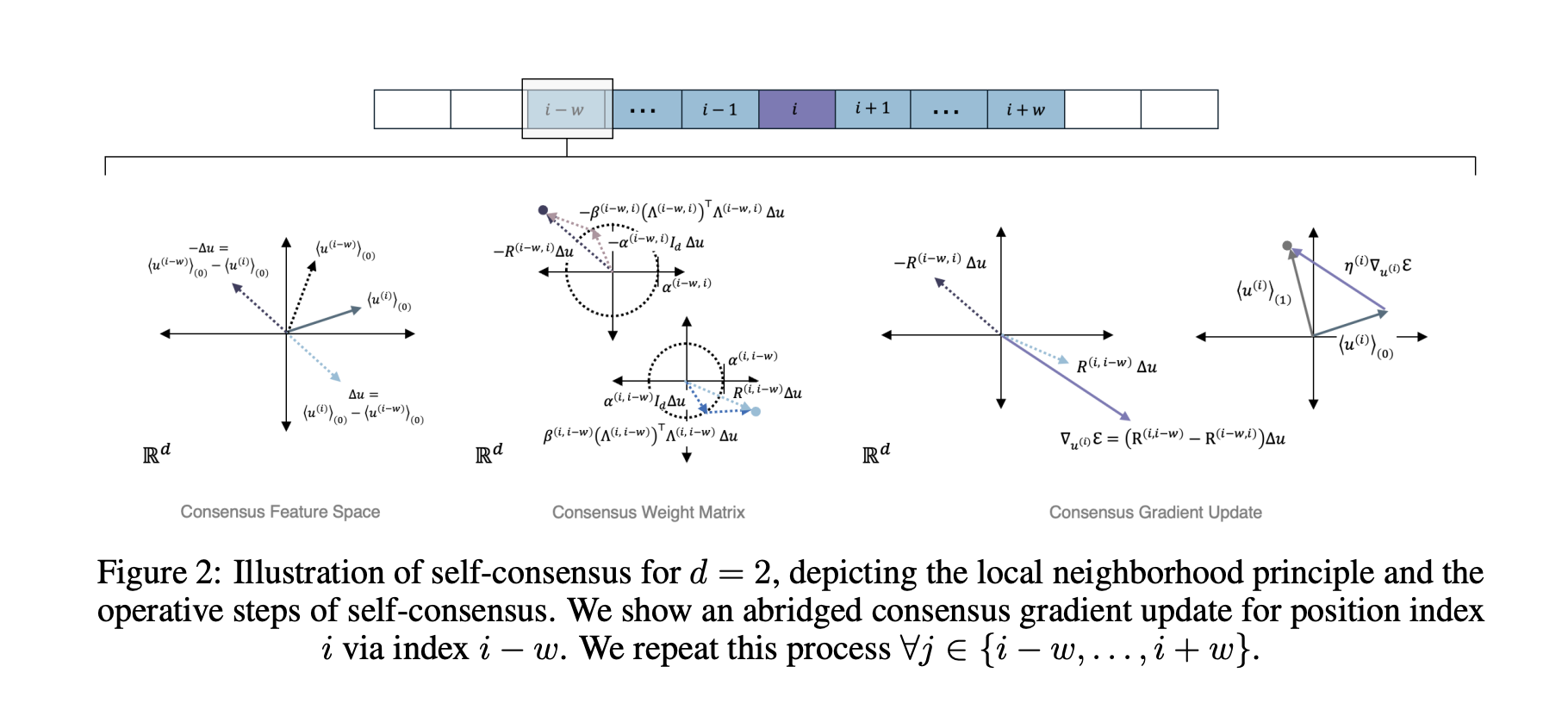
Anthrogen Introduces Odyssey: A 102B Parameter Protein Language Model that Replaces Attention with Consensus and Trains with Discrete DiffusionMarkTechPost Anthrogen has introduced Odyssey, a family of protein language models for sequence and structure generation, protein editing, and conditional design. The production models range from 1.2B to 102B parameters. The Anthrogen’s research team positions Odyssey as a frontier, multimodal model for real protein design workloads, and notes that an API is in early access. What
The post Anthrogen Introduces Odyssey: A 102B Parameter Protein Language Model that Replaces Attention with Consensus and Trains with Discrete Diffusion appeared first on MarkTechPost.
Anthrogen has introduced Odyssey, a family of protein language models for sequence and structure generation, protein editing, and conditional design. The production models range from 1.2B to 102B parameters. The Anthrogen’s research team positions Odyssey as a frontier, multimodal model for real protein design workloads, and notes that an API is in early access. What
The post Anthrogen Introduces Odyssey: A 102B Parameter Protein Language Model that Replaces Attention with Consensus and Trains with Discrete Diffusion appeared first on MarkTechPost. Read More
To Use or to Refuse? Re-Centering Student Agency with Generative AI in Engineering Design Educationcs.AI updates on arXiv.org arXiv:2510.19342v1 Announce Type: cross
Abstract: This pilot study traces students’ reflections on the use of AI in a 13-week foundational design course enrolling over 500 first-year engineering and architecture students at the Singapore University of Technology and Design. The course was an AI-enhanced design course, with several interventions to equip students with AI based design skills. Students were required to reflect on whether the technology was used as a tool (instrumental assistant), a teammate (collaborative partner), or neither (deliberate non-use). By foregrounding this three-way lens, students learned to use AI for innovation rather than just automation and to reflect on agency, ethics, and context rather than on prompt crafting alone. Evidence stems from coursework artefacts: thirteen structured reflection spreadsheets and eight illustrated briefs submitted, combined with notes of teachers and researchers. Qualitative coding of these materials reveals shared practices brought about through the inclusion of Gen-AI, including accelerated prototyping, rapid skill acquisition, iterative prompt refinement, purposeful “switch-offs” during user research, and emergent routines for recognizing hallucinations. Unexpectedly, students not only harnessed Gen-AI for speed but (enabled by the tool-teammate-neither triage) also learned to reject its outputs, invent their own hallucination fire-drills, and divert the reclaimed hours into deeper user research, thereby transforming efficiency into innovation. The implications of the approach we explore shows that: we can transform AI uptake into an assessable design habit; that rewarding selective non-use cultivates hallucination-aware workflows; and, practically, that a coordinated bundle of tool access, reflection, role tagging, and public recognition through competition awards allows AI based innovation in education to scale without compromising accountability.
arXiv:2510.19342v1 Announce Type: cross
Abstract: This pilot study traces students’ reflections on the use of AI in a 13-week foundational design course enrolling over 500 first-year engineering and architecture students at the Singapore University of Technology and Design. The course was an AI-enhanced design course, with several interventions to equip students with AI based design skills. Students were required to reflect on whether the technology was used as a tool (instrumental assistant), a teammate (collaborative partner), or neither (deliberate non-use). By foregrounding this three-way lens, students learned to use AI for innovation rather than just automation and to reflect on agency, ethics, and context rather than on prompt crafting alone. Evidence stems from coursework artefacts: thirteen structured reflection spreadsheets and eight illustrated briefs submitted, combined with notes of teachers and researchers. Qualitative coding of these materials reveals shared practices brought about through the inclusion of Gen-AI, including accelerated prototyping, rapid skill acquisition, iterative prompt refinement, purposeful “switch-offs” during user research, and emergent routines for recognizing hallucinations. Unexpectedly, students not only harnessed Gen-AI for speed but (enabled by the tool-teammate-neither triage) also learned to reject its outputs, invent their own hallucination fire-drills, and divert the reclaimed hours into deeper user research, thereby transforming efficiency into innovation. The implications of the approach we explore shows that: we can transform AI uptake into an assessable design habit; that rewarding selective non-use cultivates hallucination-aware workflows; and, practically, that a coordinated bundle of tool access, reflection, role tagging, and public recognition through competition awards allows AI based innovation in education to scale without compromising accountability. Read More
A Multi-faceted Analysis of Cognitive Abilities: Evaluating Prompt Methods with Large Language Models on the CONSORT Checklistcs.AI updates on arXiv.org arXiv:2510.19139v1 Announce Type: new
Abstract: Despite the rapid expansion of Large Language Models (LLMs) in healthcare, the ability of these systems to assess clinical trial reporting according to CONSORT standards remains unclear, particularly with respect to their cognitive and reasoning strategies. This study applies a behavioral and metacognitive analytic approach with expert-validated data, systematically comparing two representative LLMs under three prompt conditions. Clear differences emerged in how the models approached various CONSORT items, and prompt types, including shifts in reasoning style, explicit uncertainty, and alternative interpretations shaped response patterns. Our results highlight the current limitations of these systems in clinical compliance automation and underscore the importance of understanding their cognitive adaptations and strategic behavior in developing more explainable and reliable medical AI.
arXiv:2510.19139v1 Announce Type: new
Abstract: Despite the rapid expansion of Large Language Models (LLMs) in healthcare, the ability of these systems to assess clinical trial reporting according to CONSORT standards remains unclear, particularly with respect to their cognitive and reasoning strategies. This study applies a behavioral and metacognitive analytic approach with expert-validated data, systematically comparing two representative LLMs under three prompt conditions. Clear differences emerged in how the models approached various CONSORT items, and prompt types, including shifts in reasoning style, explicit uncertainty, and alternative interpretations shaped response patterns. Our results highlight the current limitations of these systems in clinical compliance automation and underscore the importance of understanding their cognitive adaptations and strategic behavior in developing more explainable and reliable medical AI. Read More
No Intelligence Without Statistics: The Invisible Backbone of Artificial Intelligencecs.AI updates on arXiv.org arXiv:2510.19212v1 Announce Type: cross
Abstract: The rapid ascent of artificial intelligence (AI) is often portrayed as a revolution born from computer science and engineering. This narrative, however, obscures a fundamental truth: the theoretical and methodological core of AI is, and has always been, statistical. This paper systematically argues that the field of statistics provides the indispensable foundation for machine learning and modern AI. We deconstruct AI into nine foundational pillars-Inference, Density Estimation, Sequential Learning, Generalization, Representation Learning, Interpretability, Causality, Optimization, and Unification-demonstrating that each is built upon century-old statistical principles. From the inferential frameworks of hypothesis testing and estimation that underpin model evaluation, to the density estimation roots of clustering and generative AI; from the time-series analysis inspiring recurrent networks to the causal models that promise true understanding, we trace an unbroken statistical lineage. While celebrating the computational engines that power modern AI, we contend that statistics provides the brain-the theoretical frameworks, uncertainty quantification, and inferential goals-while computer science provides the brawn-the scalable algorithms and hardware. Recognizing this statistical backbone is not merely an academic exercise, but a necessary step for developing more robust, interpretable, and trustworthy intelligent systems. We issue a call to action for education, research, and practice to re-embrace this statistical foundation. Ignoring these roots risks building a fragile future; embracing them is the path to truly intelligent machines. There is no machine learning without statistical learning; no artificial intelligence without statistical thought.
arXiv:2510.19212v1 Announce Type: cross
Abstract: The rapid ascent of artificial intelligence (AI) is often portrayed as a revolution born from computer science and engineering. This narrative, however, obscures a fundamental truth: the theoretical and methodological core of AI is, and has always been, statistical. This paper systematically argues that the field of statistics provides the indispensable foundation for machine learning and modern AI. We deconstruct AI into nine foundational pillars-Inference, Density Estimation, Sequential Learning, Generalization, Representation Learning, Interpretability, Causality, Optimization, and Unification-demonstrating that each is built upon century-old statistical principles. From the inferential frameworks of hypothesis testing and estimation that underpin model evaluation, to the density estimation roots of clustering and generative AI; from the time-series analysis inspiring recurrent networks to the causal models that promise true understanding, we trace an unbroken statistical lineage. While celebrating the computational engines that power modern AI, we contend that statistics provides the brain-the theoretical frameworks, uncertainty quantification, and inferential goals-while computer science provides the brawn-the scalable algorithms and hardware. Recognizing this statistical backbone is not merely an academic exercise, but a necessary step for developing more robust, interpretable, and trustworthy intelligent systems. We issue a call to action for education, research, and practice to re-embrace this statistical foundation. Ignoring these roots risks building a fragile future; embracing them is the path to truly intelligent machines. There is no machine learning without statistical learning; no artificial intelligence without statistical thought. Read More
The Zero-Step Thinking: An Empirical Study of Mode Selection as Harder Early Exit in Reasoning Modelscs.AI updates on arXiv.org arXiv:2510.19176v1 Announce Type: new
Abstract: Reasoning models have demonstrated exceptional performance in tasks such as mathematics and logical reasoning, primarily due to their ability to engage in step-by-step thinking during the reasoning process. However, this often leads to overthinking, resulting in unnecessary computational overhead. To address this issue, Mode Selection aims to automatically decide between Long-CoT (Chain-of-Thought) or Short-CoT by utilizing either a Thinking or NoThinking mode. Simultaneously, Early Exit determines the optimal stopping point during the iterative reasoning process. Both methods seek to reduce the computational burden. In this paper, we first identify Mode Selection as a more challenging variant of the Early Exit problem, as they share similar objectives but differ in decision timing. While Early Exit focuses on determining the best stopping point for concise reasoning at inference time, Mode Selection must make this decision at the beginning of the reasoning process, relying on pre-defined fake thoughts without engaging in an explicit reasoning process, referred to as zero-step thinking. Through empirical studies on nine baselines, we observe that prompt-based approaches often fail due to their limited classification capabilities when provided with minimal hand-crafted information. In contrast, approaches that leverage internal information generally perform better across most scenarios but still exhibit issues with stability. Our findings indicate that existing methods relying solely on the information provided by models are insufficient for effectively addressing Mode Selection in scenarios with limited information, highlighting the ongoing challenges of this task. Our code is available at https://github.com/Trae1ounG/Zero_Step_Thinking.
arXiv:2510.19176v1 Announce Type: new
Abstract: Reasoning models have demonstrated exceptional performance in tasks such as mathematics and logical reasoning, primarily due to their ability to engage in step-by-step thinking during the reasoning process. However, this often leads to overthinking, resulting in unnecessary computational overhead. To address this issue, Mode Selection aims to automatically decide between Long-CoT (Chain-of-Thought) or Short-CoT by utilizing either a Thinking or NoThinking mode. Simultaneously, Early Exit determines the optimal stopping point during the iterative reasoning process. Both methods seek to reduce the computational burden. In this paper, we first identify Mode Selection as a more challenging variant of the Early Exit problem, as they share similar objectives but differ in decision timing. While Early Exit focuses on determining the best stopping point for concise reasoning at inference time, Mode Selection must make this decision at the beginning of the reasoning process, relying on pre-defined fake thoughts without engaging in an explicit reasoning process, referred to as zero-step thinking. Through empirical studies on nine baselines, we observe that prompt-based approaches often fail due to their limited classification capabilities when provided with minimal hand-crafted information. In contrast, approaches that leverage internal information generally perform better across most scenarios but still exhibit issues with stability. Our findings indicate that existing methods relying solely on the information provided by models are insufficient for effectively addressing Mode Selection in scenarios with limited information, highlighting the ongoing challenges of this task. Our code is available at https://github.com/Trae1ounG/Zero_Step_Thinking. Read More