AI Governance & AI Risk Management
- Home
- portfolio
- Consulting Services
- AI Governance & AI Risk Management
HOW IT WORKS
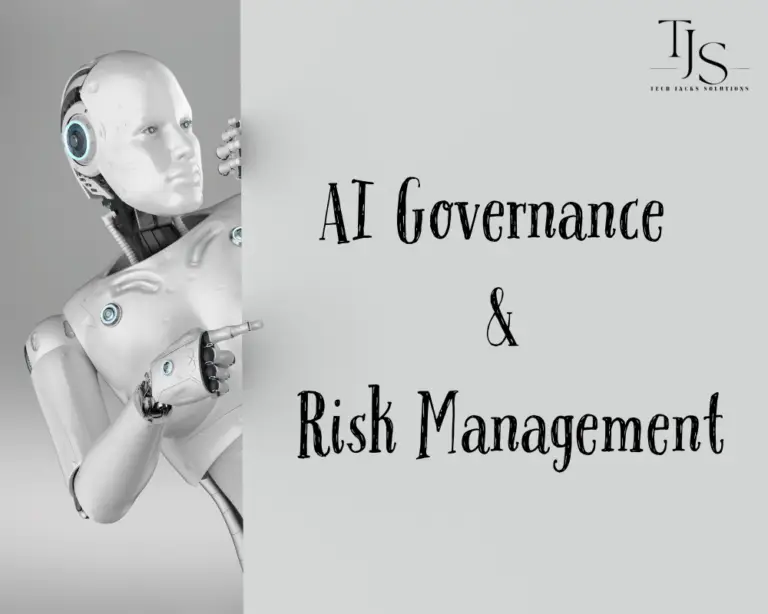
Our AI Governance & AI Risk Management service provides expert guidance to help organizations integrate AI into their operations while maintaining stringent security controls and adhering to industry standards. We focus on ensuring AI systems are deployed ethically, securely, and in compliance with applicable regulations. This involves:
- Identifying AI-related risks and regulatory obligations.
- Establishing governance structures and controls to address ethical and security concerns.
- Monitoring AI usage for ethical and regulatory compliance.
- Aligning with recognized cybersecurity frameworks for comprehensive coverage.
Engagement Type
- One-Time Assessment: A self-contained project that evaluates current AI processes, recommends improvements, and maps out a clear roadmap for responsible AI deployment and use.
- Ongoing Management: Continuous oversight, periodic risk reviews, and lifecycle governance to ensure AI stays compliant and secure as it evolves.
We operate under a structured methodology that incorporates best practices from both general cybersecurity and AI-specific governance frameworks. This comprehensive approach ensures holistic AI lifecycle management, from data sourcing to model decommissioning, with continuous oversight for new regulatory and ethical requirements.
NIST AI RMF
- Provides a structured risk management approach tailored specifically for AI, guiding organizations to govern, map, measure, and manage AI-related risks.
ISO/IEC 42001
- Proposed AI management system standard expanding on ISO 27001 principles, focusing on robust governance, risk assessment, and quality assurance for AI deployments.
EU AI Act (proposed legislation)
- Sets out risk categories (minimal to high-risk) and compliance obligations for various AI applications. We track these evolving mandates to keep your AI initiatives aligned with pending legal requirements.
OWASP AI Security
- Emphasizes controls for AI pipelines (e.g., adversarial attacks, data poisoning) and helps secure ML models at every stage of development and deployment.
COBIT 2019 (AI Governance)
- Bridges business objectives and AI strategies, detailing how to integrate AI oversight into broader IT governance processes for accountability and continuous improvement.
ISO 27001:2022
- Guides our overarching Information Security Management System (ISMS), ensuring strong security governance and risk management practices across your entire organization.
NIST SP 800-53
- Provides comprehensive controls for federal-level security standards, covering a wide scope of risk areas (access control, audit logging, incident response) that also apply to AI infrastructures.
CIS Controls v18
- Focuses on prioritized actions that mitigate common threats, many of which are highly relevant to AI data pipelines and model-hosting environments.
HIPAA
- Ensures PHI (Protected Health Information) is handled properly for AI initiatives that involve healthcare data, preventing unauthorized access or misuse.
SOC 2
- Emphasizes trust service criteria (security, availability, processing integrity, confidentiality, privacy), essential for service organizations delivering AI-driven solutions.
- PCI-DSS
- Applies if AI systems interact with payment card data, requiring validated processes to safeguard cardholder information and transaction security.
- CSA CCM & FedRAMP
- Address additional controls for AI solutions hosted in the cloud, covering identity management, data protection, and adherence to federal-level authorization processes.
By aligning with these AI-specific and general security frameworks, we ensure that every aspect of your AI initiative is robustly governed—from algorithm design and data handling to ethical considerations and ongoing regulatory compliance.
Defined Deliverables
When engaging our AI Governance & AI Risk Management service, clients receive:
- AI Risk Assessment Report: Details identified threats, vulnerabilities, and compliance gaps.
- Governance Framework & Policy Documentation: A formalized AI governance blueprint aligned with ISO 27001, NIST 800-53, etc.
- AI Lifecycle Controls: Defined processes for data handling, model validation, deployment, and retirement, mapped to compliance obligations.
- Security & Compliance Gap Analysis: Mapped recommendations for bridging shortfalls, referencing HIPAA, PCI-DSS, SOC 2, or any relevant domain.
- AI Incident Response Integration: An updated or newly created incident response plan focusing on AI-specific scenarios (data poisoning, malicious model manipulation, etc.).
- Training & Knowledge Transfer: Workshops or sessions to build internal competency on AI security principles, risk management, and compliance best practices.
- Optional Ongoing Governance Support: Advisory services for continuous improvement, additional policy updates, and compliance checks throughout the AI lifecycle.
PROCESS & RESULTS
Our methodology follows a multi-phased approach:
Phase 1: Discovery & Scoping
Activities
- Identify existing AI solutions, compliance drivers, and risk appetite
- Clarify timeline, resource requirements, and success metrics
- Confirm relevant AI frameworks (e.g., NIST AI RMF, ISO/IEC 42001) for alignment
Value Delivered
- Pinpoints AI usage & specialized standards (e.g., EU AI Act, HIPAA)
- Establishes clear project scope and stakeholder expectations
- Facilitates realistic timelines and budget forecasts
Phase 2: Assessment & Gap Analysis
Activities
- Evaluate AI systems against both traditional (ISO 27001, NIST SP 800-53, PCI-DSS) and AI-specific (COBIT for AI, OWASP AI) standards
- Identify compliance shortfalls and high-risk areas (model vulnerabilities, data handling)
- Document key findings in a structured risk register
Value Delivered
- Comprehensive mapping of AI operations to recognized controls
- Early detection of compliance gaps or liability risks
- Actionable insights to prioritize high-impact remediation
Phase 3: Remediation Planning
Activities
- Outline corrective actions for high-risk AI aspects (bias checks, data governance, model validation)
- Align proposed solutions with AI governance frameworks (ISO/IEC 42001, NIST AI RMF)
- Balance short-term fixes with long-term innovation goals
Value Delivered
- Prioritized roadmap of improvements tackling the biggest risks first
- Efficient resource allocation to avoid wasted efforts
- Blueprint for bridging governance gaps while sustaining ethical AI growth
Phase 4: Implementation Support
Activities
- Embed policies and procedures (e.g., OWASP AI security checks, CSA CCM) in day-to-day operations
- Update incident response for AI-specific threats (data poisoning, model drift)
- Coordinate across IT, compliance, and data science teams for seamless integration
Value Delivered
- Accelerated adoption of best practices, protecting AI from adversarial interference or data misuse
- Reduced risk of unauthorized model changes or unmonitored drift
- Strong synergy between business objectives and security measures
Phase 5: Validation & Training
Activities
- Conduct readiness checks to verify framework alignment (NIST AI RMF, ISO/IEC 42001, etc.)
- Provide targeted training on AI security, compliance obligations, and governance tasks
- Update runbooks or reference documents for consistent future application
Value Delivered
- Self-sustaining compliance through enhanced in-house expertise
- Continuous knowledge transfer, enabling adaptation to new mandates (e.g., EU AI Act)
- Confidence in AI’s operational and regulatory soundness
Phase 6: Continuous Oversight (Optional)
Activities
- Periodic reviews of AI models, policies, and threat landscapes
- Refresh governance documents for new AI use cases or updated standards
- Re-validation exercises (tabletop drills, scenario-based testing) to confirm readiness
Value Delivered
- Ongoing adaptation to evolving AI requirements, maintaining compliance as guidelines shift
- Proactive detection of emerging threats and vulnerabilities
- Sustained maturity in AI governance, promoting long-term trust and reliability
Business Value Delivered
- Compliance & Risk Mitigation: Align with both AI-specific (NIST AI RMF, EU AI Act) and traditional (ISO 27001, PCI-DSS, HIPAA) standards, avoiding legal penalties or reputational harm.
- Operational Efficiency: Streamlined processes and clear governance structures reduce confusion, accelerate secure AI adoption, and minimize wasted resources on ad-hoc fixes.
- Strategic Agility: Proactive oversight and continual updates to policies enable swift adaptation to evolving threats or new regulations—keeping competitive advantage intact.
- Stakeholder Trust: Transparent risk assessments, comprehensive reporting, and ethical AI practices reinforce credibility with customers, partners, and investors.
Pricing Structure
We recognize that SMBs have unique needs and budgets. To accommodate varying levels of complexity, we offer three main tiers:
|
Tier |
Scope |
Cost Range (USD) |
Typical Timeline |
|---|---|---|---|
|
Basic |
– One-time AI Risk Assessment – High-level Governance Policy |
Contact for customized pricing | 4–6 weeks |
| Standard | – Full assessment & gap analysis – Detailed policy pack & model lifecycle controls – Staff training (remote) – Incident response update – Basic cloud alignment (CSA CCM) |
Contact for customized pricing | 8–12 weeks |
| Comprehensive | – All standard inclusions – Multi-phased engagements – Additional audits (SOC 2 readiness) – Ongoing governance oversight – Full alignment with multi frameworks (ISO 27001, FedRAMP, etc.) |
Contact for customized pricing | 12+ weeks & optional retainer |
Notes
- Add-On Services (like advanced penetration testing for AI, FedRAMP advisory) are priced separately or rolled into custom quotes.
- Flexible Payment terms available (e.g., milestone-based billing or monthly installments).
Additional Notes or Future Developments
Evolution of AI Regulations
We actively monitor evolving AI regulations (e.g., the proposed EU AI Act, U.S. state-level AI laws, FTC guidelines) to keep you ahead of potential compliance challenges. Future service updates may cover specialized issues like AI fairness reporting, explainability requirements, and expanded privacy mandates.
Advanced Vendor & Third-Party AI Risk
Beyond standard compliance checks, we plan to introduce add-on services for third-party AI vendor oversight. This includes lightweight vendor risk questionnaires—covering data residency, privacy clauses, and model usage terms—to ensure your external AI tools align with core security and privacy needs.
Ethical & Bias Considerations
As organizations face increasing scrutiny over fairness and discrimination risks, we are developing a “Bias & Fairness Toolkit” for clients needing basic AI fairness checks or structured guidelines on ethical usage. This optional add-on will highlight scenario-based best practices and provide checklists to mitigate unintended bias.
Integration of Next-Gen Tools
We aim to expand our service with semi-automated model monitoring solutions (e.g., anomaly detection, policy compliance bots) to help guard against unauthorized model usage or potential data leaks. While currently in development, these next-gen features will complement our policy-driven approach for clients seeking more robust oversight.
Data Privacy & Global Compliance
Given the rise of data sovereignty laws (GDPR, CCPA, etc.), a future extension of our service will focus on privacy impact assessments and specialized data-handling protocols for AI. We will include region-specific guidance (EU, APAC, and beyond) to address the intersection of AI usage and cross-border data restrictions.
Managed AI Governance
Responding to client demand for hands-on oversight, we’re exploring a fully managed AI governance service. This subscription-based option would include periodic audits, vendor risk reviews, and real-time policy updates—ensuring your AI ecosystem remains secure and compliant as it evolves.
Cloud Security Enhancements
As AI deployments increasingly shift to containerized and serverless environments, we plan to incorporate further best practices from sources like the CIS Benchmarks and CSA Serverless Security guidelines—helping you safeguard AI workloads at scale.
CONTROL MAPPING
| Deliverable / Focus | ISO 27001:2022 | NIST SP 800-53 | CIS Controls | HIPAA | SOC 2 | PCI-DSS | CSA CCM | FedRAMP |
|---|---|---|---|---|---|---|---|---|
| AI Governance & Policy Framework | A.5, A.6 (InfoSec Policies) | PM, CA (Program Mgmt) | 1, 2 (Inventory & Mgmt) | 164.308(a)(1)(i) (Security Mgmt) | CC1, CC2 (Common Criteria) | Req.12 | CCM GOV (Governance & Risk) | PL, SA |
| Risk Identification & Classification | A.8 (Asset Mgmt & Risk) | RA, SI (Risk Assess, Sys) | 2, 4 (Policy, Logging) | 164.306(e)(1) (Risk Mgmt) | CC3, CC4 (Risk & Design) | Req.5 | CCM RSK (Risk Management) | RA, CA |
| Model Lifecycle & Compliance Controls | A.9, A.12 (Access, Ops Security) | AC, CM (Access, Config) | 5, 7, 8 (Access, Config,Malware) | 164.308(a)(5)(i) (Workforce Sec) | CC6, CC7 (Logical & System Ops) | Req.7 | CCM AIS (Application & Interface) | SA, CM |
| Security Gap Analysis / Recommendations | A.15 (Supplier Relationships) | CA, SC (Assess, Sys Comm) | 6, 13 (Vuln Mgmt, Net) | 164.316(a) (Policies & Procedures) | CC5 (Risk & Monitoring) | Req.11 | CCM IVS (Interoperability & Virtual Sys) | CA, SI |
| AI Incident Response Integration | A.13 (Comms Security) | IR (Incident Response) | 8, 9 (Email & Malware) | 164.308(a)(6)(i) (Incident Resp) | CC8 (Incident Management) | Req.12.10 | CCM DSP (Disaster Recovery) | IR |
| Training & Knowledge Transfer | A.7 (Human Resource Sec) | AT (Awareness & Training) | 14 (Training & Awareness) | 164.308(a)(5)(i) (Awareness) | CC9 (Staff Training) | Req.12.6 | CCM HRS (Human Resources) | AT, PL |
AI Governance & Risk Management
Interested in this solution? Please visit the Solutions Page.